Key takeaways
- An authentic Ethiopia cultural tour puts you inside living traditions such as coffee ceremonies, Orthodox festivals and tribal markets rather than staged shows.
- Ethiopia holds 12 UNESCO World Heritage Sites, 10 of them cultural, which anchors most serious cultural itineraries.
- The Omo Valley, Harar and the highland festival circuit are the three highlights that define a cultural tour of Ethiopia.
- Community-based tourism sends more of your spending to the people who host you and keeps traditions viable.
- A guided operator handles permits, translation, timing and consent, which is what makes cultural travel here work.
The best Ethiopia cultural tours drop you inside traditions that people still live every day: a coffee ceremony in a family home, a market morning in the Omo Valley, a candlelit Orthodox procession before dawn. You do not watch these from a bus window. You take part, with a guide who knows the families, the timing and the customs that make the exchange respectful.
Ethiopia carries one of the deepest cultural records on the planet. It kept its own alphabet, calendar and church, and it holds 12 UNESCO World Heritage Sites, 10 of them cultural, according to the UNESCO World Heritage Convention. That heritage is not sealed behind glass. It is worked, worshipped and celebrated in the open, which is exactly what a strong cultural tour is built to reach.
What defines an authentic Ethiopian cultural tour
An authentic cultural tour trades sightseeing for participation. The measure is simple: are you present at real events on their own schedule, or are you being shown a performance arranged for tourists?
A few things separate the real thing from the packaged version:
- Real timing. You attend festivals, market days and ceremonies when they actually happen, not on a fixed studio schedule.
- Local hosts. You are introduced by someone the community knows, so you enter as a guest rather than a spectator.
- Consent and fairness. Photography, home visits and gifts are handled openly, with clear agreements that respect the people you meet.
- Context you can follow. A guide explains the meaning behind a ritual, a symbol or a dish, so the day makes sense instead of blurring past.
That framing matters most in Ethiopia because so much of the culture is ongoing practice. The Ethiopian Orthodox Church still shapes daily life in the highlands. Dozens of ethnic groups keep distinct languages, dress and ceremonies. The country runs on its own 13-month calendar and marks the new year in September. A tour that honors this rhythm feels less like a checklist and more like an invitation.
Ethiopia cultural tours highlights: Omo Valley, Harar and festivals
Three experiences define most Ethiopia cultural tours. Most itineraries are built around one, two or all three.
The Omo Valley
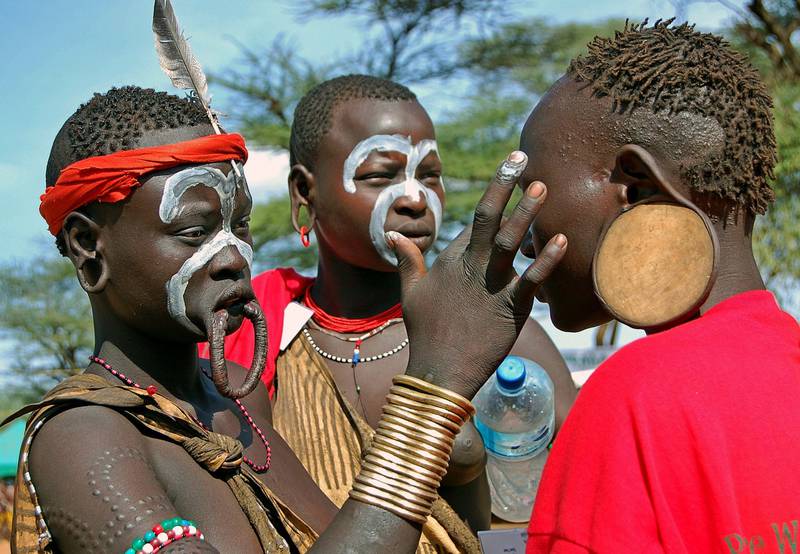
The Lower Omo Valley in the southwest is home to communities such as the Mursi, Hamar, Karo, Dassanech and Banna, each with distinct languages, body art and ceremonies. Market days bring several groups together to trade, and events like the Hamar bull-jumping ceremony mark major rites of passage. The region is culturally rich and sensitive at the same time, so a guided, consent-first approach is essential. For a deeper look at the groups and how to visit well, see our Omo Valley Ethiopia travel guide.
Harar
Harar Jugol, the fortified old city in the east, is one of Islam's historic centers in Africa, packed with mosques, shrines and narrow lanes behind its ancient walls. It is famous for its colorful houses, its traders and its nightly hyena feeding tradition. Harar rewards slow wandering more than any other Ethiopian town. Our guide to Harar's ancient walled city covers what to see and how to spend your days there.
Orthodox festivals
The highland festival calendar produces some of the most striking cultural events in the world. Timkat, the Ethiopian celebration of Epiphany, fills cities like Gondar with white-robed crowds and pre-dawn processions carrying replicas of the Ark. Meskel marks the finding of the True Cross with towering bonfires each September. Genna, Ethiopian Christmas in early January, brings all-night church services and traditional feasting. These are among the reasons UNESCO recognizes several Ethiopian celebrations as intangible cultural heritage, and they are the single strongest reason to time a trip carefully.
Coffee ceremonies, music and local crafts
The everyday culture is as memorable as the headline events, and it is where a tour becomes personal.
The coffee ceremony is the heart of Ethiopian hospitality. Green beans are roasted over coals in front of you, ground by hand, and brewed in a clay jebena. The host serves three rounds, and each has its own name and meaning. It is unhurried on purpose, a social ritual as much as a drink, and being invited into one is a genuine welcome.
Music and dance vary by region and instrument. You might hear the one-string masenqo, the krar lyre or the washint flute, and see shoulder-dancing styles that differ from one ethnic group to the next. Live performance is common at cultural restaurants in Addis Ababa and at community events across the country.
Crafts carry the same regional fingerprints. Look for hand-woven cotton with embroidered borders, silver Coptic crosses, leatherwork from Harar, and basketry with bold geometric patterns. Buying directly from makers keeps skills alive and puts money in the right hands.
Community-based and responsible tourism
Cultural tourism only stays healthy when the communities being visited actually benefit. In sensitive regions like the Omo Valley, the difference between extractive and responsible travel is stark.
Responsible operators, Yenew among them, build trips that put more of your spending into local hands and keep encounters dignified. In practice that looks like:
- Fair, transparent payments for photos, home visits and guiding, agreed in advance rather than haggled on the spot.
- Local employment, using guides, drivers and cooks from the regions you travel through.
- Consent-led encounters, where no photo is taken and no home is entered without a clear yes.
- Cultural continuity, favoring real ceremonies and working markets over staged displays put on for tour groups.
This approach also gives you a better trip. When a community welcomes visitors on its own terms, the conversations are warmer, the access is deeper and the experience feels earned. If you are weighing operators, ask each one plainly how it works with the communities on the route, and favor the company that separates responsible practice from mere convenience.
Sample cultural tour itineraries and how to book
Cultural tours in Ethiopia usually fall into three shapes. Pick the one that matches your time and interests.
Southern cultures, 6 to 8 days. Fly south, then travel overland through the Omo Valley to meet several communities on market days, with time for a bull-jumping ceremony if the timing lines up. Best for travelers focused on living traditions.
Historic north and festivals, 7 to 9 days. Connect Lalibela, Gondar and Aksum, ideally scheduled around Timkat, Meskel or Genna. Best for history, faith and grand ceremony.
Grand cultural circuit, 12 to 16 days. Combine the northern route, a stop in Harar and a stretch of the Omo Valley for the fullest picture of Ethiopian culture. Best for a once-in-a-lifetime trip.
When you book, favor an operator that handles Omo Valley permits, arranges translation and community introductions, times your visit to real events, and states its responsible-travel practices plainly. Share your dates and interests, ask how they work with the communities on the route, and confirm exactly what is included before you commit.
Start by naming the one experience you cannot miss, whether that is a Timkat dawn procession, a Hamar ceremony or a coffee ceremony in a highland home. Send that to Yenew with your travel window, and let the itinerary build outward from the moment that matters most to you.
Frequently asked questions
When is the best time to take an Ethiopia cultural tour?
October to March offers dry weather across most regions. Time your trip around Meskel in late September, Timkat in mid-January or Genna in early January if festivals are your priority.
Do I need a guide for cultural tours in Ethiopia?
For the Omo Valley and remote festival routes, yes. A local guide arranges permits, translation and respectful introductions, which are difficult to organize independently.
Is it respectful to photograph people in the Omo Valley?
Only with clear consent, and often for a small agreed fee per photo. A good guide negotiates this openly so the exchange stays fair and dignified.
How long should an Ethiopia cultural tour be?
A focused regional trip runs 5 to 7 days. A tour combining the historic north, Harar and the Omo Valley usually needs 12 to 16 days.