Ethiopia has 83 different languages and over 200 dialects. Within this cultural mosaic, the Omo River Valley stands out for its diversity. The lower valley of the Omo River has one of the greatest varieties of ethnic groups in Ethiopia and in Africa. Many people describe the Omo as a home of the human race.
The Lower Omo Valley is a UNESCO World Heritage site, because human remains dating back 2.5 million years were found there. It lies in south-west Ethiopia. The Omo River is one of the largest Ethiopian rivers outside the Nile Basin. It flows through the valley on the last part of its journey to Lake Turkana, one of the largest desert lakes in the world. The river plays a vital role in the lives of the tribes.
Hundreds of small villages are scattered across the savannah, and each ethnic group has its own customs and language. Most people are agro-pastoralists. They practise flood-retreat farming on the banks of the Omo and raise cattle on grazing land renewed by the annual flood. For many groups, livestock is a source of pride, wealth and food and is tied to social identity.
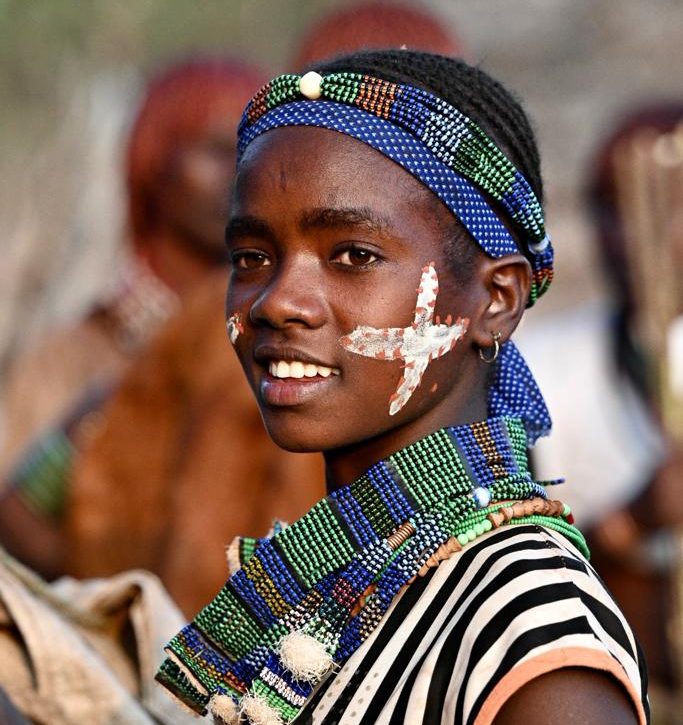
The yearly flood sets the rhythm of life. People live in simple huts, dress traditionally, drink from calabashes and keep a way of life similar to that of past centuries. The landscape of lakes and hills is superb, and in places the flat plains are so vast that you seem to see the curve of the earth. Among the peoples of the valley are the Hamar, Mursi, Ari, Benna, Karo, Dassanech, Arbore and Nyangatom. Few places in the world have so many different peoples in such a small area.
The Mursi
The Mursi are a Nilotic pastoralist people. They live in hills between the Omo River and its tributary, the Mago, in one of the most isolated areas of the country. They move twice a year between the winter and summer seasons. They herd livestock and grow crops along the banks of the Omo.
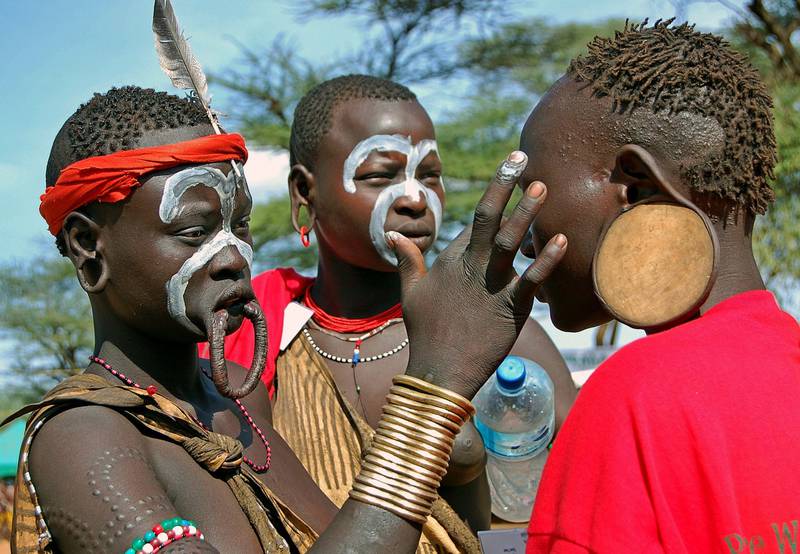
The Mursi are known for their warrior spirit. They keep the Donga, a ceremonial stick fight between young men, in which the winners gain the right to choose a wife and the respect of rivals. Mursi women wear clay or wooden plates in their lips and ears, and elaborate hairstyles with ornaments. Men paint their bodies with white chalk designs. Both men and women decorate their bodies with natural pigments, which mixed with ash also work as insect repellent. Scarification of the arms, chest and back is common, as a sign of elegance, strength and courage.
The Karo
The Karo, or Kara, are a Nilotic people known for their body paint. They are the smallest tribe in the southern Omo Valley and live along the banks of the Omo River. Surrounded by larger and wealthier groups, they keep a complex social hierarchy to discourage intermarriage and keep their family lines distinct.
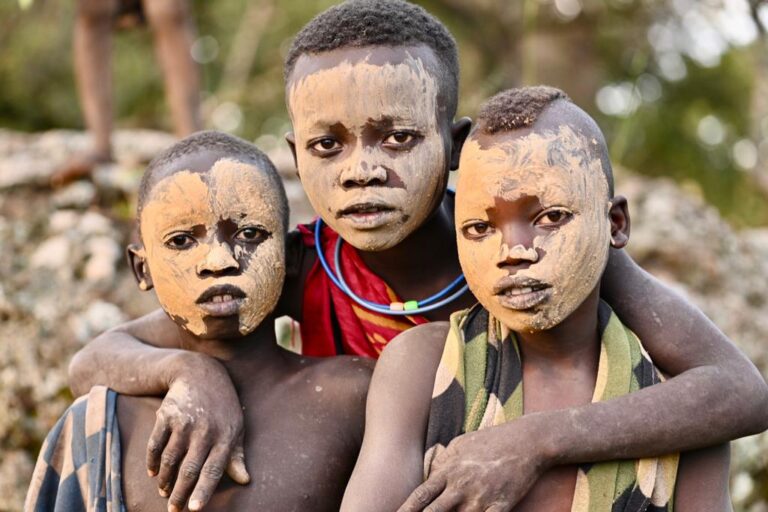
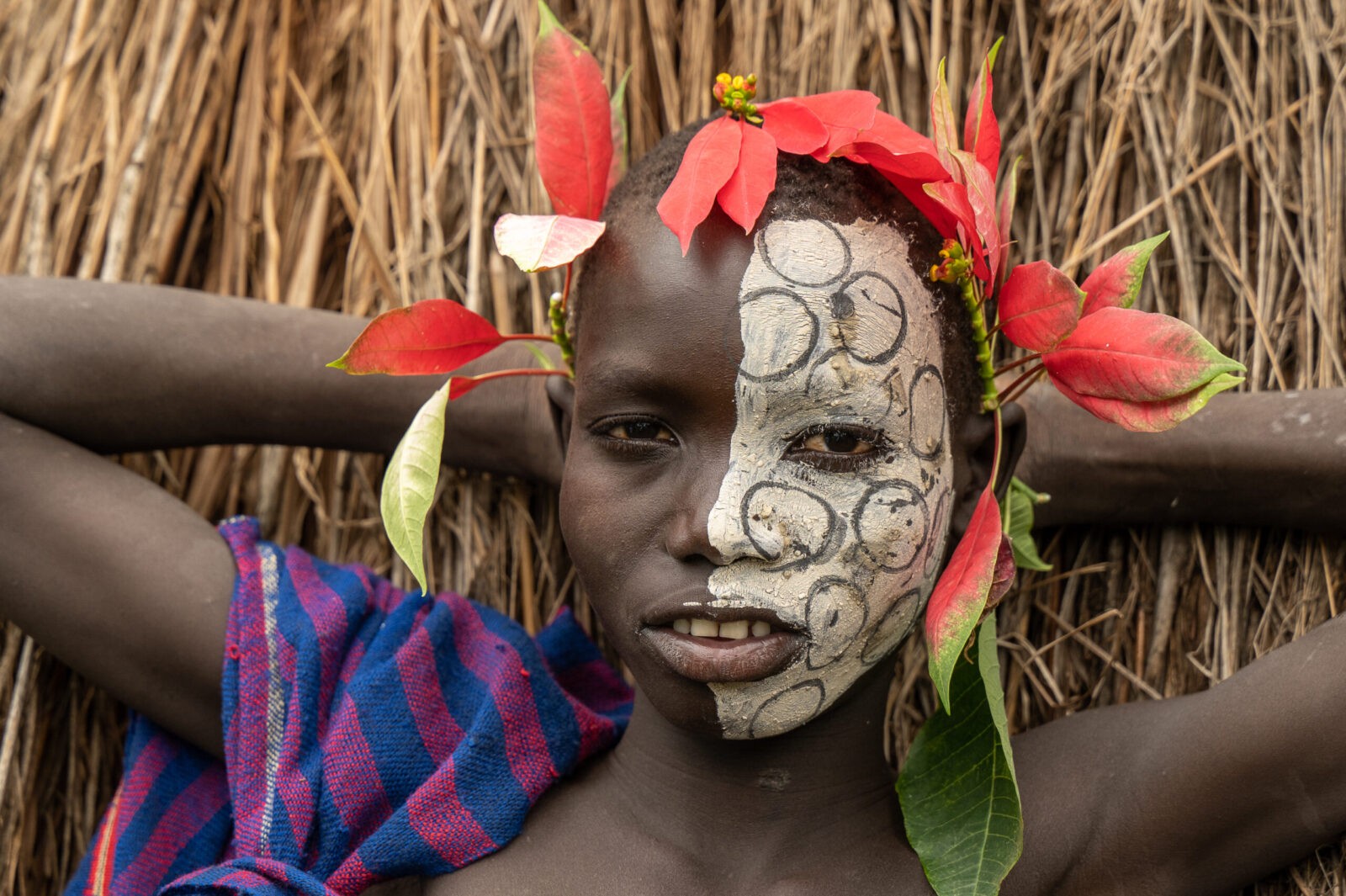
Alongside farming and livestock, the Karo are known for their detailed body and face painting. They use white chalk and minerals such as red ochre, in designs from simple dots to bold patterns, including animal motifs. Men and women both practise this, and even the youngest members of the tribe are painted.
The Dassanech
The Dassanech are among the best-known peoples of the Omo Valley. Their territory stretches to Lake Turkana in the south and to the Omo River in the west. They were traditionally pastoralists but are now mainly agro-pastoral. Because of a long history of conflict, they regard four neighbouring groups as enemies: the Turkana, the Gabra, the Nyangatom and the Hamar. The Turkana and Gabra live in Kenya, while the Nyangatom and Hamar are Ethiopian. The Dassanech are divided into eight clans.
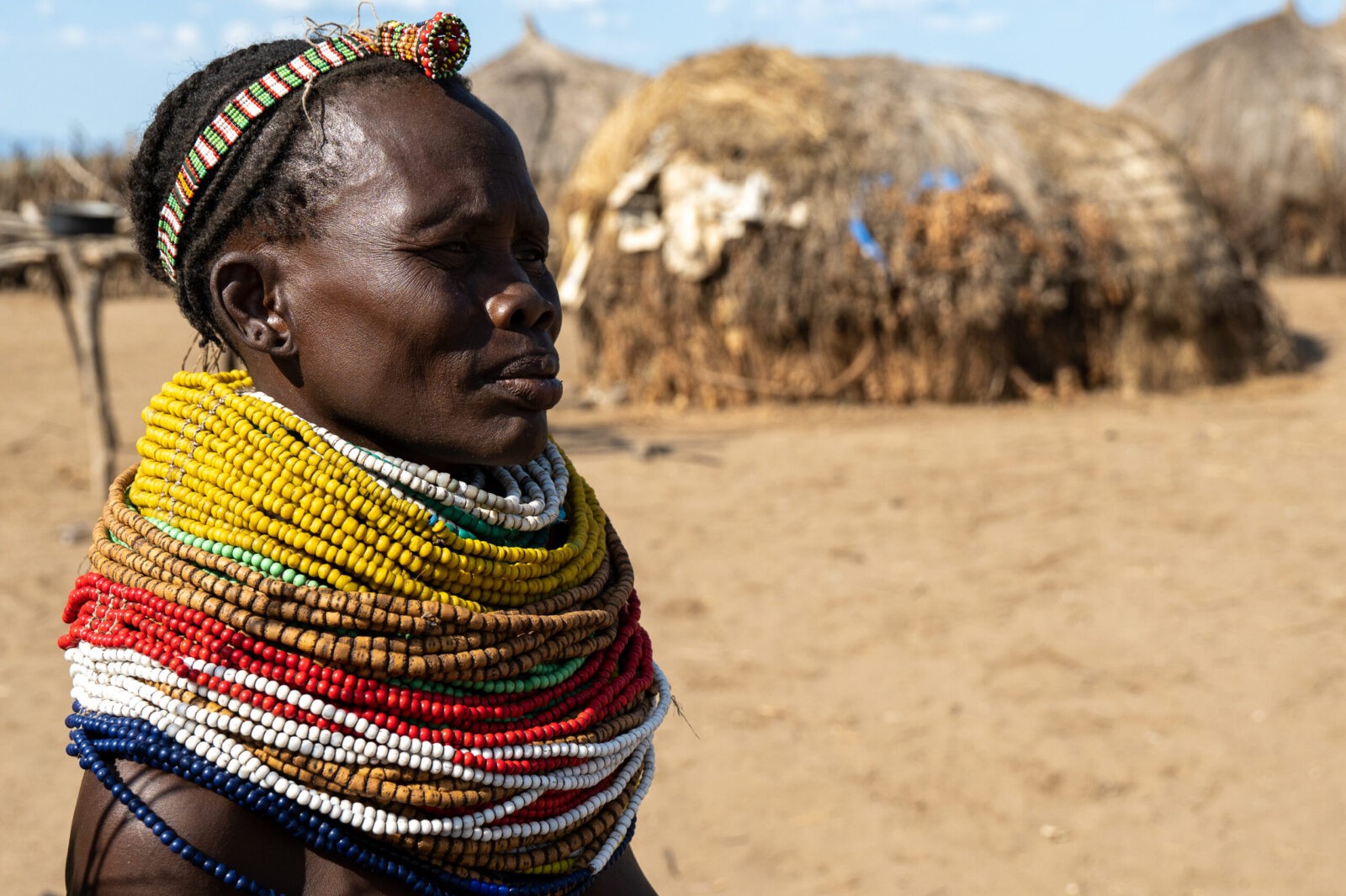
Women wear a brightly coloured cloth gathered at the waist and go barefoot. Many have small piercings under the lower lip, decorated with details such as feathers. They wear brightly coloured necklaces, most often in orange, yellow or red, and bracelets on the wrists and ankles.
The Nyangatom
The Nyangatom are agro-pastoralists living along the border of north-western Ethiopia and south-eastern South Sudan, and in the Ilemi Triangle. Many are nomadic and live in mobile cattle villages that may move several times a year. Many others live in semi-permanent communities on the banks of the Omo River, and people often move between cattle camps and villages.
The Nyangatom are known for their storytelling and singing. Boys have favourite animals, called song cows and song bulls, and the group sings about them in ceremonies. They are regarded as one of the richest and most prosperous peoples of the region.
They are considered strong warriors, and men traditionally scar their chest, one scar for each enemy killed. Women are known for their heavy necklaces and long goat-skin skirts, which are highly decorated, and for decorative scarification on the belly, face and chest. The Nyangatom are also known for the deep wells they dig in dry riverbeds in the dry season, in villages far from the Omo River.
The Surma / Suri
The Surma, or Suri, live in the west Omo region of Ethiopia and are agro-pastoralists. They decorate their whole bodies with figures painted in white chalk dissolved in water, sometimes mixed with ochre or soil dyes. The practice goes back about 400 years. It was once used to intimidate enemies, and today it is a cultural tradition passed down through generations. Women begin wearing clay plates in their earlobes at the age of 20.
When marriage approaches, the bride’s lip plate is replaced with a larger one, and the bigger the plate, the larger the dowry. Men compete in the long-stick fighting game known as Donga to show their strength and readiness for marriage, and paint their bodies with serpentine designs.
The main source of wealth is cattle and goats. Crops include sorghum, maize, cassava, cabbage, beans, yams, spices and some tobacco. The Surma also collect honey in the dry season and pan for gold in local streams, which they sell to highland merchants.