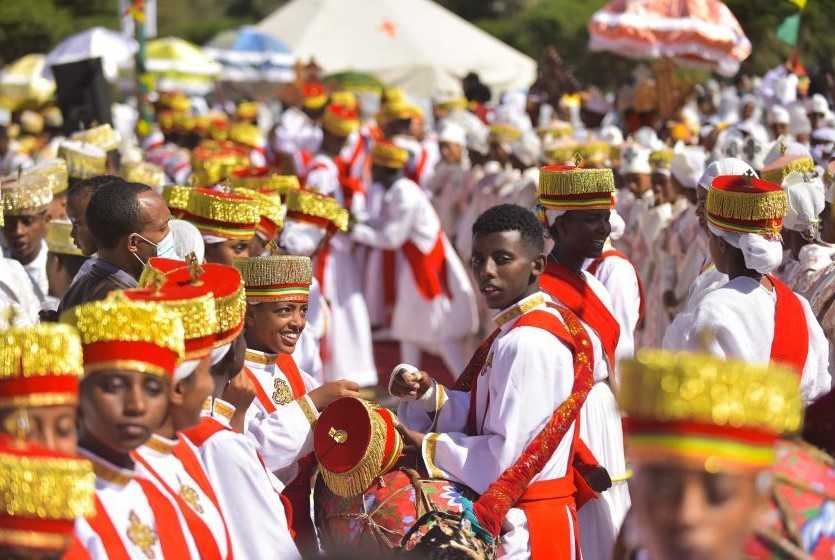
Timkat is the Ethiopian Orthodox celebration of Epiphany. It is the biggest and most colourful religious festival, and it marks the baptism of Jesus Christ in the River Jordan.
It lasts three days, from 18 to 20 January. The 20th is dedicated to the Feast of St Michael.
The Tabot procession
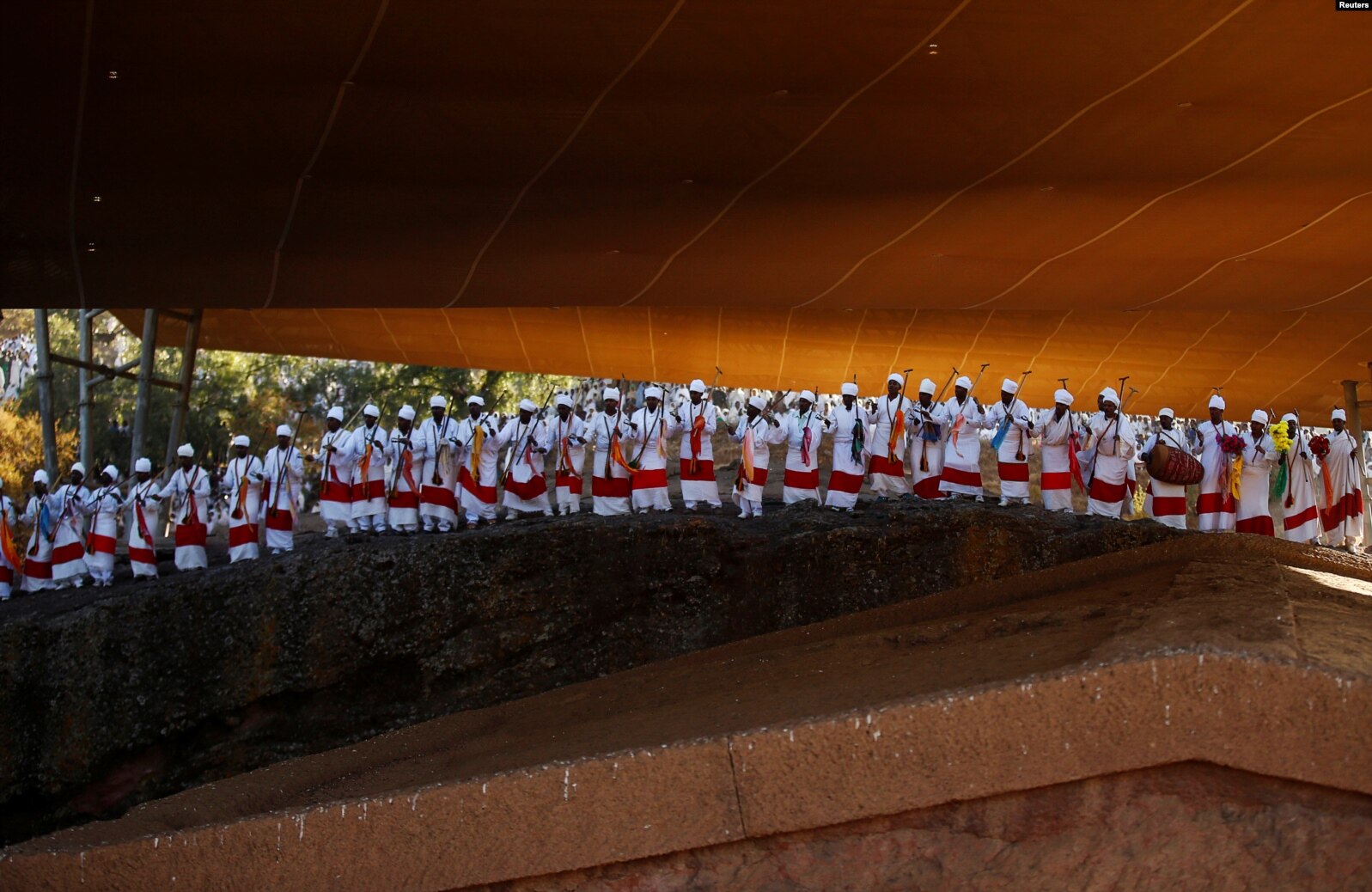
On the eve of Timkat, 18 January, known as Ketera, the Tabot is taken from every church. The Tabot is a replica of the Ark of the Covenant. It is wrapped in rich cloths and silks and carried on a priest’s head in procession.
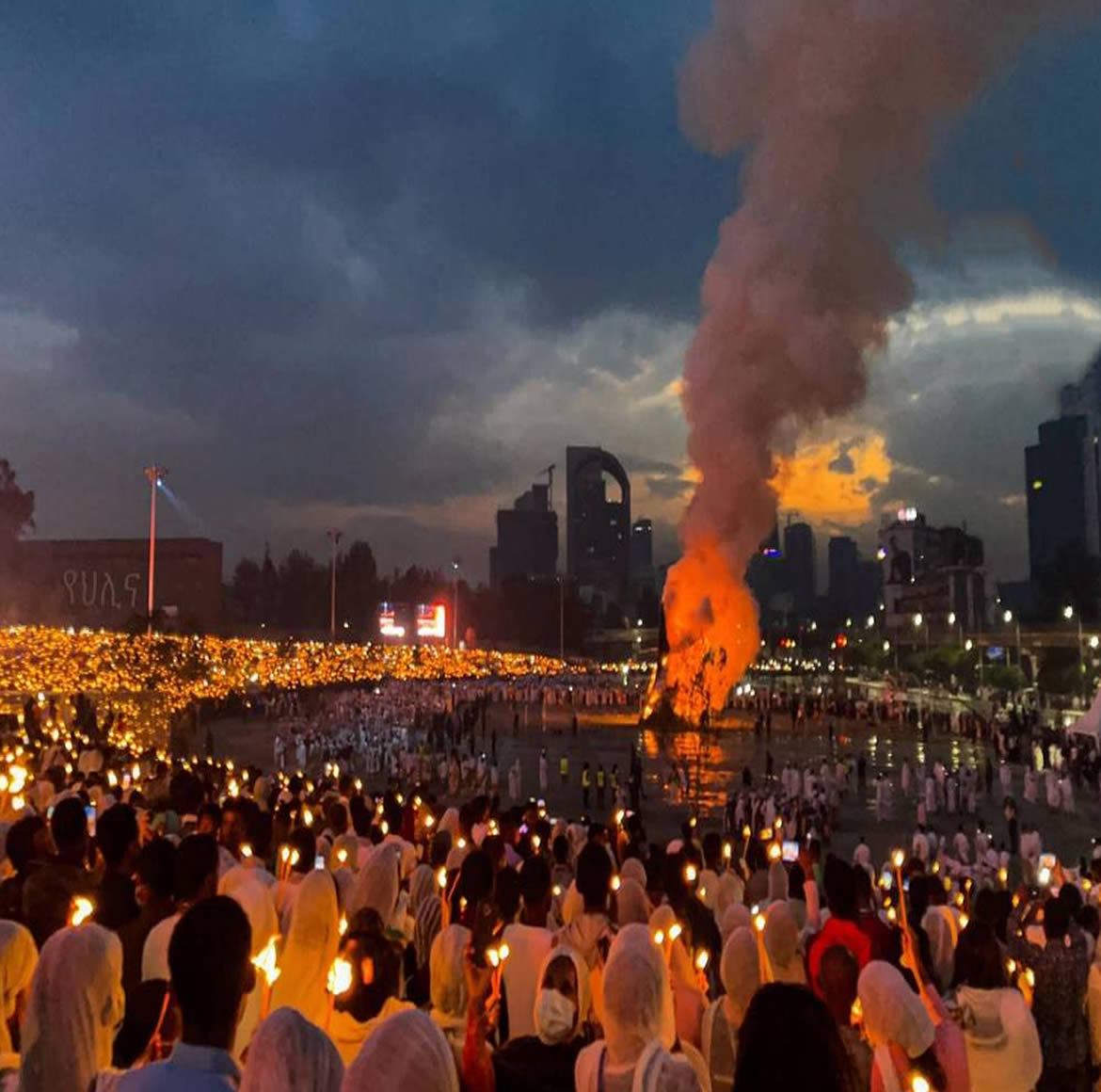
The Tabots are carried to a nearby river or pool, where they are surrounded by bonfires and candlelight. Priests and worshippers keep vigil around them through the night. The Tabot symbolises the Ark of the Covenant and the tablets of the Ten Commandments.
Celebrations in Gondar
Timkat is celebrated all over Ethiopia, but the largest ceremonies are in Gondar, the medieval capital. Priests walk the streets in bright, richly decorated robes and under umbrellas. The streets are hung with green, red and yellow, the colours of the Ethiopian flag.
The blessing of the water
Singing and dancing take place on the second day, 19 January. Men bow their heads in silent prayer, while women kneel with their foreheads to the ground, dressed in white with scarves over their heads. The service continues until 7 a.m., when daylight has arrived.
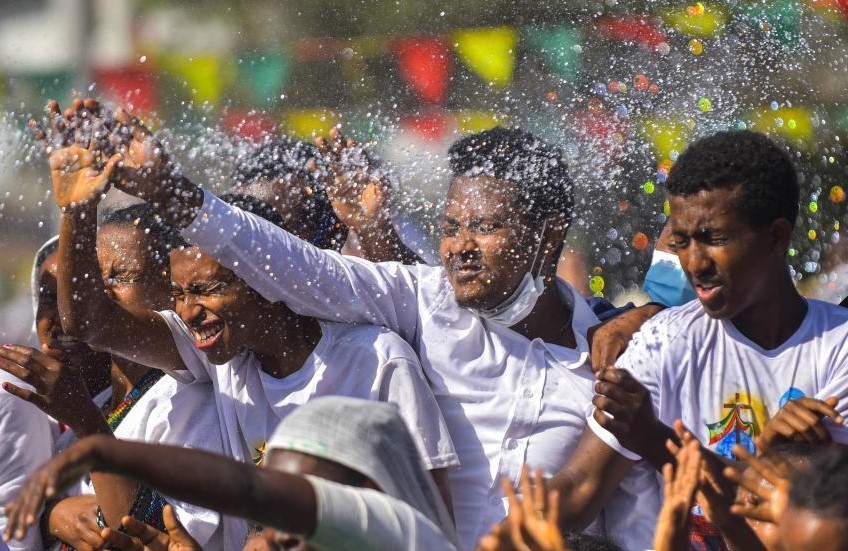
Priests, deacons and the Archbishop go down to the poolside or river for a re-enactment of the baptism of Jesus. The Archbishop blesses the water with his holy cross. Crowds then jump in with splashing and laughter, symbolically renewing their baptismal vows.