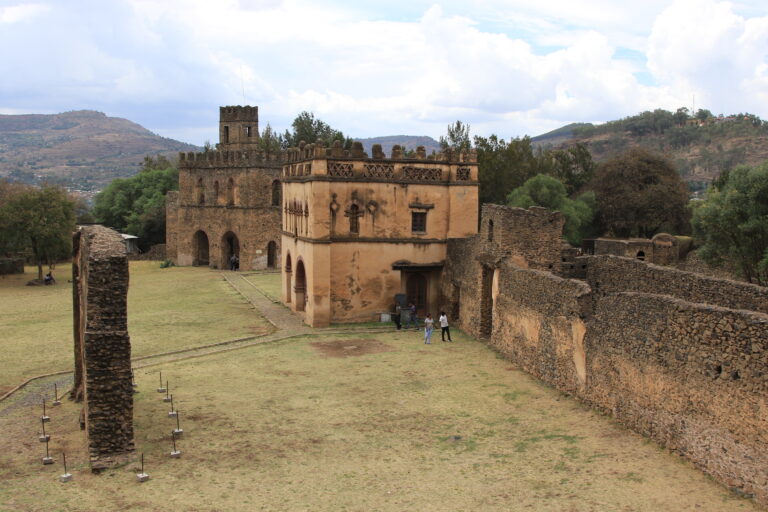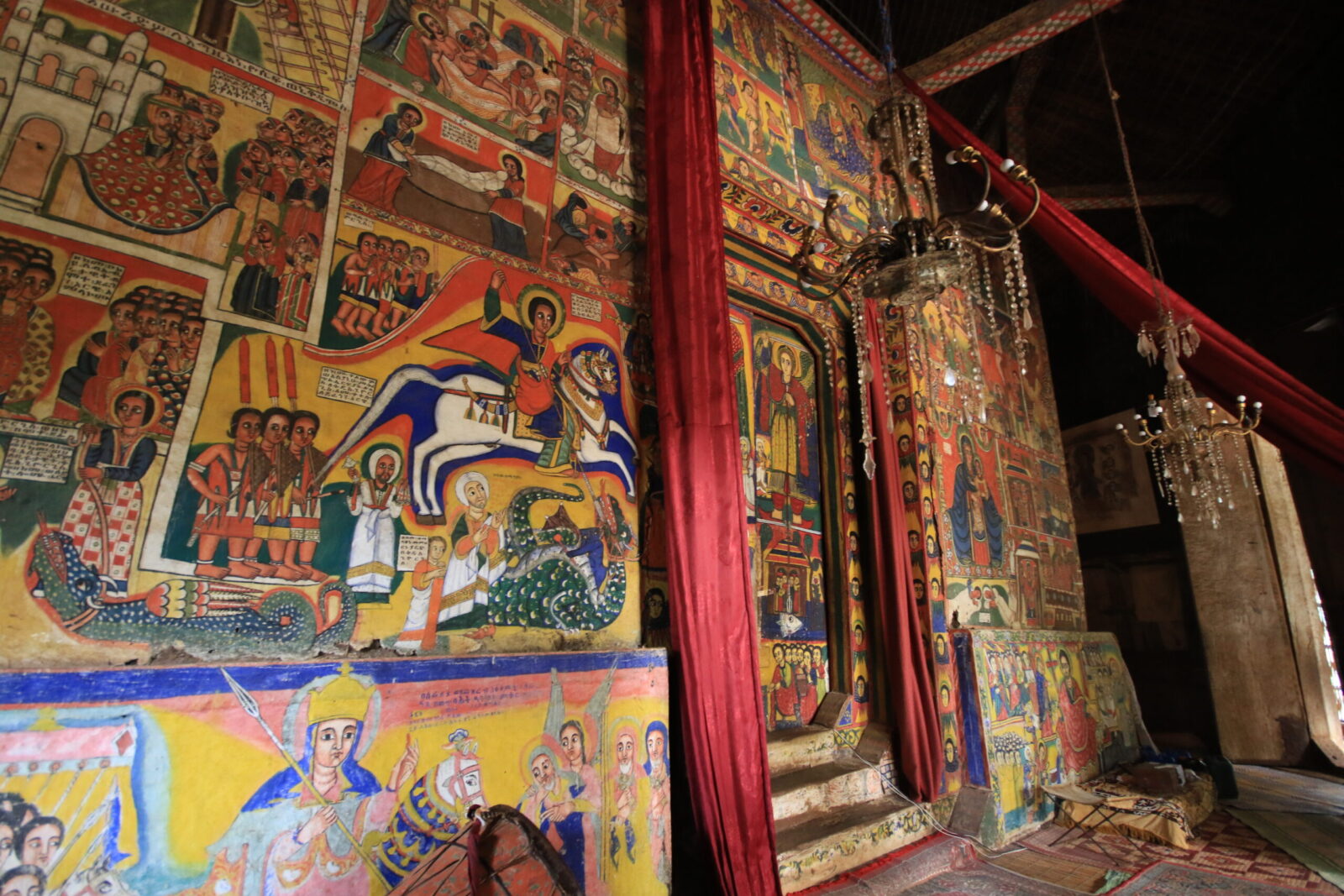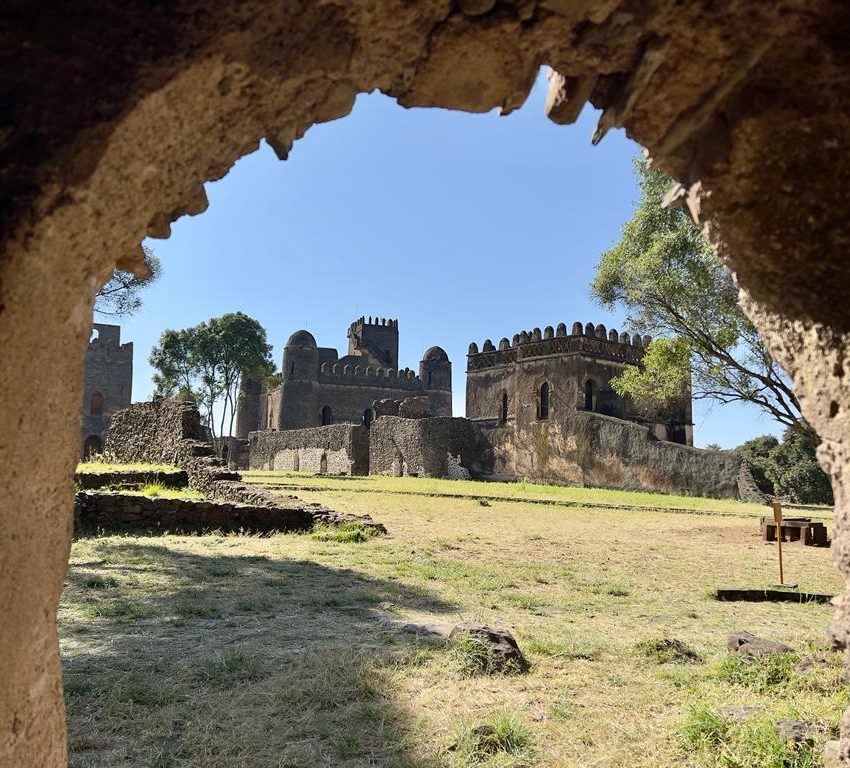
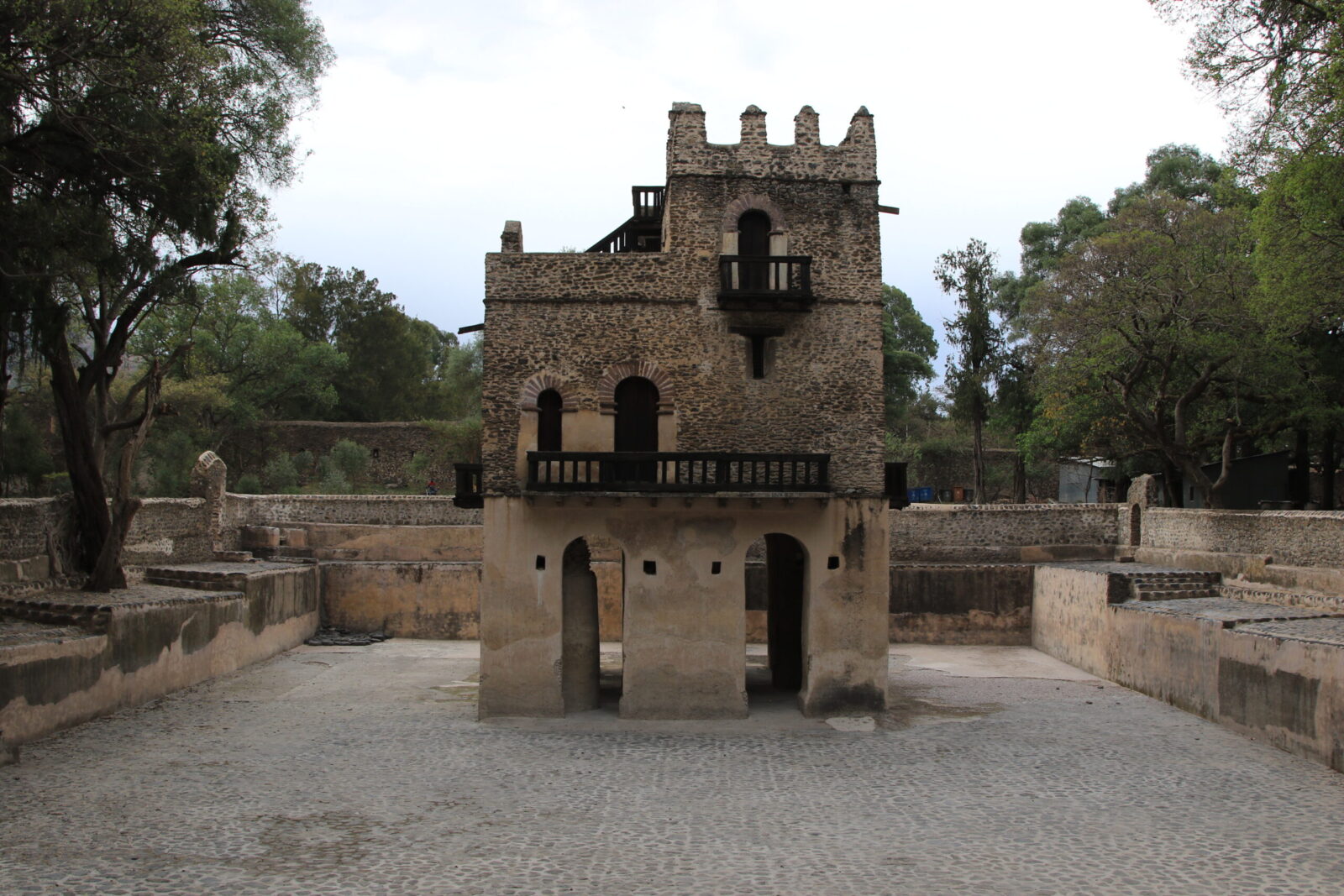
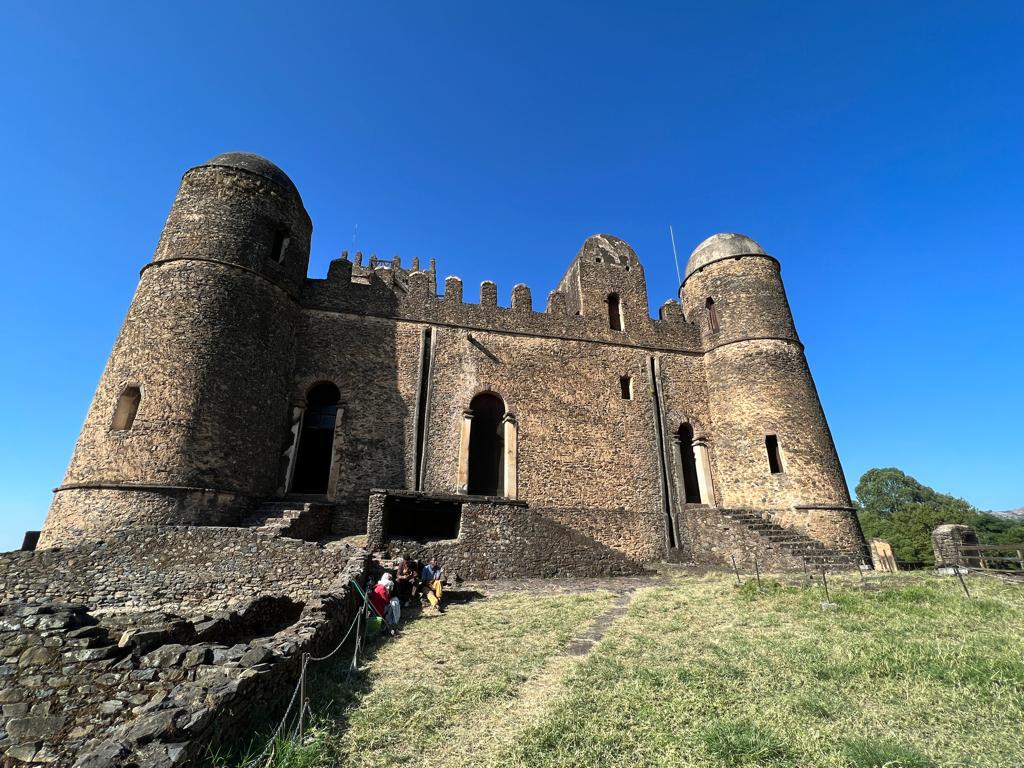
Gondar is often called the Camelot of Africa. It is an ancient capital with royal palaces and castles. In 1636, Fasiladas centralised his power at Gondar in north-west Ethiopia. It became a royal city for more than two hundred years and the capital of the Christian kingdom.
The city lies at 2,133 m above sea level, surrounded by natural resources.
Founding of the Gondarine kingdom
The creation of the Gondarine kingdom, named after its capital, followed intense religious conflict within the Christian kingdom. Under the influence of Portuguese Jesuits at his court, King Susneyos converted to Catholicism in 1607 and tried to impose the new faith on his subjects.
The population and the powerful Ethiopian Orthodox Church strongly opposed this. Susneyos abdicated in favour of his son Fasiladas. Fasiladas expelled the Jesuits in 1632 and restored Ethiopian Orthodox Christianity as the state religion.
Why Gondar
The Lake Tana region had been the heart of the kingdom since Ethiopian rulers settled there in the 16th century. Following the tradition of his ancestors, Fasiladas set up his court at a crossroads of the main trade routes. The site was high enough to be protected from malaria, sheltered by mountains, and near fertile land and a permanent water supply.