Key takeaways
- The best time to visit Ethiopia is October through March, the main dry season with clear skies for trekking and wildlife.
- Ethiopia's heavy rains fall from June to September, when highland trails turn muddy and some roads become hard to cross.
- The Danakil Depression should only be visited in the cooler months, roughly November to February, because summer heat is dangerous.
- January is the festival high point, with Gena on January 7 and Timkat on January 19 drawing crowds to Lalibela and Gondar.
- Meskel on September 27 falls right after the rains, pairing green highland scenery with a major bonfire celebration.
The best time to visit Ethiopia is October through March, the long dry season when trails are firm, skies are clear, and the country's biggest festivals take place. If your trip centers on trekking or wildlife, those same months give you the most reliable weather across the highlands. The rest of the year still has a lot to offer, but timing changes what you can realistically see and do.
Ethiopia sits in the tropics, so the calendar here is shaped by rainfall rather than by hot and cold seasons. Once you understand when the rains come and how they differ from region to region, choosing your dates becomes much simpler.
Understanding Ethiopia's dry and rainy seasons
Ethiopia has two broad patterns that most travelers plan around. The long dry season runs from around October to February, sometimes stretching into March. This is when highland days are warm and clear, mornings can be crisp or even frosty at altitude, and dust replaces mud on the roads.
The main rainy season, known locally as kiremt, falls from June through September. These are the heaviest months, delivering the bulk of the year's rainfall to the central highlands. There is also a shorter rainy spell, often called the belg, that brings lighter showers across parts of the country between February and May.
For most visitors, the practical takeaway is straightforward. Travel in the dry months for the smoothest logistics and the clearest views. Travel in the wet months and you trade some convenience for green landscapes, fewer crowds, and lower-season pricing.
Best months for trekking, wildlife, and festivals
Different experiences peak at different times of year, so it helps to match your dates to your main goal.
Trekking. The dry season from October to March is prime time for the mountains. Trails in the Simien and Bale ranges are firm, river crossings are lower, and the long views that make these hikes special are not lost behind cloud. The Simien Mountains hold Ras Dashen, Ethiopia's highest peak at 4,550 meters (14,930 feet), and the range was named a UNESCO World Heritage Site in 1978 as one of the earliest listings on the World Heritage List, according to the UNESCO World Heritage Centre. For route details and what to pack, our Simien Mountains trekking guide breaks down the options.
Wildlife. Ethiopia's endemic animals, including the gelada, the Walia ibex, and the Ethiopian wolf, can be seen year-round. The dry season simply makes them easier to reach and photograph, since vegetation is lower and access roads are open. October to March remains the safe bet for wildlife-focused trips into the highlands.
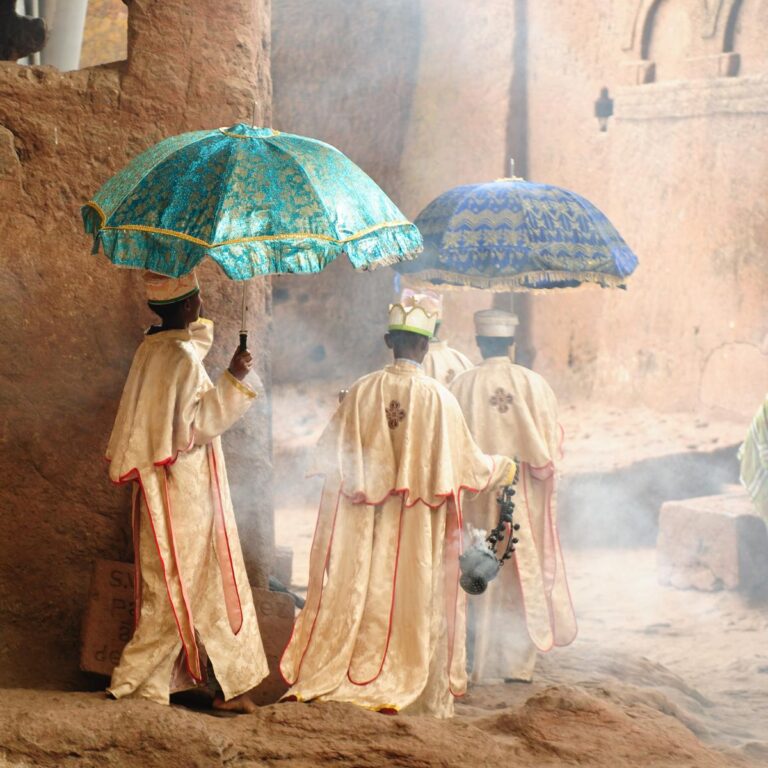
Festivals. The religious calendar is one of the strongest reasons to time a trip carefully. The largest celebrations cluster in January and late September, and they draw both pilgrims and travelers in big numbers. If a festival is your priority, book early, because towns like Lalibela and Gondar fill quickly.
Regional variations from the highlands to the Danakil
Ethiopia is large and vertically dramatic, so a single national forecast tells you very little. Altitude and region matter more than the month on the calendar.
The central highlands, where Addis Ababa, Gondar, and Lalibela sit, stay temperate through the year thanks to their elevation. Daytime temperatures are usually mild, and it is the rain, not the heat, that shapes your plans.
The Danakil Depression is the opposite world. It lies about 125 meters (410 feet) below sea level, and the settlement of Dallol recorded an average annual temperature of 34.6 degrees Celsius (94.3 degrees Fahrenheit) between 1960 and 1966, with a highest reading of 49 degrees Celsius (121 degrees Fahrenheit). Because of that heat, this region is realistically only tourable in the cooler months, roughly November to February.
The southern lowlands, including the Omo Valley, run hotter and follow their own rainfall rhythm. These areas can stay accessible even while the highlands are wet, which makes them a useful option during the main rainy season.
Festival calendar: Timkat, Meskel, Gena and more
Ethiopian holidays follow the country's own calendar, so the dates sit differently from what many visitors expect. Here are the ones worth planning around.
Gena (Ethiopian Christmas), January 7. Preceded by a long fast, Gena is celebrated with early church services, white ceremonial dress, and, in some places, a traditional field game that shares its name. Lalibela is the classic place to witness it among pilgrims. Our guide to Gena and Ethiopian Christmas covers what the day involves.
Timkat (Epiphany), January 19. This is arguably the most spectacular festival in the country, marking the baptism of Jesus. Processions carry replicas of the Ark, crowds gather in white, and blessings with water follow the next morning. Gondar and Lalibela are the standout locations. Note the date can shift to January 20 in leap years.
Meskel, September 27. Meskel commemorates the finding of the True Cross and is centered on a large bonfire known as the Demera. It lands right after the main rains, so the highlands are green and the timing pairs a big celebration with fresh scenery. The date moves to September 28 in leap years.
Because these festivals cause a genuine surge in visitors, accommodation and guides book out well ahead. Reserving early is the single best move if a specific festival is the reason for your trip.
How to pick the best time to visit Ethiopia for you
Start from what you most want to do, then work back to a season.
If you want the widest range of activities in one visit, aim for the dry season between October and March. You get reliable trekking, straightforward wildlife access, and, in January, the festival highlights all at once.
If festivals are your main draw, January is the clear winner, with Gena and Timkat only days apart. Late September is the alternative, built around Meskel and the green post-rain landscape.
If you are set on the Danakil Depression, keep your travel firmly in the cooler window of November to February and treat the heat as a hard limit, not a suggestion.
If you are flexible and want fewer crowds, the tail of the rains in September or early October can be rewarding, with lush scenery and lower-season rates, as long as you accept the odd wet day.
Whatever your season, the smoothest way to lock in dates is to plan the itinerary and the festival calendar together. GishAbay Ethiopia Tour can line up the timing, permits, and guides so your trip falls in the right window from the start. When you are ready to map it out, put your dates on the calendar and reach out to build the route around the experiences you came for.
Frequently asked questions
What is the overall best time to visit Ethiopia?
October through March is the best window. The main rains have ended, skies are clear, and the country's largest festivals fall inside this period.
When should I avoid traveling to Ethiopia?
June through September brings the heaviest rain. Mountain trekking becomes muddy and some rural roads flood, though the highlands turn lush and green.
When can I safely visit the Danakil Depression?
Plan a Danakil trip for the cooler months, roughly November to February. Summer temperatures there are among the highest recorded on Earth and unsafe for touring.
When are the main Ethiopian festivals?
Gena (Ethiopian Christmas) is January 7, Timkat (Epiphany) is January 19, and Meskel is September 27. Dates can shift by a day in leap years.
Is the rainy season a bad time to visit at all?
Not entirely. The countryside is greenest then, crowds thin out, and lowland regions like the Omo Valley stay accessible even while the highlands are wet.