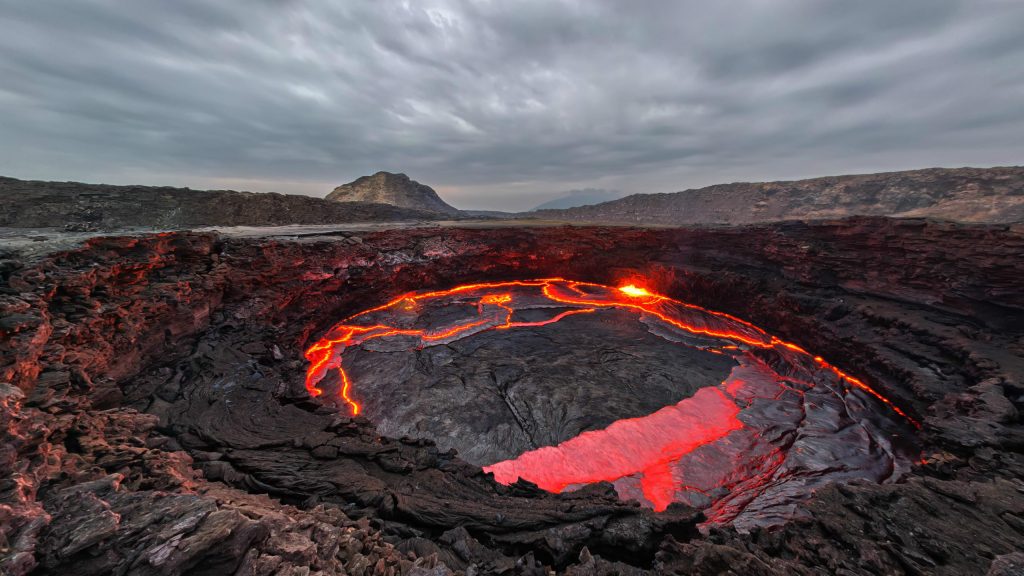
The Danakil Depression is a volcanic region and a geological wonder, in one of the most arid places on the planet. It has hardened lava covered with a thick layer of salt. With its sulphur springs, salt flats and coloured mineral deposits, it looks more alien than Earth-like.
The area is in the Afar Region of north-eastern Ethiopia. It lies about 125 m (410 ft) below sea level and is one of the hottest and most inhospitable places on Earth. Temperatures average about 34.5 °C (94 °F) and have been recorded above 50 °C (122 °F).
Landscape
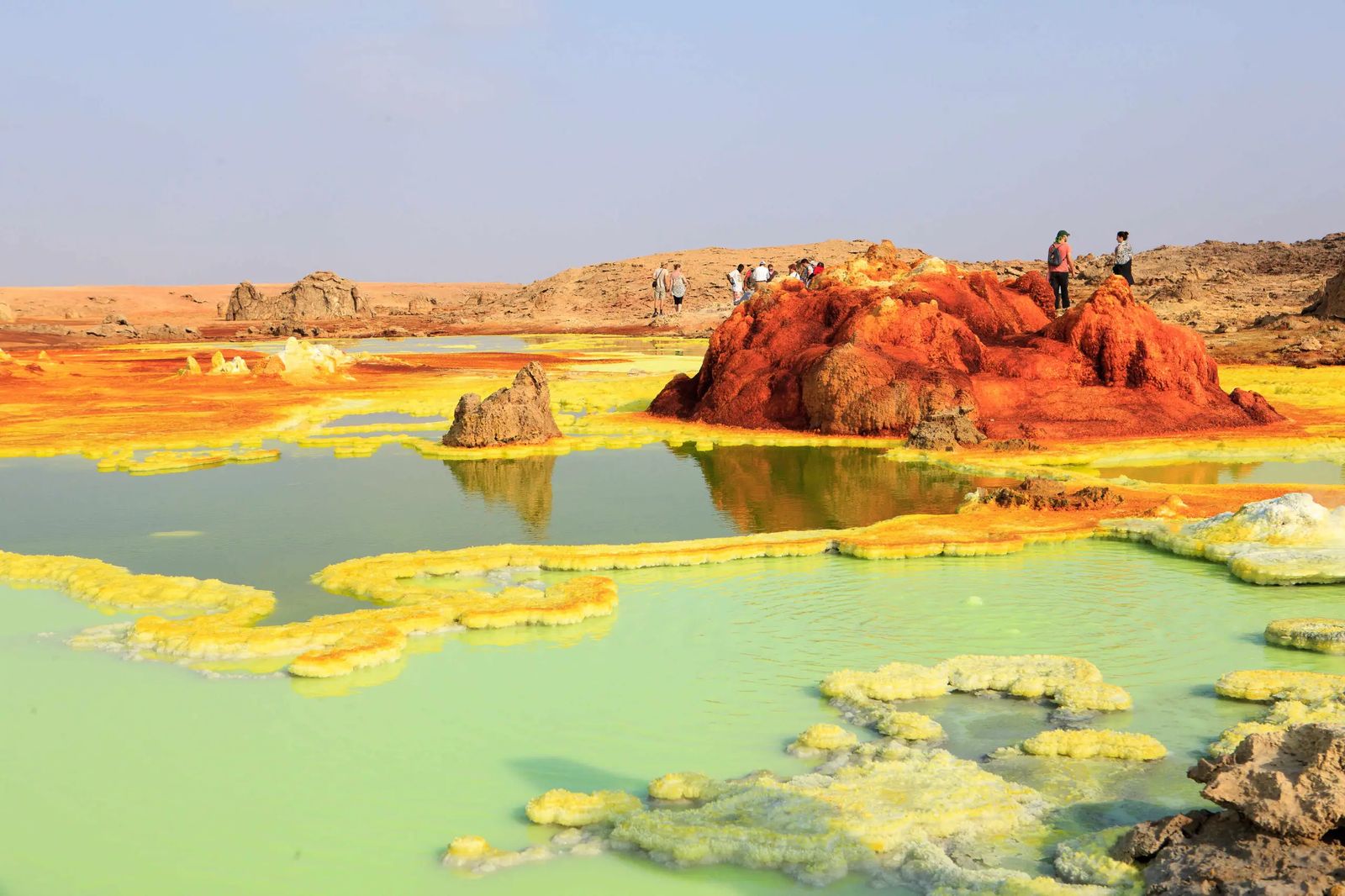
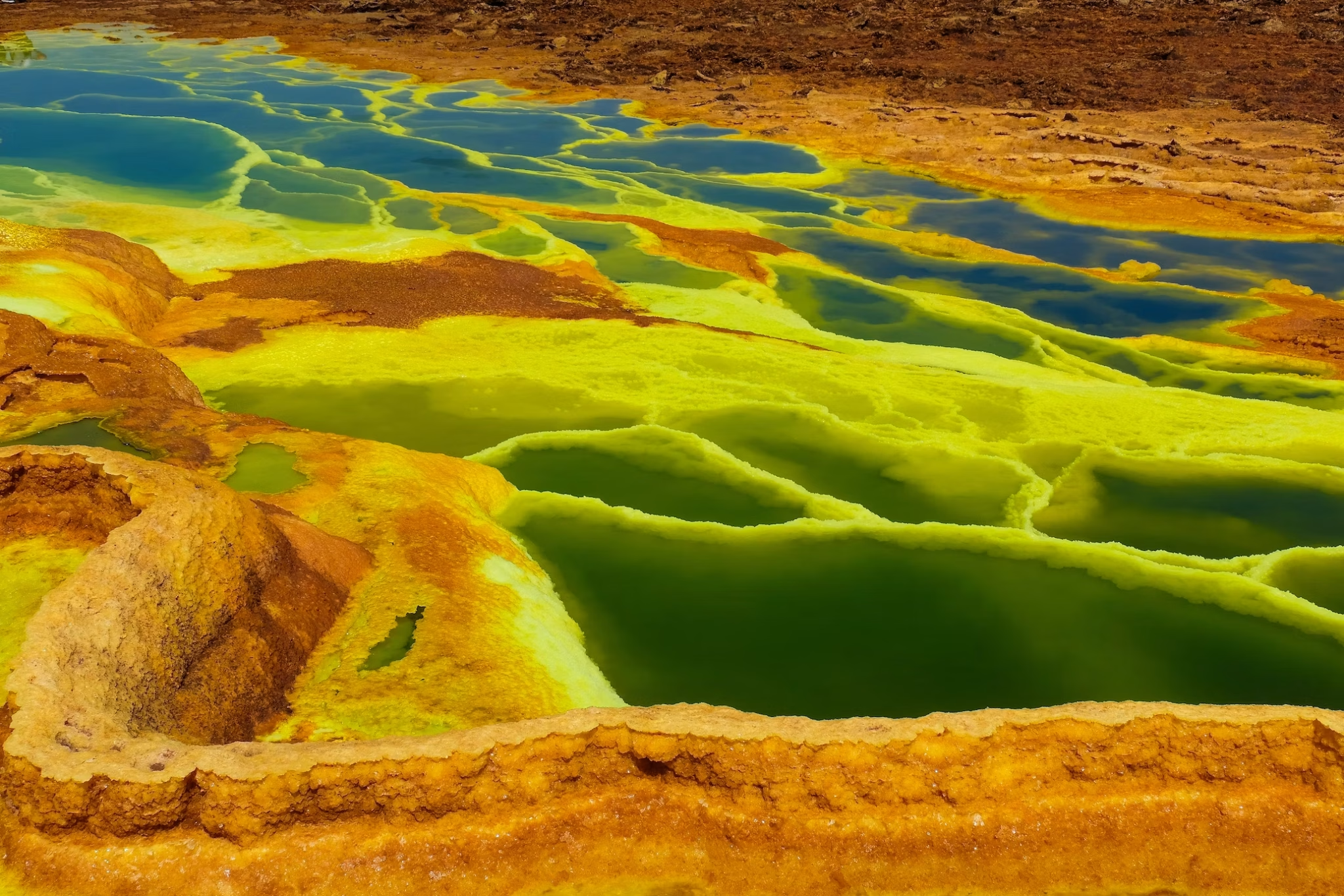
The depression formed above the divergence of three tectonic plates. It has sulphur springs, volcanoes, geysers, acidic pools, vast salt pans and colourful mineral-rich lakes. Volcanic heat warms the spring water and brings sulphur and iron to the surface, leaving yellow, green and orange deposits.
Most of the depression is covered by salt flats. Other areas have basalt flows, shield volcanoes and cinder cones. Several craters up to a mile across can be seen on the salt flats, thought to be maars formed by phreatic eruptions.
Salt miners and visitors
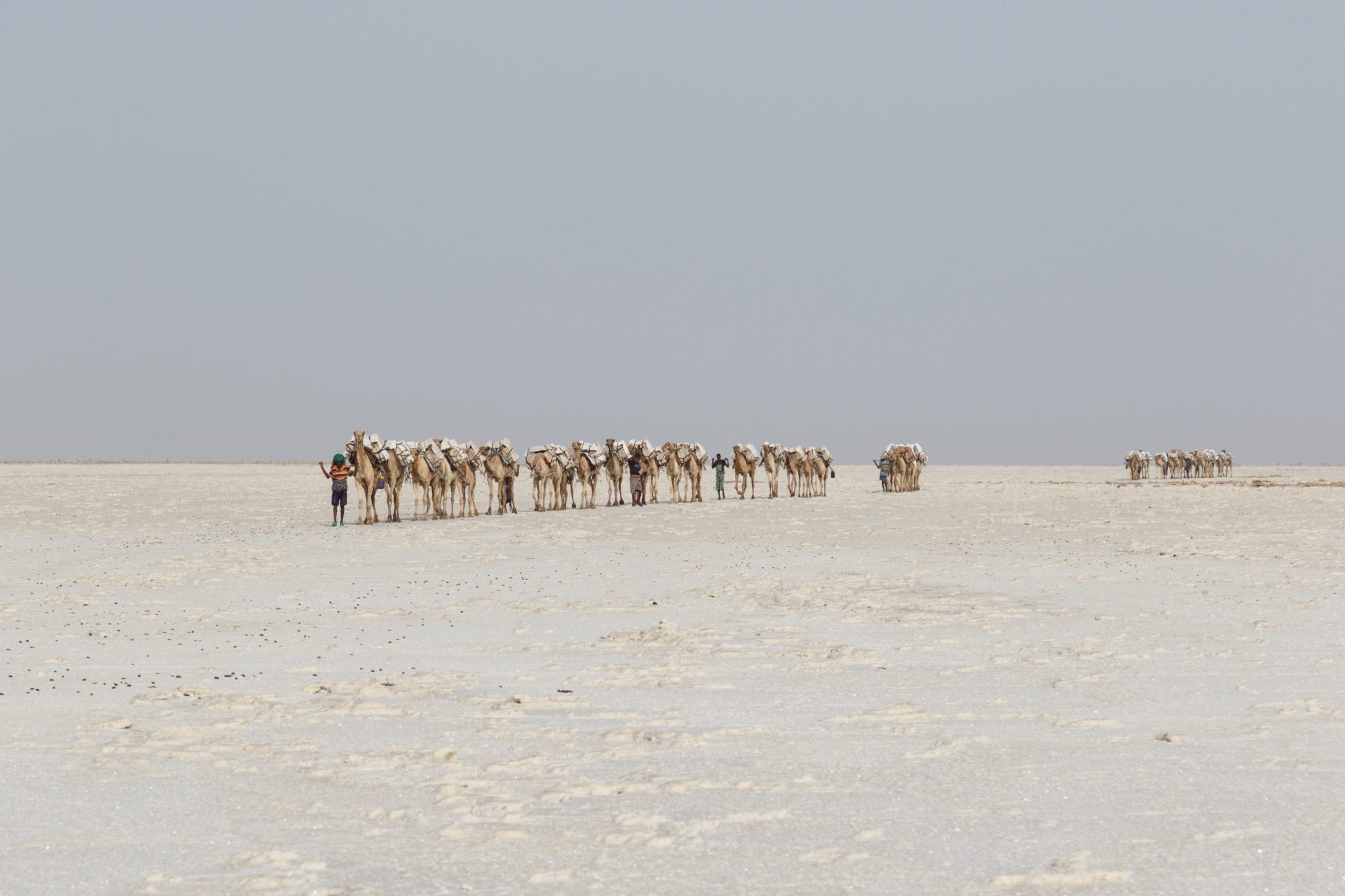
The area attracts salt miners, scientists and travellers. As they have for centuries, miners travel for hours, often with camel caravans, to cut salt slabs by hand from the flat pans. Salt is the region’s ‘white gold’ and was a form of currency in Ethiopia until the 20th century.
The Danakil Depression is one of Ethiopia’s top attractions. It is known as one of the most yellow places in the world, with shades of red, blue and green across the landscape.