Key takeaways
- The dry season, roughly October through May, gives you the most reliable weather for trekking, festivals, and northern historic sites.
- Ethiopia requires proof of yellow fever vaccination for travelers aged 9 months or over arriving from countries with risk of transmission (Ethiopian Public Health Institute).
- Apply for your e-Visa through the official government portal before you fly, and confirm current fees there rather than on third-party sites.
- First-timers do well on a northern historic circuit, while return visitors can push south to the Omo Valley or the Danakil Depression.
- A local operator turns fragmented domestic logistics into one coordinated itinerary with permits, drivers, and vetted guides handled for you.
The best time to start planning an Ethiopia trip is now, because the strongest weather window and the biggest festivals both fall in the dry months and fill up fast. This guide walks you through timing, entry paperwork, realistic costs, and sample routes so you can move from browsing to booking without second-guessing every decision.
Ethiopia rewards travelers who plan ahead. Rock-hewn churches, high mountain escarpments, active lava lakes, and living tribal cultures sit far apart, and the roads and flight schedules between them reward good preparation. Get the foundations right and the country opens up.
Key Takeaways
- The dry season, roughly October through May, offers the most dependable conditions for trekking, festivals, and the northern historic route.
- Ethiopia requires yellow fever proof for travelers aged 9 months or over arriving from at-risk countries (Ethiopian Public Health Institute).
- Book your e-Visa on the official government portal before flying, and pair with a local operator to handle domestic logistics.
When Should You Take Your Ethiopia Trip?
Most travelers should aim for the dry season, which runs roughly October to May. The core window of October through February brings clear skies to the highlands, firm trails for trekking, and cool evenings. This is also festival season, so timing your visit around a major celebration adds real depth to the experience.
Weather varies sharply by region. The northern highlands and Simien Mountains stay cool and dry through winter, while the Danakil Depression in the northeast is brutally hot year-round and only sensible to visit in the cooler months. The main rains, the kiremt, fall in July and August across much of the country, turning dirt roads to mud and clouding mountain views.
Ethiopia runs on its own calendar, with 13 months and a New Year in September. The great religious festivals follow it. Timkat, the Ethiopian celebration of Epiphany, lands in mid-January and fills towns like Gondar with processions and blessings. Meskel, marking the finding of the True Cross, falls in late September. Enkutatash, the New Year, opens the season. If a festival matters to you, build the trip around its date and book early, because rooms in festival towns go quickly.
For a deeper look at one of these celebrations, our guide to Gena, the Ethiopian Christmas, explains how the holiday is observed and what visitors can expect.
What Are the Visa and Vaccination Essentials?
Two pieces of paperwork sit at the center of any Ethiopia trip: your visa and your vaccination proof. Most international visitors need a visa, and the simplest route is the electronic visa applied for online before you travel. Sort both well ahead of departure so nothing stalls you at the airport.
Apply for your e-Visa through the official government portal rather than a lookalike third-party site. Fees and validity periods change, so treat the official portal as the single source of truth for current pricing and always print or save your approval before you fly. Give yourself a buffer of at least a couple of weeks in case processing runs slow.
On vaccinations, yellow fever is the requirement to know. Proof of vaccination against yellow fever is required for travelers aged 9 months or over arriving from countries with risk of yellow fever transmission, and for those who have transited more than 12 hours through an airport in such a country (Ethiopian Public Health Institute). Travelers flying direct from Europe or North America are not caught by that rule, though the vaccine is still widely recommended. Check with a travel clinic about routine boosters and malaria precautions for lowland regions well before you go.
How Much Should You Budget for an Ethiopia Trip?
Budget planning comes down to three big buckets: getting around, guiding, and where you sleep. Ethiopia can suit a wide range of wallets, but the geography means transport often takes the largest share, especially if you cover the classic circuits that span hundreds of kilometers.
Domestic flights connect the main hubs and save days compared with long overland drives. Flying between the northern historic towns, for instance, keeps a tight itinerary realistic. Overland travel is cheaper but slower, and some routes genuinely need a sturdy vehicle and an experienced driver rather than a rental car.
Guiding is where value shows up. Many sites, from the Simien Mountains to the Danakil, require permits, scouts, or local guides by regulation, and a knowledgeable guide turns a stop into a story. Accommodation ranges from simple guesthouses to a handful of genuinely comfortable lodges near marquee sites, so you can dial the standard up or down by region. A practical approach is to spend on flights and guiding, then flex your lodging to match your budget.
Which Route Fits First-Timers vs. Return Visitors?
Your route should match your experience level. First-timers get the most from the northern historic circuit, while return visitors can trade comfort for adventure in the south and the far northeast. Matching the itinerary to what you have already seen keeps every day feeling fresh.
For a first Ethiopia trip, plan 8 to 12 days on the northern loop. A classic version links Bahir Dar and Lake Tana, the castles of Gondar, a Simien Mountains excursion, and the rock-hewn churches of Lalibela. It balances history, culture, and one memorable stretch of highland scenery without asking too much of any single day.
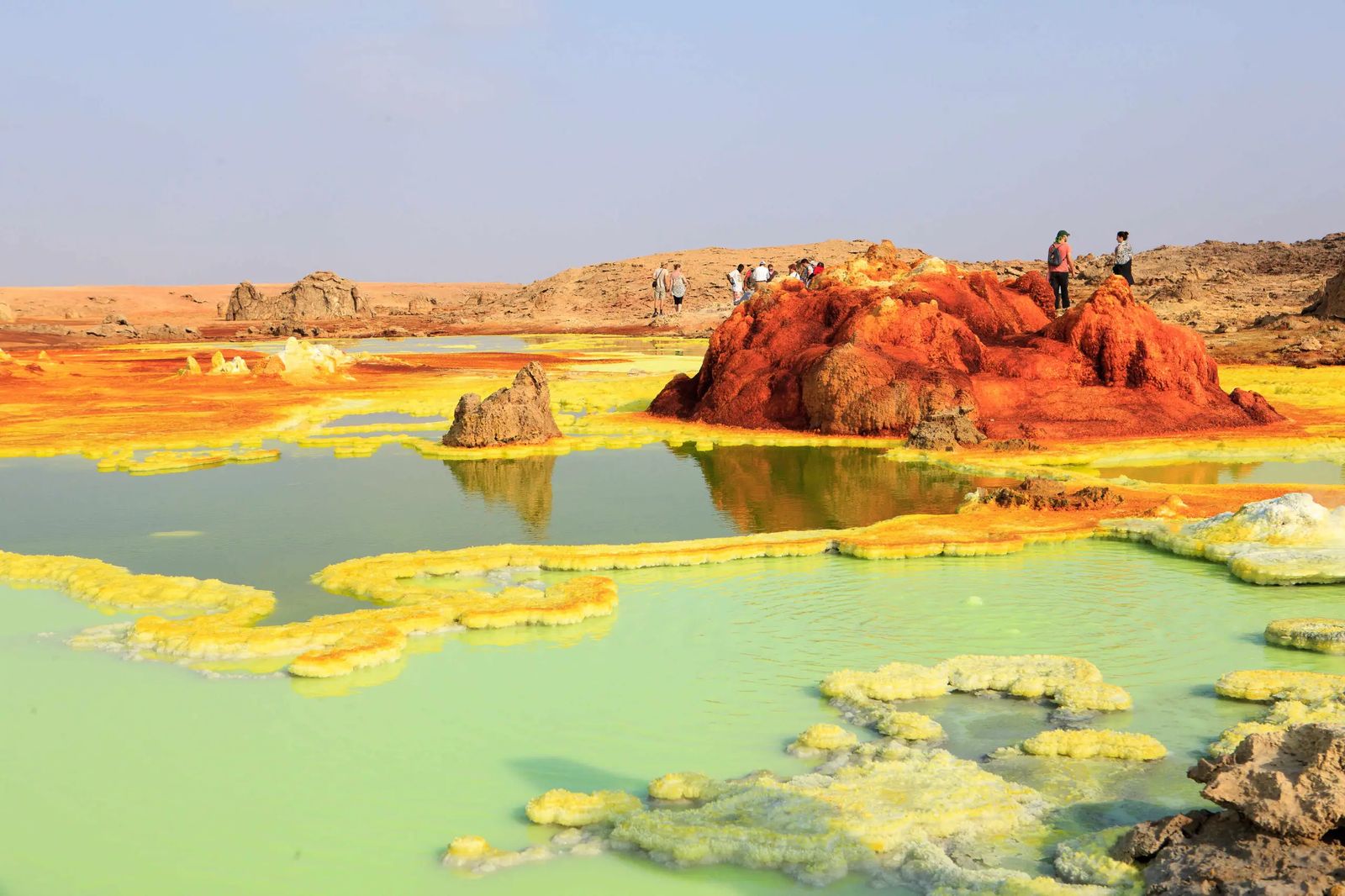
Return visitors can go bolder. The Omo Valley in the south offers close cultural encounters with communities that have kept distinct traditions, while the Danakil Depression delivers the surreal salt flats and the active lava lake of Erta Ale. These trips demand more time, tolerance for heat, and careful logistics. Our guide to trekking the Simien Mountains breaks down what this harder highland route actually involves.
How Does a Local Operator Make Your Ethiopia Trip Smoother?
A local operator absorbs the parts of an Ethiopia trip that are hardest to manage from abroad: domestic flight bookings, regional permits, reliable drivers, and guides who actually know each area. That coordination is the difference between a smooth itinerary and a string of stressful gaps.
Booking scattered pieces yourself often means chasing separate providers across regions with patchy communication. When a flight shifts or a road closes, you are the one improvising. Yenew handles those moving parts as a single plan, so a change in one place gets reworked into the rest of your schedule without you losing a day. Our team also pairs you with guides matched to your interests, whether that is early Christian history, highland wildlife, or the cultures of the south.
That local knowledge extends to timing and access. A good operator knows which festival dates are worth building around, which sites need permits arranged in advance, and how to sequence a route so you are not backtracking. If you are still weighing options, our overview of how to choose the right Ethiopia tour package walks through the questions worth asking before you commit.
Start Planning Your Route
Pick your travel window first, ideally somewhere in the October to February sweet spot, then decide whether a festival should anchor the dates. Once you have a rough window, sketch a northern loop if this is your first visit or a southern or Danakil route if it is not, and reach out to Yenew to turn that sketch into a costed, permit-ready itinerary. That single step removes most of the guesswork and lets you spend your energy on the trip itself rather than the logistics behind it.
Frequently asked questions
What is the best time of year to take an Ethiopia trip?
The dry season, roughly October to May, is the most reliable window. October through February suits trekking, northern historic sites, and major festivals, while the main rains fall in July and August.
Do I need a visa to visit Ethiopia?
Most international visitors need a visa. The simplest route is the official e-Visa applied for online before departure. Confirm current fees and validity on the government portal, since third-party sites are often out of date.
Is a yellow fever vaccination required for Ethiopia?
Proof of yellow fever vaccination is required for travelers aged 9 months or over arriving from countries with risk of transmission, or transiting more than 12 hours through such an airport, per the Ethiopian Public Health Institute.
How many days do I need for a first Ethiopia trip?
Plan for 8 to 12 days on a first visit. That is enough to cover the northern historic circuit, including Lalibela and Gondar, at a comfortable pace without spending every day in transit.
Should I book an Ethiopia trip through a local operator?
For most first-timers, yes. Domestic flights, permits, and reliable drivers are hard to arrange from abroad. A local operator coordinates the logistics and pairs you with guides who know each region.