Key takeaways
Awash National Park sits about 225 km east of Addis Ababa and covers roughly 827 square kilometers, established in 1966 as Ethiopia's first national park (Wikipedia, retrieved 2026-11-06).
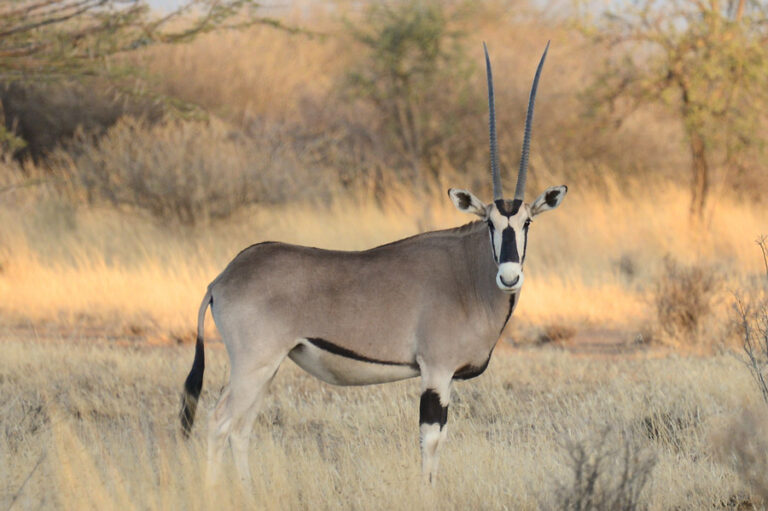
- Signature wildlife includes beisa oryx, greater and lesser kudu, Soemmerring's gazelle, warthog, and both hamadryas and olive baboons.
- The park records more than 450 bird species, making it one of Ethiopia's top lowland birding sites.
- Mount Fentale, a 2,007 m volcano that last erupted in 1820, anchors the park's dramatic volcanic scenery and nearby hot springs (Smithsonian GVP, retrieved 2026-11-06).
- The dry months from roughly October to March give the clearest roads and the easiest wildlife viewing.
Awash National Park is Ethiopia's oldest national park and one of the easiest Rift Valley safaris to reach from the capital. It sits about 225 km east of Addis Ababa, covers roughly 827 square kilometers of acacia savanna and volcanic terrain, and was established in 1966 (Wikipedia, retrieved 2026-11-06). Within a single visit you can watch oryx cross the plains, stand beside a roaring river gorge, and hike an active volcano. This guide covers where the park lies, what lives there, and how to plan a game drive that actually delivers.
Where Does Awash National Park Lie East of Addis Ababa?
Awash National Park spans about 827 square kilometers roughly 225 km east of Addis Ababa, at an altitude that mostly hovers around 900 meters (Wikipedia, retrieved 2026-11-06). That places it in the dry lowlands of the Great Rift Valley, a different world from the cool highland plateau around the capital.
The drive takes most travelers three to four hours on the paved road that heads toward Dire Dawa and Harar. Because the approach is straightforward, Awash works as a long day trip for the determined, though an overnight stay pays off. The park straddles the Awash River, which gives the reserve its name and its central landmark.
The terrain is open and flat in the south, rising toward volcanic hills in the north. Grasslands dotted with flat-topped acacia trees make spotting animals easy, since there is little dense forest to hide them. For a wider picture of how Awash fits into a self-driven or guided trip, Yenew's Ethiopia private tours can slot it into a custom route.
The Awash River Gorge and Its Powerful Waterfall
The park's scenic heart is the Awash Falls, where the river drops over a run of cataracts into a gorge roughly 50 meters deep near the southern boundary. The falls are a series of broad cascades rather than one tall plunge, and the sound carries well before you reach the viewpoint.
A short trail from the park's southern gate leads to overlooks above the water. Morning light hits the spray well, and the humid pockets along the gorge draw birds and the occasional troop of baboons down to drink. The river here also marks a natural dividing line in the landscape, with plains on one side and the gorge cutting a sharp seam through the volcanic rock.
If you are drawn to Ethiopia's water features, the country has grander drops elsewhere. The Blue Nile Falls near Bahir Dar are far larger in flood season. Awash earns its place through contrast: a lively river gorge set against bone-dry savanna, with wildlife grazing within sight of the falls.
What Wildlife Lives in Awash: Oryx, Kudu, Baboons and Birdlife?
Awash National Park records more than 81 mammal species and 453 bird species, including 6 found only in Ethiopia (Wikipedia, retrieved 2026-11-06). That mix of plains game and strong birdlife is what keeps the park on serious itineraries.
The signature mammal is the beisa oryx, a pale desert antelope with long straight horns that suits the dry plains perfectly. Alongside it you can expect greater and lesser kudu, the delicate Soemmerring's gazelle, the tiny Salt's dik-dik, warthog, and herds that move freely across the open grass. Predators such as leopard, cheetah, serval, and jackal are present, though they are shy and far harder to find.
Primates are a highlight. Large troops of hamadryas baboons, with their silver capes, share the park with the more common olive baboon and grivet monkeys. The contrast between these species in one reserve is unusual.
For birders, the lowland habitat delivers hornbills, bustards, rollers, and raptors across the plains, with riverine species near the gorge. Awash often appears on dedicated birding tours in Ethiopia for exactly this reason. If primates fascinate you, Ethiopia's highlands hold a very different relative, the gelada baboon of the Simien Mountains.
Fentale Volcano and Hot Springs Within the Park
The northern end of Awash National Park is dominated by Mount Fentale, a stratovolcano reaching 2,007 meters with a broad summit caldera, whose last confirmed eruption was in 1820 (Smithsonian Global Volcanism Program, retrieved 2026-11-06). Dark lava flows from past activity still streak the lower slopes.
Guided hikes climb toward the caldera rim, where the walls drop steeply into the crater. The ascent is hot and exposed, so an early start and plenty of water matter. The reward is a sweeping view over the Rift Valley floor and, on clear days, the park's plains spreading south.
At the foot of the volcano lie the Filwoha hot springs, where turquoise pools fed by geothermal water sit among doum palms. The springs are a popular stop to cool the pace of a safari, though swimming is not always advised given the temperatures. Together the volcano and springs show the geology that shaped the whole region, the same forces that created the wider Rift Valley lakes and the Danakil Depression farther northeast.
Best Time to Visit and Game-Drive Tips
The best time to visit Awash National Park is the dry season, roughly October through March, when firm roads and thinner vegetation make wildlife easier to spot. During the rains, black-cotton soil can turn tracks to mud and scatter animals across a greener, wetter landscape.
A few practical pointers improve any game drive here:
- Start early. The first hours after dawn are cooler, and animals are most active before the midday heat pushes them into shade.
- Hire a scout. Park regulations usually require an armed ranger or scout, who also knows where oryx and kudu have been moving.
- Use a high-clearance vehicle. Tracks are rough, and a 4x4 handles the volcanic rubble far better than a sedan.
- Carry water and sun protection. The lowlands get genuinely hot, and shade is scarce out on the plains.
- Combine the south and north. Spend the morning on the plains and at the falls, then push toward Fentale and the hot springs.
Because Awash is compact and close to Addis, it suits travelers watching a budget as well as those on premium trips. Yenew can shape either, and travelers planning the wider logistics should sort out their Ethiopia tourist visa before they fly.
Combining Awash With a Rift Valley Itinerary
Awash National Park works best as the opening or closing chapter of a Rift Valley route rather than a stop on its own. Its position east of Addis makes it a natural first night out of the city, after which many travelers loop south and west through the chain of Rift Valley lakes and parks.
A common pattern pairs Awash with the lakes south of the capital and continues toward Arba Minch and Nechisar National Park, where crocodiles, hippos, and more plains game await. From there, trips often press on to the cultural depth of the far south. The savanna wildlife of Awash sets up a strong contrast with the human landscapes of the Omo region.
Think of Awash as the wildlife anchor that balances Ethiopia's famous historical and cultural circuits. If you are routing a trip now, map Awash as your first two days out of Addis, confirm a ranger and a 4x4 through your operator, and then decide whether the lakes, the south, or the eastern road to Harar makes the most sense for the rest of your time. That single decision shapes the entire journey, so settle it before you book anything else.
Frequently asked questions
Where is Awash National Park located?
Awash National Park lies about 225 km east of Addis Ababa in Ethiopia's Rift Valley, straddling the Awash River. The drive from the capital takes roughly three to four hours on the main road toward Dire Dawa.
What animals can you see in Awash National Park?
Common sightings include beisa oryx, greater and lesser kudu, Soemmerring's gazelle, Salt's dik-dik, warthog, and large troops of hamadryas and olive baboons. The park also records more than 450 bird species.
Is there a waterfall in Awash National Park?
Yes. The Awash River drops over a series of cataracts into a gorge about 50 meters deep near the southern edge of the park. A viewpoint and short trail let you watch the falls up close.
When is the best time to visit Awash National Park?
The dry season, roughly October through March, is best. Roads stay firm, vegetation thins out, and animals gather near the river and water sources, which makes game drives more productive.
Can you climb Mount Fentale in the park?
Yes. Mount Fentale is a 2,007 m volcano with a large summit caldera, and guided hikes are possible. Many visitors pair the climb with a soak in the Filwoha hot springs at the park's northern end.