Key takeaways
- Arba Minch in Ethiopia sits on high ground between Lake Abaya and Lake Chamo, two of the largest Rift Valley lakes.
- Nechisar National Park, run by the Ethiopian Wildlife Conservation Authority, records several hundred bird species, including local endemics.
- Boat trips on Lake Chamo reach the crocodile market, one of Africa's densest concentrations of large Nile crocodiles.
- The Dorze villages above town add highland culture, weaving and false-banana farming to any Arba Minch visit.
- Arba Minch works best as the anchor for a wider southern Ethiopia and Omo Valley circuit.
Arba Minch Ethiopia is a highland town in the south of the country that sits between two large Rift Valley lakes and acts as the gateway to Nechisar National Park. Visitors come for crocodile-filled boat trips, zebra plains, weaver villages and some of the best lake views in East Africa.
The name Arba Minch means "forty springs" in Amharic, a nod to the groundwater that feeds the forest below town. Set in the highlands around 500 km south of Addis Ababa, it is warm, green and far quieter than the northern tourist trail. For many travellers it is the first real taste of southern Ethiopia.
Where does Arba Minch sit between two Rift Valley lakes?
Arba Minch Ethiopia perches on high ground that divides Lake Abaya from Lake Chamo, two of the largest lakes in the Ethiopian Rift Valley. Lake Abaya covers about 1,162 km² and reddens with suspended sediment, while Lake Chamo lies just to the south, separated by a ridge known locally as the Bridge of God.
The contrast between the two lakes is the signature view here. Lake Abaya runs a rusty brown from iron-rich runoff, and Lake Chamo stays a clearer blue-green. According to WorldAtlas, Lake Abaya sits at about 1,175 m, stretches some 60 km long and reaches depths of only around 13 m, which makes it shallow for its size (WorldAtlas, 2024).
The best vantage point is the terrace of the old Bekele Mola hotel and the nearby park viewpoint, where both lakes and the dividing isthmus fill the frame. Early morning light, before the haze builds, gives the sharpest colours.
What wildlife lives in Nechisar National Park and the Bridge of God?
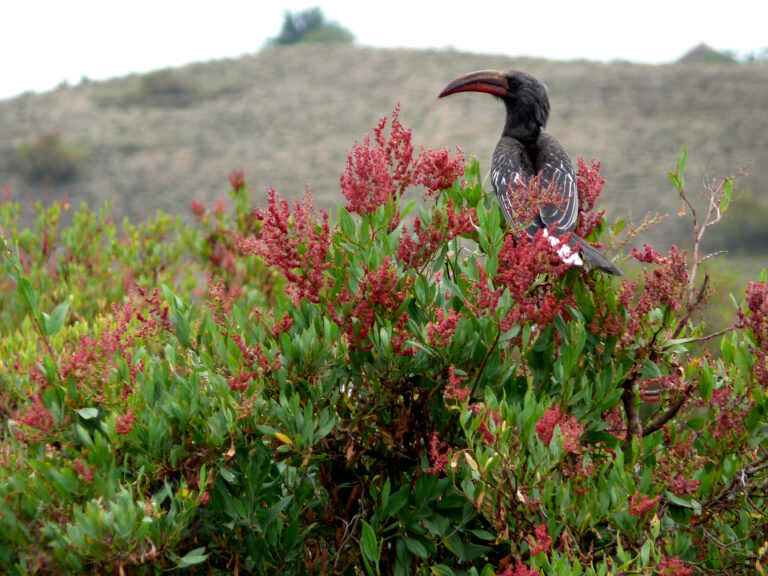
Nechisar National Park, run by the Ethiopian Wildlife Conservation Authority, records several hundred bird species and dozens of mammals, which makes it one of the richest small parks in southern Ethiopia. The park wraps around the eastern shores of both lakes and climbs onto the grass plains that give it its name.
"Nechisar" means "white grass," describing the pale savanna that shimmers across the central plain. Herds of Burchell's zebra, Grant's gazelle and greater kudu graze here, while Guenther's dik-dik dart through the scrub and Anubis baboons patrol the forest edge. The plains once held Swayne's hartebeest, a subspecies that has not been reliably sighted here in recent years, a reminder of how fragile these populations are.
The Bridge of God is the slender isthmus of high ground dividing Lake Abaya and Lake Chamo. The park road runs along this ridge, and the climb rewards you with both lakes falling away on either side. Birders rate the park highly: among its endemics are the wattled ibis, the thick-billed raven and the elusive Nechisar nightjar, a species so rare it was first described from a single wing.
Can you see crocodiles and hippos on Lake Chamo boat trips?
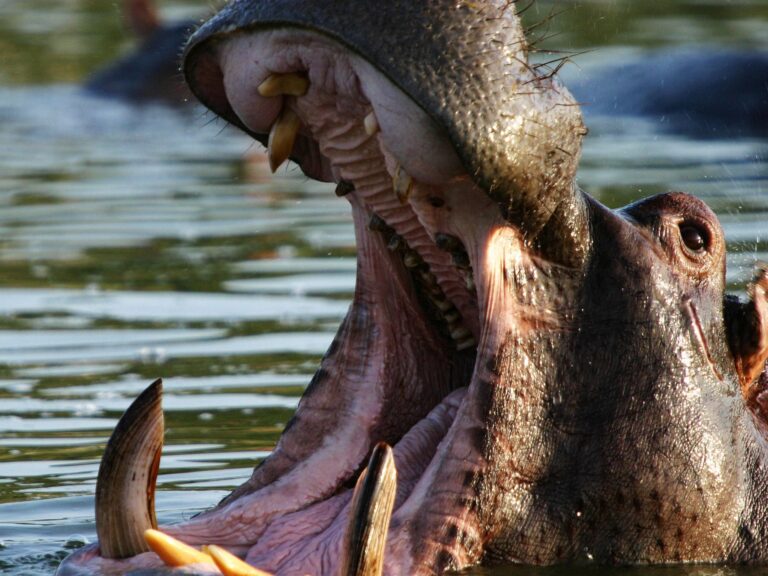
Yes. Boat trips on Lake Chamo are the headline activity in Arba Minch, carrying visitors to the famous crocodile market, a shallow bay where large Nile crocodiles haul out in plain view. Pods of hippo surface nearby, and pelicans, storks and fish eagles crowd the shoreline.
The crocodile market is a natural gathering spot rather than anything commercial. Dozens of crocodiles, some well over four metres, bask on the mudflats at the lake's northern end. The density here is among the highest anywhere in Africa, which is why wildlife documentary crews return to it again and again.
Trips usually launch in the morning, last two to three hours, and run in small motorboats with a local guide and park scout. Life jackets are standard, and the water stays calm in the early hours. Keep cameras ready from the moment you leave the jetty, because hippos often surface close to the boat before you reach the crocodile flats. For a sense of how these outings slot into a tailored trip, see our approach to Ethiopia private tours.
What are the Dorze villages and highland scenery nearby?
Above Arba Minch, the road climbs into the Guge Mountains to reach the Dorze villages, famous for their towering beehive-shaped bamboo houses and their skill at cotton weaving. The drive gains well over a thousand metres, trading lakeside heat for cool, misty highland air and terraced hillsides.
Dorze homes can stand several metres tall, built from a frame of bamboo and wrapped in enset, the false-banana plant that underpins local life. When termites gnaw at the base, the family simply lifts and moves the whole house, so older dwellings slowly shrink over the decades. Visitors watch weavers work backstrap looms, taste fresh kocho bread made from enset, and sample the local spirit, areke.
The views on the way up are reason enough to make the trip. From the ridge you look back down over Lake Abaya and the hazy plains of Nechisar far below. Many travellers combine a Dorze morning with an afternoon boat trip, a pairing that captures both the culture and the wildlife of the region in a single day.
How does Arba Minch anchor a southern Ethiopia trip?
Arba Minch is the natural hub for exploring southern Ethiopia, with road and air links that put the Omo Valley, the Rift Valley lakes and the Dorze highlands within easy reach. Most itineraries use the town as a two or three night base before pushing deeper south.
From here the road continues toward Konso and on to the tribal heartland of the lower Omo. Travellers heading that way often route through Jinka, the main gateway town; our Jinka, Ethiopia guide covers what to expect. Arba Minch Airport also connects to Addis Ababa, which makes it easy to fly in, explore the lakes, then continue overland without doubling back.
A typical southern loop spends the first day on Nechisar and the crocodile market, a second day with the Dorze and the Guge highlands, then moves on to Omo Valley communities. This is exactly the kind of multi-stop journey Yenew builds for international travellers, handling the boats, park permits, scouts and highland transfers so you can focus on the landscape rather than the logistics.
Set aside at least two full days for Arba Minch itself. Rush it and you will catch the crocodiles but miss the Dorze; skip the highlands and you lose the region's finest views. The town rewards travellers who give it time, and it sets the tone for everything that follows further south.
Frequently asked questions
Where is Arba Minch in Ethiopia?
Arba Minch lies in southern Ethiopia, roughly 500 km south of Addis Ababa by road. It sits on cool high ground between Lake Abaya and Lake Chamo in the Great Rift Valley.
What animals live in Nechisar National Park?
Nechisar shelters Burchell's zebra, Grant's gazelle, greater kudu, Guenther's dik-dik, baboons and warthogs, plus Nile crocodiles and hippos in Lake Chamo. The park also records several hundred bird species.
Is the Lake Chamo boat trip worth it?
Yes. The Lake Chamo boat trip reaches the crocodile market, where large Nile crocodiles bask in the open, alongside hippo pods and abundant waterbirds. It is the single most popular activity in Arba Minch.
How do you get to Arba Minch?
Most visitors drive from Addis Ababa, about 500 km on paved roads, or fly into Arba Minch Airport. The town then serves as a base for Nechisar, Dorze and the wider Omo Valley.
What is the Bridge of God in Nechisar?
The Bridge of God is a narrow isthmus of high ground that separates Lake Abaya and Lake Chamo. The ridge carries the road into Nechisar National Park and gives sweeping views over both lakes.