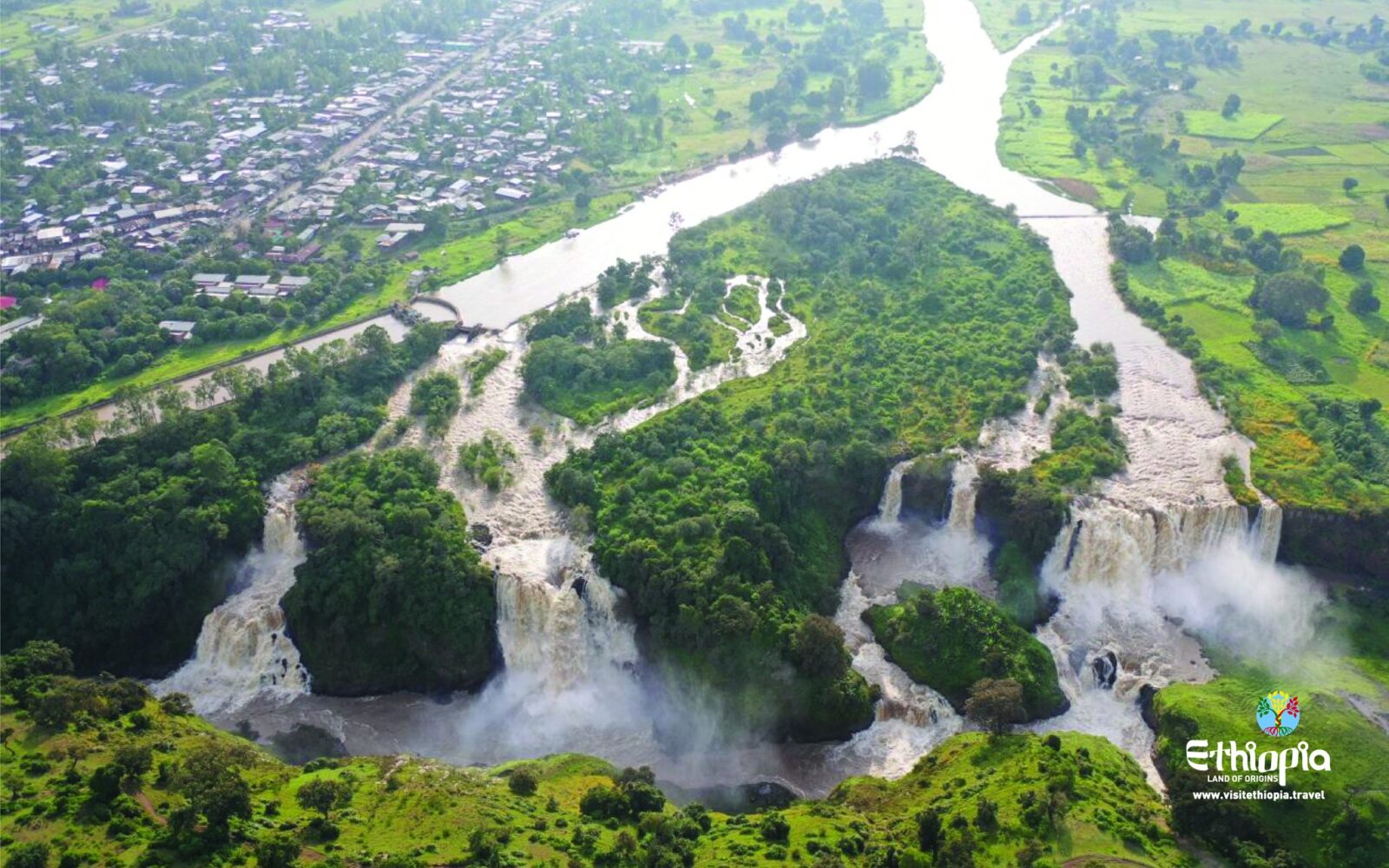
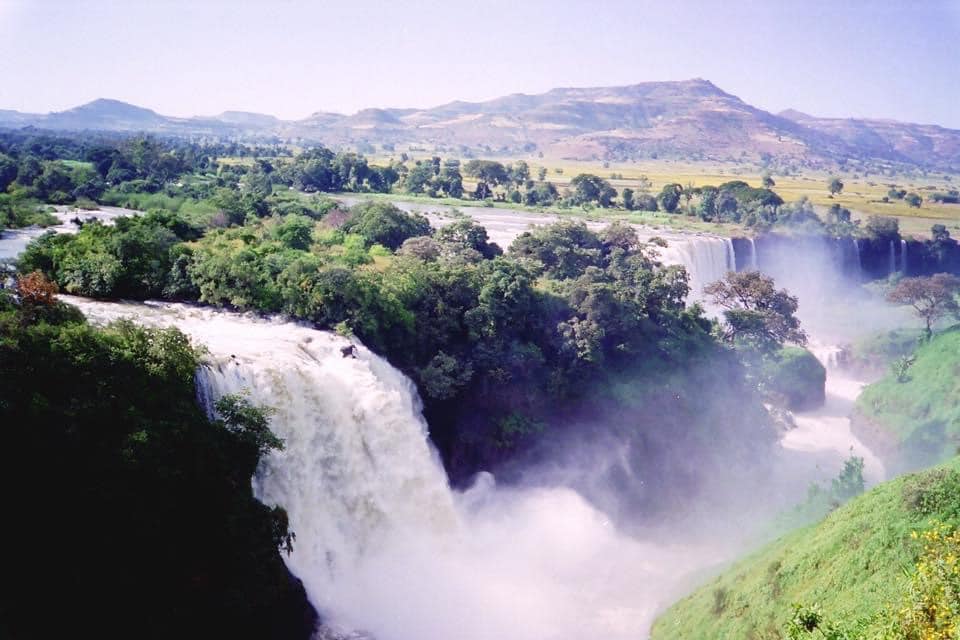
The Blue Nile Falls are one of the great natural sights of Ethiopia and among the greatest waterfalls in Africa. They are near the city of Bahir Dar in northern Ethiopia and are fed by water from Lake Tana, the source of the Blue Nile.
Locally they are called Tis Abay, which means ‘smoking water’ in Amharic. They are at their most impressive in the rainy season, from June to early September. The area is peaceful, with a tranquil atmosphere.
Visiting the falls
A footpath leads to a series of viewpoints. It crosses a stone bridge built by the Portuguese in 1626 and passes through riverside forest. Endemic birds live here, such as the white-cheeked turaco, black-winged lovebird and yellow-fronted parrot.
About the falls
The falls are estimated to be between 37 and 45 m high. They form four streams whose width varies greatly by season. In the dry season they can be a small trickle, and in the rainy season they are more than 400 m wide.
The falls are on the upper course of the Blue Nile, which starts in Lake Tana. It is one of the major sources of the Nile, the world’s longest river, which flows through Sudan and Egypt. The Blue Nile contributes up to 80% of the Nile’s flow.
History
The first known description of the falls is by the Portuguese doctor and adventurer João Bermudes in 1565. The Portuguese also built the Agam Dildi bridge in 1626, described as the oldest stone bridge in Ethiopia.
The 18th-century Scottish traveller James Bruce described the falls as ‘a magnificent sight, that ages, added to the greatest length of human life, would not efface or eradicate from my memory’.