Key takeaways
- Ethiopia adopted Christianity around 330 CE under King Ezana of Aksum, making it one of the oldest Christian states on earth.
- Lalibela holds 11 medieval rock-hewn churches carved from volcanic rock, inscribed by UNESCO in 1978.
- The main church regions are Lalibela, Tigray, Lake Tana, and Gondar, each with a distinct architectural style.
- Active churches are working places of worship, so modest dress and removing shoes at the threshold are expected.
Ethiopia's churches are among the oldest Christian sites anywhere in the world, dating back to a kingdom that adopted the faith around 330 CE. From the monolithic rock-hewn sanctuaries of Lalibela to cliff-top chapels in Tigray and island monasteries on Lake Tana, these are living places of worship rather than museum ruins. This guide explains the main types of Ethiopia churches, the four regions worth planning a trip around, how to behave respectfully when you visit, and how to fit them into a wider heritage tour.
Why Ethiopia's Churches Are Among the Oldest Christian Sites on Earth
Christianity reached Ethiopia through the Kingdom of Aksum, a powerful trading state on the Red Sea. Around 330 CE, King Ezana declared Christianity the state religion, placing Ethiopia alongside Armenia as one of the earliest nations to embrace the faith. That continuity has never been broken.
The result is the Ethiopian Orthodox Tewahedo Church, which counts an estimated 45 to 50 million members and stands as the largest of the Oriental Orthodox Churches, according to EBSCO Research Starters. Its clergy still chant in Ge'ez, an ancient liturgical language, and preserve manuscripts, crosses, and painting traditions that reach back more than a thousand years.
For travelers, this depth of history is the point. The churches you visit are not restored replicas. Priests live in the same complexes their predecessors served centuries ago, and pilgrims still walk long distances to reach them during festivals such as Timkat and Genna.
Rock-Hewn, Monolithic, and Monastery Churches Explained
Ethiopian churches fall into a few broad categories, and knowing the differences helps you plan what to see.
- Rock-hewn churches are carved directly into cliff faces or hillsides. Builders cut into existing stone rather than assembling blocks, so the church emerges from the mountain itself.
- Monolithic churches are a striking subset of the rock-hewn family. Workers excavated a trench on all four sides and then hollowed out a freestanding building from a single piece of bedrock. The Church of Saint George in Lalibela, shaped like a cross and sunk below ground level, is the most famous example.
- Monastery churches are usually built structures, often round, that sit within a walled compound of clergy quarters, libraries, and burial sites. Many occupy islands or remote hilltops that kept them safe through centuries of conflict.
Each type reflects a practical logic. Carving downward into rock produced buildings that were nearly impossible to burn or loot, while island and cliff locations protected treasures during periods of invasion.
Key Regions: Lalibela, Tigray, Lake Tana, and Gondar
Four regions in northern Ethiopia hold the highest concentration of significant churches. Most heritage itineraries connect two or more of them.
Lalibela
Lalibela is the centerpiece for most visitors. King Gebre Meskel Lalibela of the Zagwe dynasty commissioned its churches in the late 12th and early 13th centuries, intending the town to serve as a new Jerusalem for pilgrims who could no longer reach the Holy Land. There are 11 rock-hewn churches here, carved from red volcanic scoria and linked by tunnels and trenches. UNESCO inscribed the site in 1978 as one of the first African entries on the World Heritage List, and you can read the official description on the UNESCO World Heritage Centre listing.
Plan for at least two full days. The churches divide into two main clusters plus the freestanding Bete Giyorgis, and morning light is best for photography and for catching services.
Tigray
The Tigray region, in the far north, holds dozens of rock-hewn churches perched on cliffs and mesas. The Gheralta cluster is the best known, and reaching some of these chapels involves genuine climbing. Abuna Yemata Guh, cut into a sheer rock spire, requires a scramble up bare stone with the help of local guides. The reward is a small painted sanctuary with commanding desert views and a sense of near-total isolation.
Tigray suits travelers who want fewer crowds and more adventure. Physical fitness and a head for heights help considerably.
Lake Tana
Lake Tana, the source of the Blue Nile, is dotted with island and peninsula monasteries. Many date from the medieval period and hold vivid murals, illuminated manuscripts, and treasures moved here for safekeeping over the centuries. A boat trip from Bahir Dar reaches several of them, with the Zege Peninsula and its round churches among the most accessible.
The Lake Tana monasteries offer a gentler, water-based day of sightseeing. Some monasteries restrict entry for women, so ask your guide in advance which sites you can visit.
Gondar
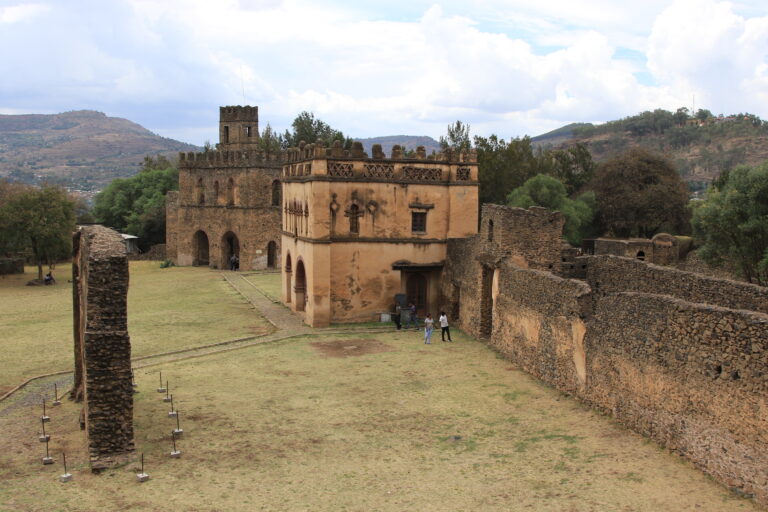
Gondar served as Ethiopia's imperial capital in the 17th century, and its royal enclosure, Fasil Ghebbi, sits behind a long stone wall that ringed the fortress-city. Within the wider city, the church of Debre Berhan Selassie is a highlight for its ceiling covered in rows of winged angel faces, one of the most photographed interiors in the country.
Gondar pairs naturally with Lake Tana, since Bahir Dar and Gondar sit within a few hours of each other by road.
Etiquette and Dress Code for Visiting Active Churches
These are working places of worship, and respectful behavior matters. A few simple habits will keep you welcome.
- Dress modestly. Cover your shoulders and knees. A scarf is useful for women, and long trousers or a long skirt are the safe default for everyone.
- Remove your shoes. You will be asked to take off footwear before entering a church or stepping onto sacred ground. Slip-on shoes and clean socks make this easier.
- Ask before photographing. Some priests welcome photos of the building and will pose with crosses or manuscripts, often for a small tip. Others prefer no photography during services. Always ask first.
- Mind the separations. Men and women often stand on different sides, and certain inner areas are reserved for clergy. Follow your guide's lead.
- Respect festival crowds. During Timkat, Genna, and Meskel, churches fill with worshippers. Keep to the edges, avoid blocking processions, and let pilgrims take priority.
A small offering left in the donation box is customary and helps maintain these sites.
How to Combine Church Visits Into a Heritage Tour
The four church regions sit along Ethiopia's classic northern circuit, which also takes in the Aksum stelae, Gondar's castles, and the dramatic scenery of the Simien Mountains. A common route runs from Bahir Dar and Lake Tana to Gondar, then on to Lalibela, with an add-on to Tigray for travelers with more time.
Distances are long and mountain roads are slow, so most visitors fly between the main hubs on domestic routes. Building in a rest day around Lalibela pays off, since the churches reward a slower pace and early starts.
A guided trip removes much of the friction. Local guides arrange church entry, explain the iconography, translate for priests, and time your visits around services and festivals. Gishabayethiopiatour builds these heritage circuits for international travelers, combining the northern churches with the culture and landscapes that surround them, and can tailor the balance of rock-hewn sites, monasteries, and imperial history to your interests.
If you want to see how a church-focused route fits into a longer trip, our guide on how to choose the right Ethiopia tour package walks through the trade-offs of duration, pacing, and season.
Start by deciding how many days you can give the north, then anchor your plan on Lalibela and add Gondar, Lake Tana, or Tigray outward from there. Reach out to a specialist operator early, because Lalibela accommodation and festival dates book out well ahead of the January pilgrimage season.
Frequently asked questions
How old are Ethiopia's churches?
Ethiopia embraced Christianity around 330 CE, and its most famous rock-hewn churches at Lalibela were carved in the 12th and 13th centuries. The tradition ranks among the oldest continuous Christian practices in the world.
How many rock-hewn churches are in Lalibela?
Lalibela has 11 medieval monolithic churches carved directly from red volcanic rock. UNESCO inscribed them as a World Heritage Site in 1978.
What should I wear when visiting an Ethiopian church?
Wear modest clothing that covers your shoulders and knees. You will be asked to remove your shoes before entering, so slip-on footwear is practical.
Can non-Christians visit Ethiopian Orthodox churches?
Yes. Visitors of any faith are generally welcome at active churches and monasteries, provided they dress modestly and respect ongoing services and worshippers.
Which regions should I visit to see the best churches?
Lalibela, Tigray, Lake Tana, and Gondar together offer the widest range. They are commonly linked on a northern Ethiopia heritage circuit.