Key takeaways
- Hadar in Ethiopia's Afar region is where Lucy, a 3.2-million-year-old Australopithecus afarensis skeleton, was found in 1974.
- There is no precise published road figure for the Addis Ababa to Hadar route, but plan on a long day's drive of several hundred kilometres northeast.
- Lucy's skeleton is about 40 percent complete, making her one of the most important early-human fossils ever recovered.
- Hadar sits inside the UNESCO-listed Lower Valley of the Awash, so it pairs naturally with a wider Afar or Danakil journey.
Hadar is the remote fossil site in Ethiopia's Afar region where Lucy, a 3.2-million-year-old human ancestor, was unearthed in 1974. If you are trying to pin down the Addis Ababa to Hadar road distance, the honest answer is that no precise highway figure is widely published, because the fossil fields sit well off the main road and are reached by guide and 4×4 rather than signposted route.
This guide explains why Hadar matters, where it lies, what the drive from Addis Ababa really looks like, and how to fold it into a larger Afar adventure.
Why Is Hadar World-Famous as the Site of Lucy?
Hadar earned global fame on November 24, 1974, when a team led by Donald Johanson and Maurice Taieb found a partial skeleton later cataloged as AL 288-1 (Smithsonian Human Origins). The fossil belongs to the species Australopithecus afarensis and is roughly 3.2 million years old.
Ethiopians know her as Dinknesh, which means "you are wonderful." The rest of the world knows her as Lucy, after a Beatles song played at the camp the night she was found. Her skeleton is about 40 percent complete, a remarkable share for a fossil of that age, and complete enough to show she walked upright.
That single detail reshaped the human story. Lucy demonstrated that our ancestors walked on two legs long before brain size expanded, pushing bipedalism back millions of years. Few individual fossils have changed a field so sharply.
Hadar kept giving after Lucy. In 1975 researchers uncovered the so-called First Family, a cluster of remains from more than a dozen individuals of the same species. A short distance south at Dikika, a team led by Zeresenay Alemseged recovered Selam in 2000, an infant skeleton so well preserved it is often called the most complete early-human child known from that deep in time.
Where Does Hadar Lie Within the Afar Region?
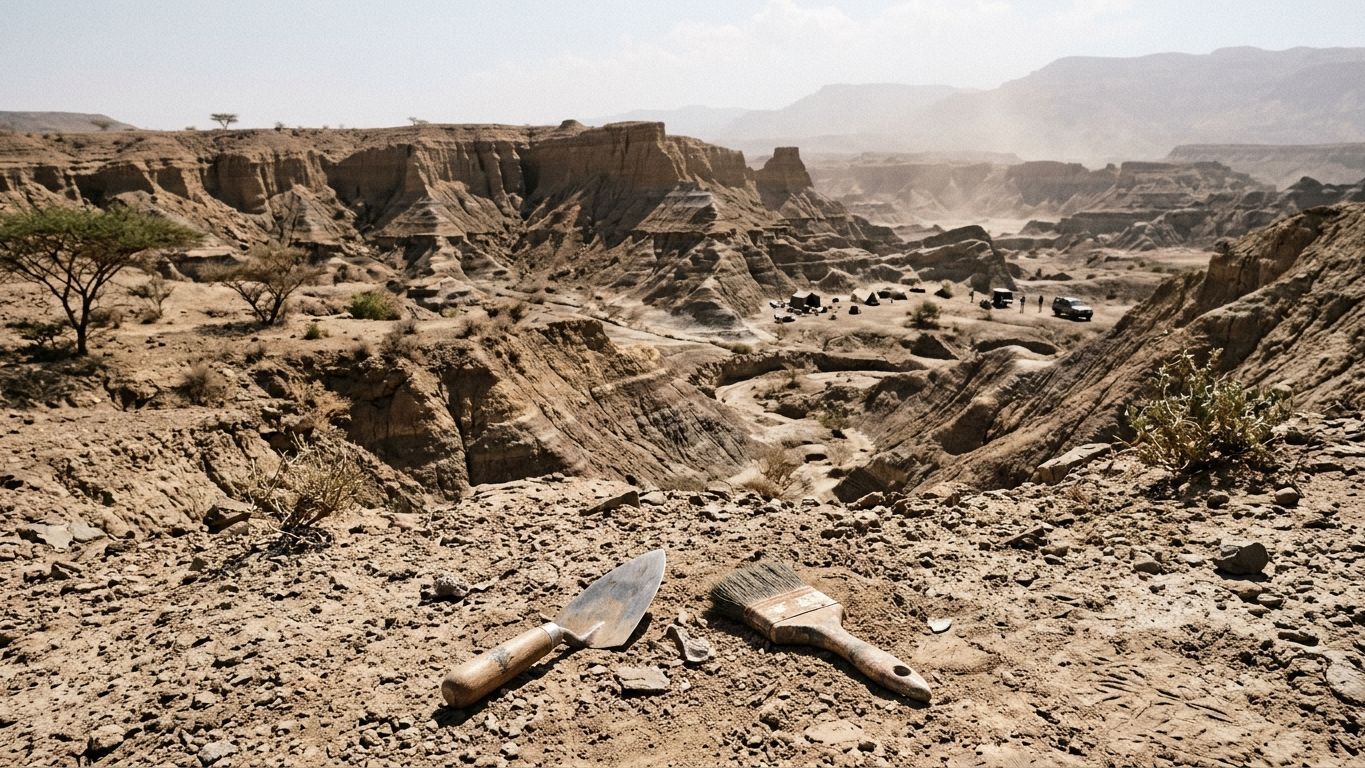
Hadar sits in the Afar region of northeastern Ethiopia, inside the Lower Awash Valley where the Awash River threads through arid lowland. This is one of the hottest, lowest corners of the country, a landscape of dust, scrub, and sediment that happens to preserve bone beautifully.
The wider area carries formal recognition. The Lower Valley of the Awash became a UNESCO World Heritage Site in 1980, listed for its exceptional density of hominin fossils (List of World Heritage Sites in Ethiopia). The protected zone covers the eroding badlands that have yielded remains spanning millions of years.
Geology did the hard work here. Layers of volcanic ash let scientists date each fossil precisely, while seasonal rains carve gullies that expose new bone every year. The same harsh conditions that make the Afar tough to travel are exactly what turned it into an open-air archive of human origins.
How Far Is Hadar From Addis Ababa by Road?
There is no reliable, published road distance for the exact drive from Addis Ababa to the Hadar fossil fields, so treat any single number with caution. The site is a research area off the sealed road network, and mapping tools often confuse the name with unrelated places. Plan on a long day of driving northeast across several hundred kilometres.
What does that mean in practice? You leave Addis Ababa, descend toward the Awash valley, and continue into the hot Afar lowlands. The terrain shifts from green highland to dry rift country as you lose altitude. Roads are reasonable on the main corridors and rough once you branch toward the fossil zones.
Because the final approach crosses unmarked tracks, almost everyone reaches Hadar with a local guide and a sturdy 4×4. Going solo is impractical and, in places, unsafe without someone who knows the routes and the communities. A planned itinerary removes the guesswork, and a company like Yenew can arrange the vehicle, permits, and Afar-speaking guides that make the trip feasible.
One honest note for planners: most visitors do not stand at Lucy's exact discovery pit, which is protected and undeveloped. They experience the story through the surrounding Afar landscape and the museum displays in the capital.
What Can Travelers See at the Paleoanthropology Sites?
The fossil beds themselves are working scientific ground, not a visitor center with ropes and plaques. What you gain at Hadar is the setting: the eroded sediment, the sweep of the Awash basin, and the sense of standing where the human lineage left its oldest clear footprints.
For the fossils up close, the National Museum of Ethiopia in Addis Ababa is the anchor. A cast of Lucy is displayed there, with the original bones kept secure, alongside exhibits that place her beside later discoveries. Many travelers pair a museum morning in the capital with the drive into Afar, so the story and the land connect.
If you want to understand what makes these finds so valuable, the context is the draw. Afar has produced an unusually long and continuous fossil record, letting scientists trace change across deep time in one region. Walking that ground, even without touching a fossil, is the experience most people remember.
Local Afar communities are part of the picture too. Their knowledge of the terrain, water, and seasons has supported fossil-hunting expeditions for decades, and respectful visits bring that living link into view.
How Do You Combine Hadar With a Danakil or Afar Journey?
The strongest reason to visit Hadar is that it rarely stands alone. It belongs to the same Afar region as the Danakil Depression, so a single journey can braid human origins together with some of the strangest geology on the planet.
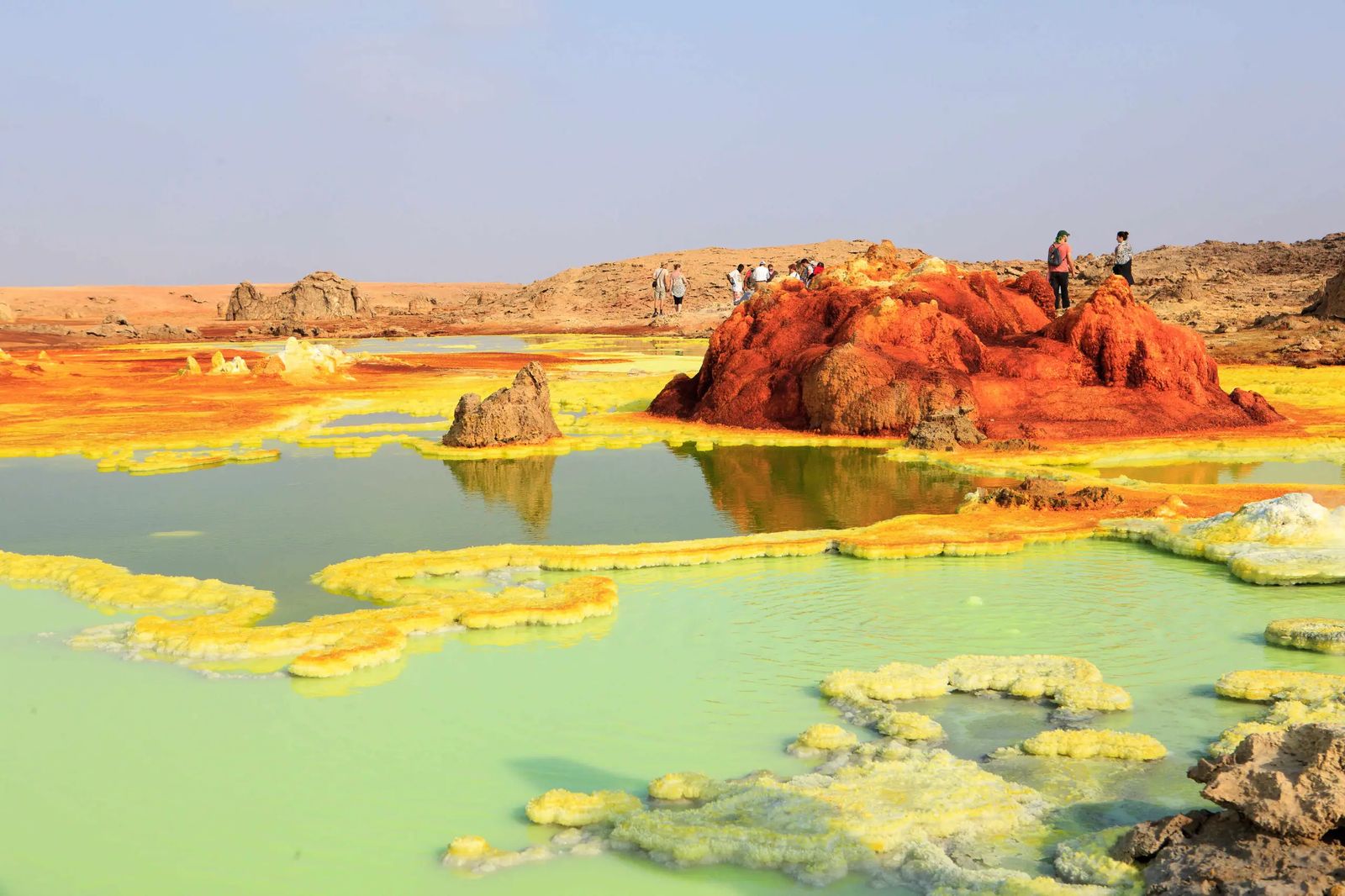
A natural arc runs from the capital into the lowlands, taking in the Awash valley fossil country and then pushing further toward Danakil's salt flats, sulfur springs, and lava lakes. For the full picture of that otherworldly terrain, see our guide to the Danakil Depression tour, which covers heat, logistics, and what to expect.
Timing matters more here than almost anywhere in Ethiopia. The Afar lowlands are punishing in the hot months, so cooler-season travel is strongly advised for comfort and safety. Water, a reliable vehicle, and local guides are not optional extras in this region, they are the baseline for a sane trip.
Frame the whole thing as one Afar expedition rather than two errands. You trade a long, hot drive for a rare combination: the cradle of humankind and a living volcanic desert, reached in the same loop. That pairing is what makes the effort worthwhile.
Planning Your Visit
Hadar rewards travelers who come for meaning rather than monuments. The honest takeaway is to set expectations before you book: you are visiting a landscape and a story, not a polished attraction, and the road details demand local know-how rather than a mapping app.
Your concrete next step is to settle the season and the logistics first. Decide on cooler-month dates, then line up a guided Afar itinerary that bundles Hadar with Danakil, the Awash valley, and a museum stop in Addis Ababa. Reach out to a specialist operator like Yenew to build that single loop, and you turn a confusing, remote target into one of the most memorable journeys Ethiopia offers.
Frequently asked questions
What is the road distance from Addis Ababa to Hadar?
No official road figure is widely published for Hadar itself, since the fossil fields are remote and off the main highway. Travelers should budget a long day's drive of several hundred kilometres northeast through the Awash valley, usually with a guide and a 4×4.
Can tourists actually visit the spot where Lucy was found?
The original fossil fields at Hadar are a protected research area and not a developed tourist attraction. Most travelers see Lucy's story at the National Museum in Addis Ababa, then view the Afar landscape where she was discovered.
How old is Lucy and what species was she?
Lucy is about 3.2 million years old and belongs to the species Australopithecus afarensis. She was discovered at Hadar in 1974 by a team led by Donald Johanson and Maurice Taieb.
Is Hadar close to the Danakil Depression?
Yes. Both Hadar and the Danakil Depression lie within Ethiopia's Afar region, so a paleoanthropology-minded traveler can frame both as parts of one Afar journey rather than separate trips.