Key takeaways
- Debre Libanos gedam lies northwest of Addis Ababa in the North Shewa Zone of Oromia, roughly a two hour drive from the capital.
- Saint Tekle Haymanot founded the monastery in the 13th century, and it became one of the most important spiritual centers in the Ethiopian Orthodox Tewahedo Church.
- The nearby stone Portuguese Bridge spans a highland gorge and is popularly linked to Portuguese missionaries, though many historians credit a 19th century Ethiopian builder.
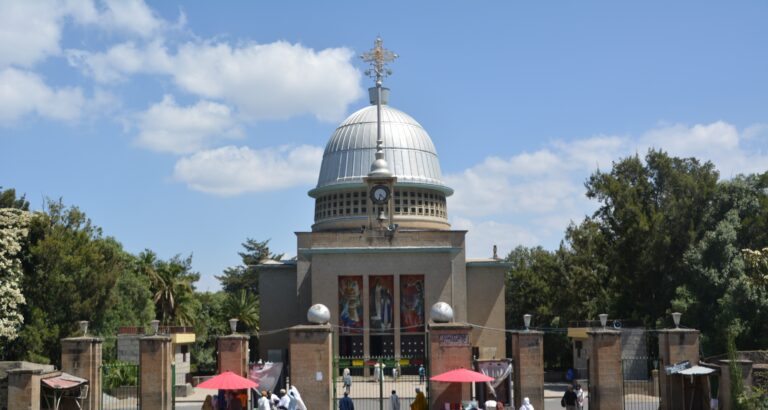
- The present church was built over Saint Tekle Haymanot's tomb in 1961 and is known for its stained glass windows.
- Most travelers visit on a single day trip from Addis Ababa, often combined with the gorge viewpoint and gelada monkey spotting.
Debre Libanos gedam sits northwest of Addis Ababa in the North Shewa Zone of the Oromia Region, roughly a two hour drive from the capital (Owen Abroad). It is one of the most important monasteries in the Ethiopian Orthodox Tewahedo Church, set on a terrace between a high cliff and a river gorge. This guide covers the location, the founding story, the famous Portuguese Bridge, the church interior and the photo highlights, plus practical advice for visiting on a day trip.
The monastery rewards the traveler who wants history and landscape in one stop. You get a living religious community, a dramatic highland setting and a short walk to a centuries-old looking bridge, all within an easy outing from the city.
Where Is Debre Libanos Gedam Located?
Debre Libanos is in the North Shewa Zone of the Oromia Region, lying northwest of Addis Ababa (Owen Abroad). The monastery complex sits on a natural terrace between a cliff and the gorge of a tributary of the Abbay, the Blue Nile. The drive from the capital generally takes a little over two hours on the paved road that heads north toward Bahir Dar.
The turnoff to the monastery is a short distance off the main highway, so the site is easy to reach by private vehicle. Many visitors fold it into a broader northern route. If you are weighing a longer push on the same road, our guide to day trips from Addis Ababa to Bahir Dar explains what is realistic in a day and what needs an overnight.
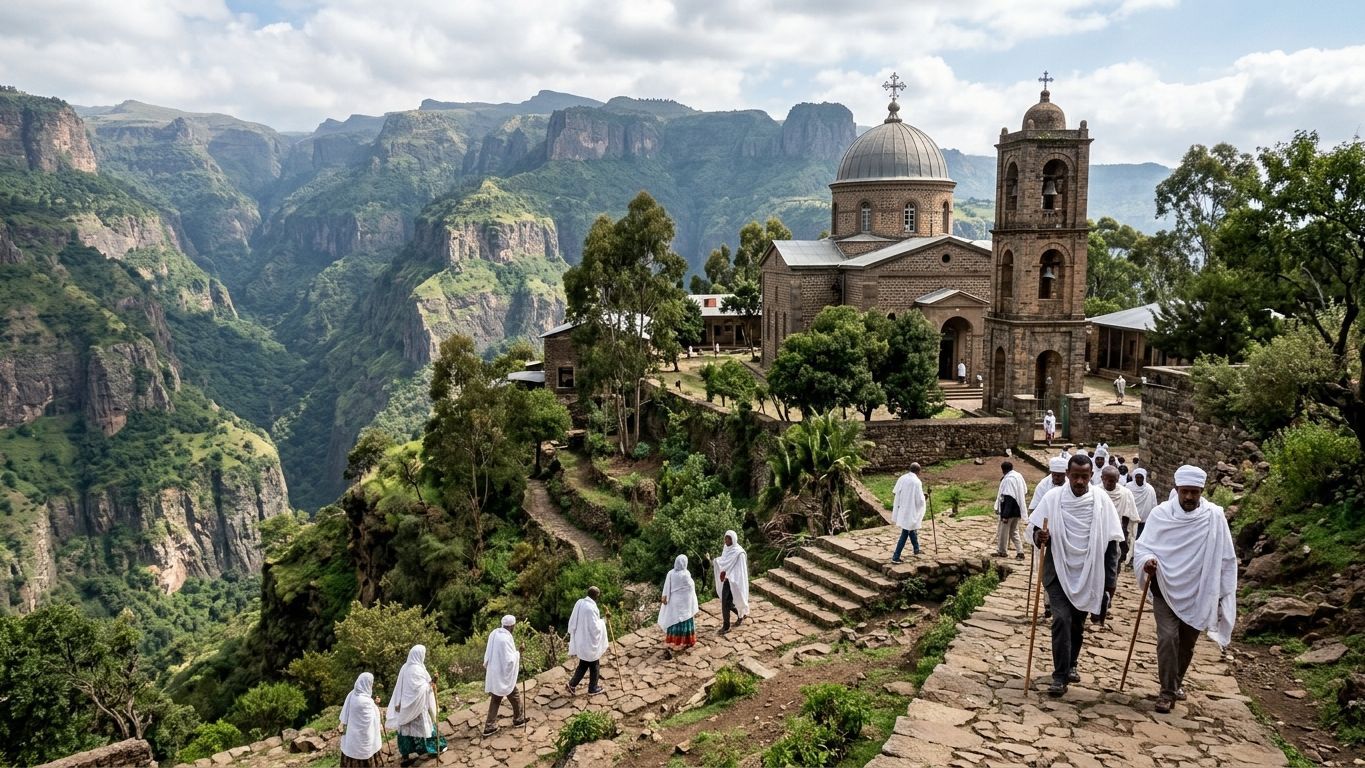
The setting is the first thing most people notice. The highlands open into a deep gorge, and the monastery clings to the edge of it. On a clear morning the view across the canyon is the kind of scene that makes the two hour drive feel short.
Who Founded the Monastery and Why Does It Matter?
Saint Tekle Haymanot founded Debre Libanos in the 13th century (Owen Abroad). He was one of the most revered monastic saints in Ethiopian Christianity, and tradition holds that he prayed for years in a cave above the present site. That cave is still a point of pilgrimage, and the spring near it draws worshippers who believe its water carries blessing.
The monastery grew into a spiritual powerhouse. Its chief abbot, titled the Ichege, became the second most powerful figure in the Ethiopian Church after the Abuna, the head bishop (Owen Abroad). For centuries, decisions that shaped the national church ran through this community on the cliff.
Debre Libanos also carries a heavy modern memory. During the Italian occupation in the late 1930s, occupying forces destroyed the earlier church and killed a large number of monks, deacons and pilgrims in a massacre that remains one of the darkest episodes in the site's history. Accounts of the death toll vary widely between official records and later historical research, so the monastery is remembered today as a place of martyrdom as much as a place of prayer.
That weight is part of why the monastery feels different from a simple sightseeing stop. People come to pray, to remember and to be baptized, and visitors share the space with them. A respectful, quiet presence goes a long way here.
What Is the Story Behind the Portuguese Bridge?
A short walk from the monastery leads to the stone arch known as the Portuguese Bridge, spanning a cleft in the highland rock. The popular name links it to Portuguese missionaries who reached this part of Ethiopia in the 16th century. Many historians, however, attribute the structure to a 19th century Ethiopian builder working in a Portuguese architectural style, so the name reflects legend as much as record.
Whatever its exact origin, the bridge is the photographic heart of a visit. Water runs beneath it in the rainy months and falls away into the gorge, and the view from the surrounding rocks stretches far across the canyon. The short cliffside walk also brings you close to the local wildlife.
Gelada monkeys often graze on the grassy ledges near the bridge, and they are remarkably relaxed around people. These highland primates, found only in Ethiopia, are a reliable photo subject here. They are one of the easiest wildlife encounters to pair with a cultural site anywhere near the capital.
What Does the Church Look Like Inside?
The church you see today is not the ancient original. Emperor Haile Selassie had the present domed church built over Saint Tekle Haymanot's tomb in 1961, after the earlier building was destroyed. What it lacks in age it makes up for in color and light.
Large stained glass windows are the standout feature. They wash the interior in shifting color through the day and tell scenes from scripture and Ethiopian Christian tradition. Combined with religious paintings and the quiet movement of priests in white robes, the interior is one of the most photogenic church spaces near Addis Ababa.
Photo Highlights to Look For
When people search for Debre Libanos Orthodox church photos, a handful of scenes come up again and again. These are the frames worth slowing down for:
- The domed church facade framed by the cliff behind it, best in early light.
- Stained glass windows glowing from inside, shot without flash.
- The Portuguese Bridge arch with the gorge falling away behind it.
- Gelada monkeys on the grassy ledges near the viewpoint.
- Priests and pilgrims in traditional white netela shawls, photographed only with consent.
A simple rule keeps everyone comfortable. Outside, photograph freely. Inside the church, and with any individual worshipper, ask first, especially during services.
How Do You Visit as a Day Trip?
Most travelers see Debre Libanos on a single day trip from Addis Ababa. An early start gets you to the monastery before the midday haze, leaving time for the church, the bridge walk and the gorge viewpoint before the drive back. The round trip comfortably fits into one day with a relaxed pace.
A typical visit runs in this order:
- Drive north from Addis Ababa, roughly two hours, watching the landscape climb into open highland.
- Visit the monastery and church, ideally with a guide who can explain the paintings and the history.
- Walk out to the Portuguese Bridge and the gorge viewpoint, watching for gelada monkeys along the way.
- Pause for lunch at one of the lodges perched on the canyon rim, several of which have panoramic terraces.
- Return to the city in the afternoon.
Come prepared for a sacred site at altitude. Dress modestly with shoulders and knees covered, carry a scarf to cover your head inside the church, and wear shoes that handle uneven ground near the bridge. A local guide is genuinely useful here, both for the history and for navigating the etiquette of a working monastery.
If you would rather not arrange the logistics yourself, a guided outing removes the guesswork around transport, timing and access. At Yenew we build Debre Libanos into day trips and longer cultural routes, so you spend your time on the cliff rather than on arrangements. You can see how our wider program fits together in our guide to Ethiopia tours and how to book.
Plan to pair Debre Libanos with the right season and the right companions. A clear highland morning, a knowledgeable guide and an unhurried pace turn a short drive from Addis Ababa into one of the most memorable days of an Ethiopian trip. Book it early in your itinerary, while your energy for walking the gorge rim is still high.
Frequently asked questions
Where is Debre Libanos gedam located?
Debre Libanos is in the North Shewa Zone of the Oromia Region, northwest of Addis Ababa. By road it is roughly a two hour drive from the capital along the route toward Bahir Dar.
Can you take photos inside the church at Debre Libanos?
Photography of the exterior, the gorge and the Portuguese Bridge is generally welcome. Inside the church, ask your guide first, as rules on photographing worshippers, paintings and services vary and are strictest during Mass.
Who founded Debre Libanos monastery?
Saint Tekle Haymanot, a revered Ethiopian monk and saint, founded the monastery in the 13th century. He is said to have lived and prayed in a cave above the present site for many years.
Is Debre Libanos worth a day trip from Addis Ababa?
Yes. The drive, the cliff setting, the monastery, the Portuguese Bridge and the chance to see gelada monkeys make it one of the most rewarding single day outings from Addis Ababa.
What should women and men wear to visit the monastery?
Dress modestly. Cover shoulders and knees, and bring a scarf to cover your head inside the church. Comfortable shoes help on the uneven paths near the bridge and gorge.