Key takeaways
- Ziquala Abo is an Ethiopian Orthodox monastery set beside a crater lake atop Mount Zuquala, an extinct volcano south of Addis Ababa.
- The monastery is dedicated to Saint Gebre Menfes Kidus (Abbo), who is traditionally said to have founded it in the volcano's crater.
- The main annual pilgrimage falls on Tikimt 5 in the Ethiopian calendar, which lands on October 15 (October 16 in a leap year).
- The fifth day of every Ethiopian month is dedicated to Abbo, so smaller gatherings happen monthly, not only once a year.
- Most visitors reach the summit as a day trip from Bishoftu (Debre Zeit) or Addis Ababa by 4x4, with a short walk to the crater rim.
Ziquala Abo is an Ethiopian Orthodox monastery that sits on the rim of a crater lake, high on an extinct volcano south of Addis Ababa. Pilgrims climb here to honour Saint Gebre Menfes Kidus, drink the holy lake water, and pray at one of the oldest holy mountains in the central highlands. This guide covers the site, its history, the pilgrimage calendar, and how to plan a visit.
The mountain carries two identities at once. It is a geological landmark rising from the Rift Valley floor, and it is a living centre of faith where monks and nuns still keep the daily cycle of prayer. Many travellers who come for the view leave remembering the pilgrims instead.
Where Mount Zuquala Rises Above the Rift Valley
Mount Zuquala is an extinct volcano that stands roughly 3,000 metres above sea level, lifting several hundred metres above the surrounding plain south of Addis Ababa. The cone is visible for miles across the flat farmland of the central Rift Valley, which is part of why it became a sacred landmark long before modern roads reached it.
The slopes carry one of the better patches of highland forest in the region. Juniper and other native trees ring the upper mountain, and the area is recognised for its birdlife and its value as a protected forest. That green cap is unusual in a landscape that is otherwise dry and heavily farmed.
For context on the wider volcanic lake country at the mountain's feet, the lakeside town of Bishoftu sits among its own crater lakes just to the north.
The Crater Lake and Its Sacred Significance
At the summit, the old crater holds a near-circular lake that pilgrims call Dembel, or Hora Dembel. The water is treated as holy. People carry it home in bottles and jerry cans, splash it on themselves for healing, and have it blessed by the monastery's priests rather than swimming in it.
The lake gives the mountain much of its spiritual weight. In Ethiopian Orthodox tradition, a saint's chosen place of prayer becomes charged with blessing, and the crater is understood as the spot where Abbo lived in extreme asceticism. The still water inside a volcanic bowl, ringed by forest, reinforces the sense of a set-apart place.
The mountain is also shared ground. The closing of Erecha, the thanksgiving ceremony of the Oromo people, is held here, so the summit draws both Christian pilgrims and Oromo worshippers around the same season.
Debre Libanos Zuquala Abo Monastery History
The monastery is dedicated to Saint Gebre Menfes Kidus, known across Ethiopia as Abbo. Tradition holds that he came from Egypt and founded the monastery inside the extinct volcano, choosing the crater as the place for a life of prayer and fasting (Ethiopian Orthodox Tewahedo Church).
According to that tradition, Abbo received a great covenant from God on Tikimt 5, the date that still anchors the yearly pilgrimage. The saint is remembered for an austerity so extreme that stories describe him living without clothing, food, or water for long stretches, accompanied by wild animals.
The community on the mountain has endured through hard history, including destruction during the sixteenth-century wars and later rebuilding under imperial patronage. Today it remains an active monastery with resident monks and nuns who maintain the churches and welcome pilgrims. For a sense of how a major highland monastery operates and looks, the Debre Libanos Monastery guide offers a useful comparison from the same Orthodox tradition.
The Annual Pilgrimage and Feast Days
The main pilgrimage to Ziquala Abo falls on Tikimt 5 in the Ethiopian calendar. In the Gregorian calendar that lands on October 15 most years, and October 16 in a leap year. On that day the forest tracks fill with worshippers in white, many of whom have walked or driven through the night to reach the summit by dawn.
Abbo is not honoured only once a year. The fifth day of every month in the Ethiopian calendar is dedicated to the saint, so the mountain sees smaller monthly gatherings as well. If you cannot time a visit to the October feast, a monthly commemoration still shows the site as a living place of devotion.
The October celebration is vivid. Expect chanting, processions, drums, incense, and crowds pressing toward the crater lake for its blessed water. It coincides with the end of the rains, when the highlands are green, which makes it one of the more photogenic religious events in the region.
Hiking or Driving to the Summit
Most visitors reach the top by vehicle. A rough track climbs from the base of the mountain through the forest to a parking area near the crater, and a sturdy 4x4 handles it far better than a low car, especially after rain. From the parking area it is a short, easy walk to the crater rim, the lake, and the monastery buildings.
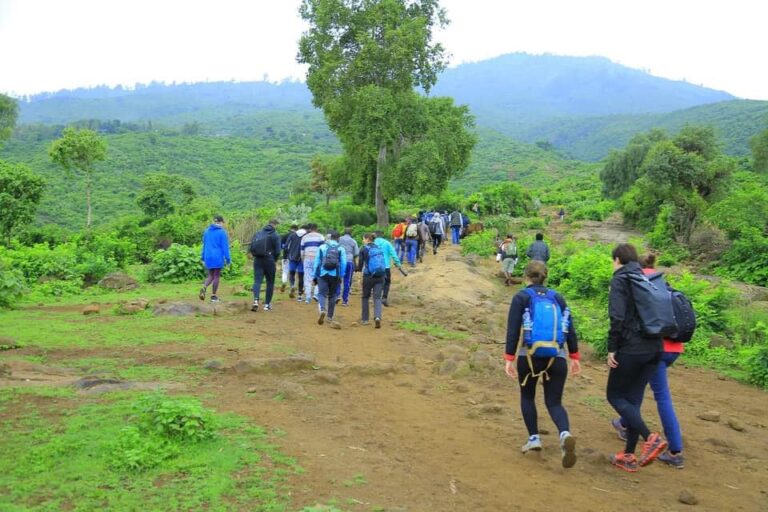
Walkers can go up on foot instead, which is how most pilgrims do it. The climb is steady rather than technical, but the altitude near 3,000 metres and the loose, sometimes muddy surface make good shoes and a slow pace worthwhile. Allow a couple of unhurried hours if you walk, and carry water, sun protection, and a layer for the cooler, breezy summit.
Whichever way you go up, treat the whole mountain as a holy site once you pass the forest edge. Local guides can read the etiquette for you, point out the churches, and explain which areas are open to women or to non-Orthodox visitors on a given day.
Planning a Visit From Debre Zeit or Addis Ababa
Ziquala works well as a day trip. The mountain sits roughly 50 kilometres south of Addis Ababa, with the lakeside town of Bishoftu, also called Debre Zeit, as the natural launch point closer still. From either base you can reach the summit, spend time at the crater, and return the same day.
The practical weak point is the final climb, not the main road, so the vehicle matters more than the distance. Book a 4x4 with a driver who knows the track, start early to beat both the midday sun and the afternoon cloud, and build in buffer time if you visit during or just after the rains.
A local operator removes most of the friction here, from permits and a knowledgeable guide to a vehicle that can actually make the ascent. If you want the mountain folded into a wider route through the central highlands, Yenew builds trips around sites like this through its custom private tours, which is the simplest way to pair Ziquala with Bishoftu's crater lakes or a run on toward the Rift Valley.
The next step is easy: pick your date, lean toward the October 15 feast if the crowds and colour appeal to you, and lock in a guide and 4x4 before you commit to the summit track.
Frequently asked questions
What is Ziquala Abo?
Ziquala Abo is an Ethiopian Orthodox Tewahedo monastery on Mount Zuquala, an extinct volcano south of Addis Ababa. It sits beside a sacred crater lake and is dedicated to Saint Gebre Menfes Kidus, known locally as Abbo.
When is the Zuquala Abo pilgrimage?
The main pilgrimage is on Tikimt 5 in the Ethiopian calendar, which falls on October 15 most years and October 16 in a leap year. The fifth day of every Ethiopian month is also dedicated to Abbo.
How do you get to Mount Zuquala?
Most travellers drive from Bishoftu (Debre Zeit) or Addis Ababa, then take a rough mountain track to the summit by 4x4. A short walk leads from the parking area to the crater rim and the monastery.
Can non-Orthodox visitors enter the monastery?
Respectful visitors are generally welcome at the site and the crater lake. Dress modestly, remove shoes where asked, and follow a guide's lead on which church areas are open to non-Orthodox or women.
Is Lake Dembel safe to swim in?
The crater lake, Dembel, is considered holy water by pilgrims, who collect and bless it rather than swim. Treat it as a sacred site and ask your guide before approaching or touching the water.