Key takeaways
- A 2-day Danakil tour covers either Dallol and the salt flats or Erta Ale, but rarely both in any depth.
- A 3 days Danakil Depression tour is the standard choice because it fits Dallol, the salt flats and the Erta Ale overnight climb.
- A 4-day itinerary adds buffer time, a slower pace and a second night that improves your odds of good volcanic activity.
- Erta Ale no longer has a persistent lava lake, so judge an itinerary by its access and timing rather than any lava guarantee.
- Heat is the main constraint: plan for extreme temperatures, early starts and a guided vehicle with a support crew.
Three days is the length most travelers should book for a Danakil Depression tour, because it fits the two landmark zones, Dallol with the salt flats and the Erta Ale volcano, without a punishing pace. A 3 days Danakil Depression tour is the standard package for that reason, while 2-day trips trade depth for speed and 4-day trips add comfort and better odds of strong volcanic activity. This guide compares each length, shows what you actually get to see, and helps you match a package to your time and budget.
The Danakil sits in Ethiopia's Afar region, one of the lowest and hottest places on the planet. Planning here is really about two things: distance between sights and heat. Get those right and the trip is unforgettable.
What a 2-day Danakil Depression tour covers
A Danakil Depression tour 2 days long is a focused trip that realistically covers one of the two main zones, not both. Operators usually split 2-day trips into a Dallol route or an Erta Ale route. The Dallol version takes you to the hydrothermal field and the salt flats of Lake Asale. The Erta Ale version drives you to the volcano for the overnight climb and returns the next day.
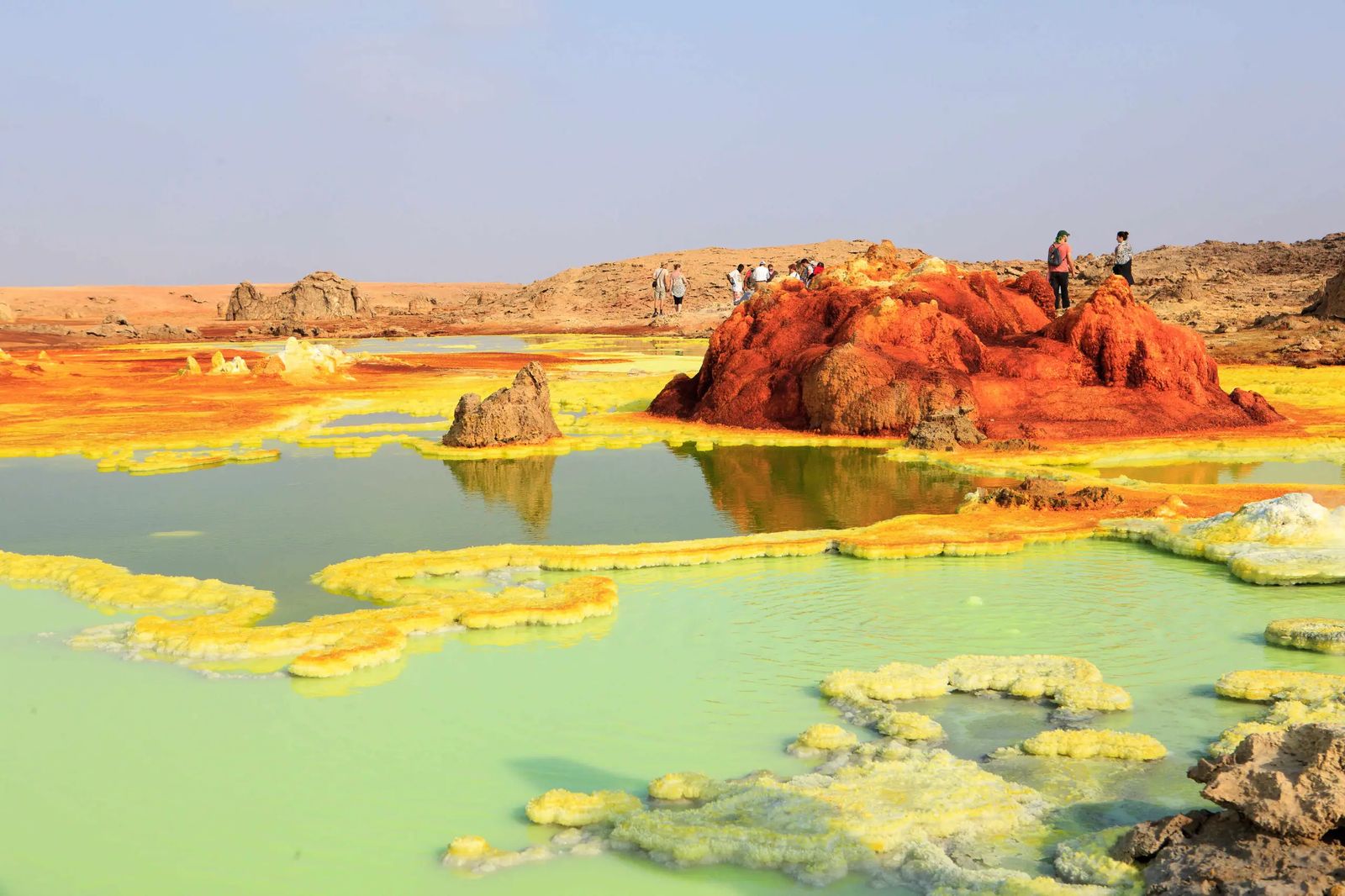
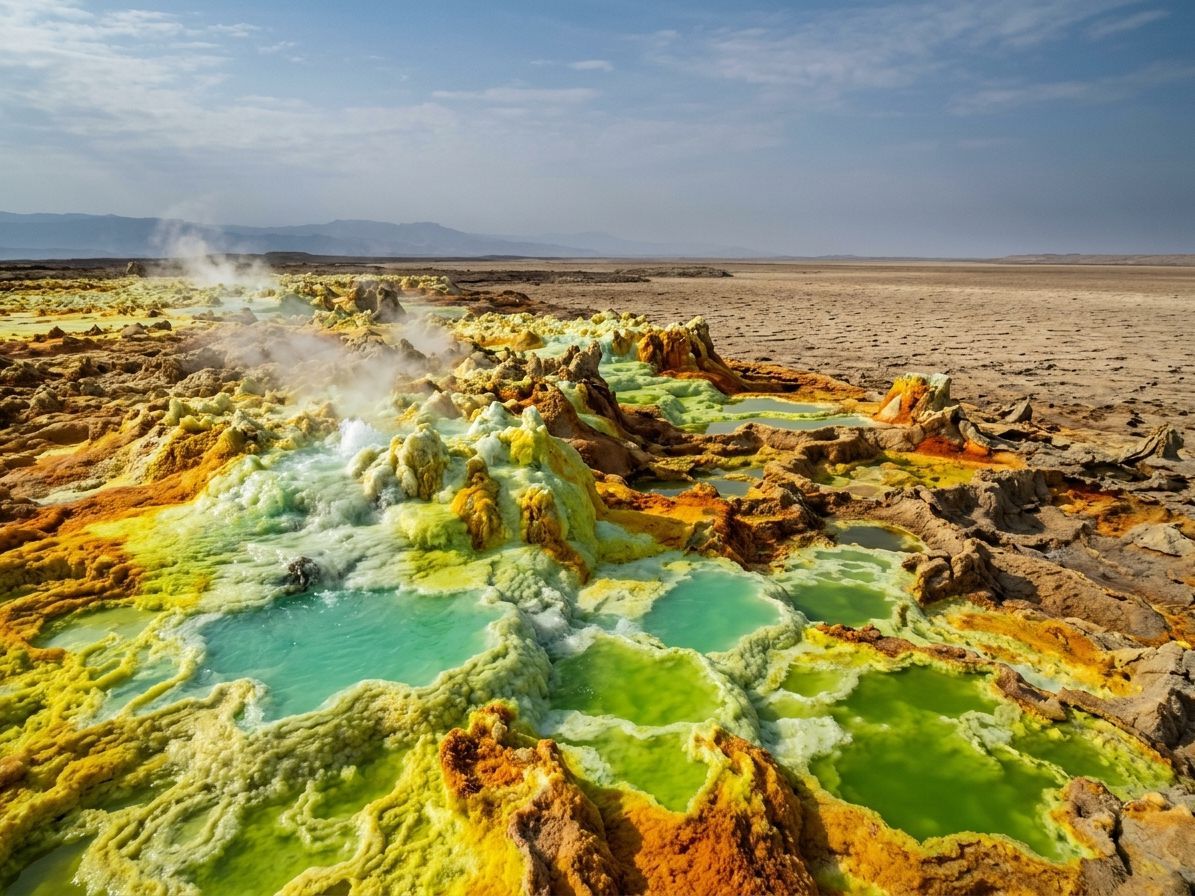
Dallol is worth the trip on its own. It sits at 48 meters below sea level, the lowest subaerial volcano on land, with acid brine pools reaching temperatures above 100 degrees Celsius, according to the specialist monitoring site Volcano Live. The result is a field of yellow, green and orange mineral terraces unlike anywhere else.
Pick the 2-day option if your Ethiopia itinerary is tight and you would rather see one zone properly than rush both. Many travelers pair it with other regions covered in our Ethiopia travel packages to make the long drive worthwhile.
Why a 3 days Danakil Depression tour is the standard choice
A 3 days Danakil Depression tour is the most booked option because it fits all three signature experiences at a workable pace: Dallol, the salt flats, and the overnight Erta Ale climb. The extra day removes the choice a 2-day trip forces on you. Instead of picking one zone, you see the hydrothermal field, watch the Afar salt caravans on Lake Asale, and still have the Erta Ale ascent built into the schedule.
That balance is why the 3-day package dominates the market. It is long enough to absorb the heat routine of early starts and midday rest, and short enough to fit into a wider Ethiopia trip.
Erta Ale and the lava question
Erta Ale is a shield volcano with a summit around 613 meters, and its caldera has drawn visitors for its lava activity for decades. One point matters when you compare packages: the persistent lava lake that existed for years is no longer continuously active, per Volcano Live. Today visitors may see a glowing caldera, small vents, or occasional flows, and what you witness varies from trip to trip. Judge an itinerary by its access and timing rather than by any lava guarantee.
A typical day-by-day breakdown
Most itineraries follow a similar rhythm, adjusted for length. Here is how a standard 3-day trip usually runs.
- Day 1: Drive and Dallol. Depart Mekele, descend into the depression, and reach the Dallol area in the afternoon. Explore the mineral terraces, then camp near the salt flats.
- Day 2: Salt flats to Erta Ale. See the Afar salt mining and camel caravans at Lake Asale in the morning, then drive to the Erta Ale base. Climb to the crater rim at night to avoid the heat and camp near the summit.
- Day 3: Sunrise and return. View the caldera at dawn, descend, and make the long drive back.
A 2-day trip compresses this by dropping either Day 1 or the Erta Ale leg. A 4-day trip inserts a buffer day: a slower descent, extra time at the salt flats, or a second night near Erta Ale, which improves your chances of catching stronger activity.
| Itinerary | Dallol | Salt flats | Erta Ale climb | Pace |
|---|---|---|---|---|
| 2 days | Usually yes, or Erta Ale instead | Partial | Only on the volcano route | Fast |
| 3 days | Yes | Yes | Yes | Balanced |
| 4 days | Yes | Yes, with more time | Yes, often a second night | Relaxed |
Packing, heat and safety
Heat is the defining challenge here. Dallol holds the record as the hottest inhabited place by annual average, roughly 34 degrees Celsius measured over 1960 to 1966, per Volcano Live, and daytime highs climb far above that. Every sensible itinerary is built around the heat: early starts, a midday rest, and the Erta Ale climb done at night.
Pack for the conditions:
- Water and electrolytes. Drink more than feels necessary. Tours supply water, but carry your own refillable bottle.
- Sun protection. A wide-brim hat, high-SPF sunscreen, sunglasses and a light long-sleeve layer beat exposed skin.
- Sturdy footwear. The Erta Ale trail and salt crust are rough underfoot. Closed, broken-in shoes are essential.
- A headlamp. The night climb needs hands-free light.
- A dust mask or buff. Wind, sulfur fumes near the vents and fine dust all irritate airways.
- Minimal valuables. You will camp in the open with basic facilities.
On safety, go with a licensed operator that handles permits, vehicles and a support crew. The region requires local arrangements, and conditions can shift with weather and volcanic activity. A good guide reads those conditions and adjusts. Timing matters too: the cooler, drier window from about November to February is far more comfortable, and our guide to the best time to visit Ethiopia breaks the seasons down in detail.
Choosing the right package for your time and budget
Match the length to what you want and how much time you have. If you have only a couple of free days and one clear priority, a 2-day trip delivers it. If you want the full Danakil, from the color of Dallol to the glow of Erta Ale, book the 3-day package. If you value a slower pace and a better shot at good volcanic activity, step up to four days.
Budget usually tracks length, since each day adds vehicle time, fuel, camping logistics, permits and crew. A longer trip costs more per person but lowers the risk of a rushed, disappointing visit. When you compare operators, ask what is included, how large the group is, what the guide-to-traveler ratio looks like, and how recent their volcanic activity reports are.
Yenew builds Danakil itineraries at all three lengths and can slot the trip into a wider Ethiopia route, so you can tell us your available days and priorities and we will recommend the fit. Tell us whether Dallol or Erta Ale matters most to you, and we will shape the days around it.
Frequently asked questions
How many days do you need for a Danakil Depression tour?
Three days is the usual minimum to see Dallol, the salt flats and Erta Ale without rushing. Two days works if you accept seeing only one of the two main zones.
Is a 2-day Danakil Depression tour worth it?
A 2-day trip is worth it if your schedule is tight and you prioritize either the Dallol area or the Erta Ale climb. It is a long drive for a short stay, so expect a fast pace.
Does Erta Ale still have a lava lake?
The persistent lava lake that existed for decades is no longer continuously active. Visitors may see a glowing caldera, small vents or occasional flows, which vary trip to trip.
When is the best time for a Danakil tour?
The cooler, drier months from roughly November to February are the most comfortable. The region is extremely hot year round, so any visit means planning around heat.
Do I need a guide for the Danakil Depression?
Yes. Access requires permits, a local Afar escort in places, and a support crew. Independent travel is not practical, so a guided package is the standard way to visit.