Key takeaways
- Konso in southern Ethiopia was inscribed on the UNESCO World Heritage List in 2011 under cultural criteria (iii) and (v).
- The landscape covers about 140 square kilometres of hand-built dry-stone terraces, with the tallest retaining walls rising several metres.
- Carved wooden waga statues mark the graves of respected men and are among the most distinctive funerary traditions in Ethiopia.
- Konso sits on the main road from Arba Minch toward Jinka, making it a natural first stop on an Omo Valley trip.
Konso in Ethiopia is a living cultural landscape of dry-stone terraces, walled hilltop villages and carved wooden grave markers. It earned a place on the UNESCO World Heritage List in 2011 and sits on the main southern route that most travellers follow toward the Omo Valley. The draw here is an entire farming society that has shaped its steep, dry hills by hand across many generations and still lives within those walls today.
This guide explains what makes the site exceptional, how the terraces and villages work, what the waga statues mean, and how to fit Konso into a wider trip through the south.
What Makes Konso a UNESCO World Heritage Site?
Konso was inscribed on the UNESCO World Heritage List in 2011 under cultural criteria (iii) and (v), recognising both its agricultural tradition and its relationship with a harsh environment (African World Heritage Sites, 2026). It was the first site in Ethiopia listed specifically as a cultural landscape rather than a single building or ruin.
That distinction matters. A cultural landscape is recognised because people, land and tradition are bound together. At Konso the terraced fields, the fortified towns and the funerary markers are not separate attractions. They are parts of one system that has kept a community fed and organised on difficult ground.
The protected area covers about 140 square kilometres (African World Heritage Sites, 2026). Within it, the Konso people maintain farming and social practices that stretch back many generations. Few places in the region let you read so much history directly in the stones around you.
The Stone-Walled Terraces and Fortified Villages
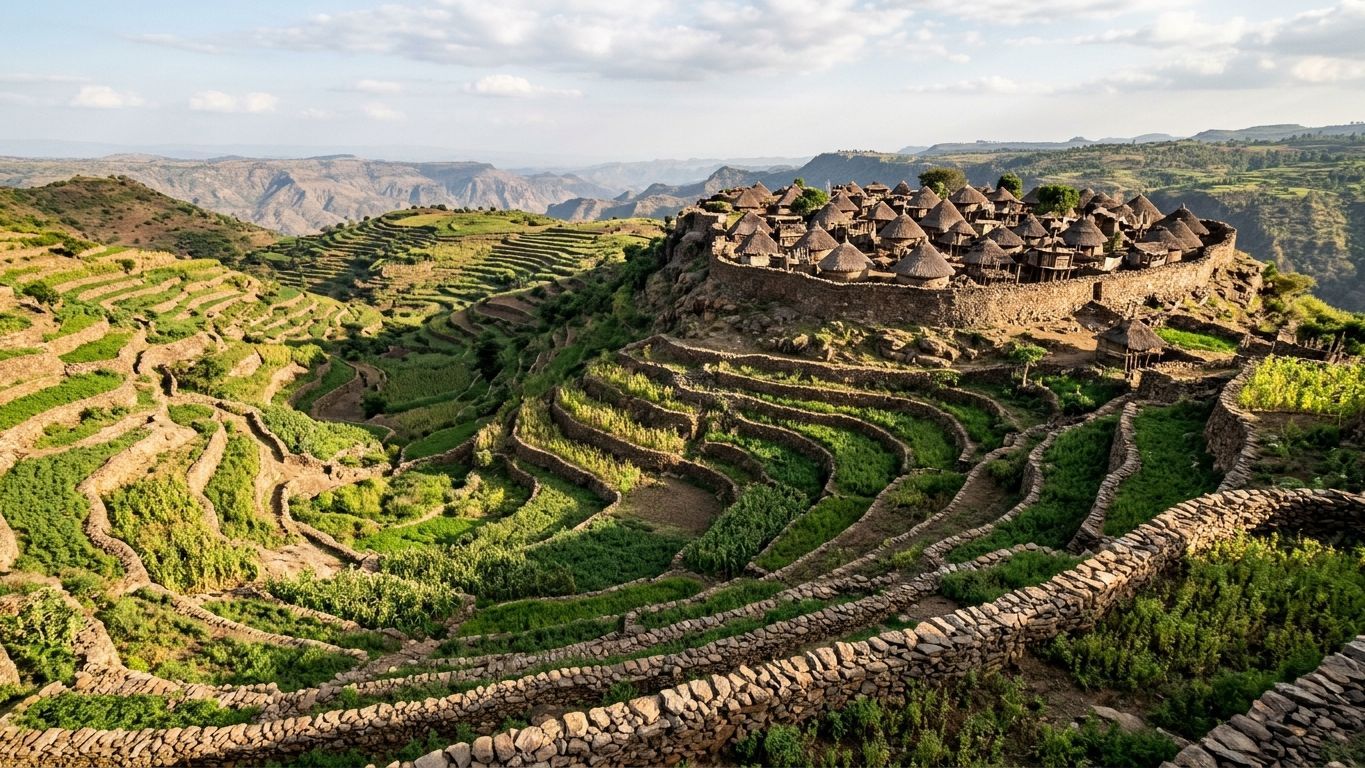
The terraces are the first thing you notice: endless dry-stone walls, the tallest rising several metres, holding soil on slopes that would otherwise wash away. The Konso built them without mortar, fitting stones by eye and skill so that the walls flex rather than crack.
These terraces do more than stop erosion. They slow rainwater, letting it seep between levels so that millet and sorghum survive on dry highland slopes. Keeping the walls standing is constant communal work, passed from parents to children.
Above the fields sit the fortified villages, known locally as paleta. Each crowns a hilltop and is wrapped in one or more rings of defensive dry-stone walling. Inside, narrow lanes twist between round thatched houses toward open communal squares called mora.
The mora are the social heart of a town. Here elders meet, disputes are settled, young men sleep in communal houses and generational history is tracked. The same engineering that tames the hillside also shapes daily life, a connection that sets Konso apart from the better-known monuments and royal cities of the Ethiopian highlands further north.
Waga Statues and Konso Funerary Traditions
Scattered through clearings near the villages stand the waga: carved wooden figures raised over the graves of honoured men. A group of waga often represents one man alongside his wives, and sometimes the enemies or wild animals, lions and leopards among them, that he defeated in life.
The statues are weathered, frank and oddly moving. Many wear carved expressions and a few sit under small shelters that protect the soft wood from sun and rain. They record who a person was and what the community chose to remember about him.
UNESCO has described these markers as an exceptional living testimony to funerary traditions that are on the verge of disappearing. Younger generations carve fewer of them each year, which is part of why the practice carries such weight. Seeing the waga in their forest clearings, rather than behind museum glass, is one of the quieter highlights of a southern trip.
The Konso Cultural Centre near the main town gathers displays of waga and other artefacts, and it is a useful stop for context before you walk out to a village. Respect for the dead runs deep here, so these sites are treated as sacred ground.
Where Konso Fits on the Omo Valley Route
Konso sits in South Ethiopia Regional State at the edge of the Great Rift Valley, several hundred kilometres south of Addis Ababa and a short drive from Arba Minch. It lands squarely on the main road running from Arba Minch toward Jinka, the usual gateway to the lower Omo Valley.
That position makes Konso a natural first cultural stop before the deeper Omo journey. Most travellers fly into Arba Minch, drive a little under two hours to Konso, then continue south and west to reach the valley's riverside communities. Skipping it means missing the clearest introduction to how southern peoples live with the land.
The south rewards a slower pace, and Konso pairs well with the lakes and birding around the Rift Valley on the way down. If you are shaping a wider itinerary, our overview of Ethiopia cultural tours shows how sites like this link into longer journeys through living traditions. At Yenew we build the Konso stop into most of our southern departures for exactly this reason.
Visiting Tips and Cultural Etiquette
Timing shapes the whole experience. The dry stretch from mid-October to January is ideal, when roads are firm and the terraces glow green after the rains. The months from April to June bring heavy rain that turns tracks to mud and can cut off villages entirely.
A local guide is strongly recommended. The terraces, mora squares and waga clearings carry meanings that are easy to walk straight past, and a guide also helps you move respectfully through private and sacred spaces. Photography fees apply in some villages, so carry small notes.
A few points of etiquette go a long way:
- Always ask before photographing people or sacred sites.
- Use your right hand for handshakes and for eating.
- Accept an offer of food or drink graciously; a flat refusal can read as rude.
- Point with an open hand rather than a single finger, and avoid showing the soles of your feet.
Come prepared for the terrain. The paths between terraces are steep and uneven, so sturdy footwear matters, and services outside hotels are limited. Bring extra water and a few snacks. Days are warm and nights can turn cool at this elevation, so pack a light layer.
Konso is best understood on foot and in conversation, not from a passing car window. Set aside at least half a day, start early, and let a local walk you from the terraces up through a paleta to the waga clearings in sequence. To fold that visit into a well-paced trip through the south, start planning with our guide to booking an Ethiopia tour and build Konso in as your first stop before the Omo Valley.
Frequently asked questions
Where is Konso in Ethiopia?
Konso is in South Ethiopia Regional State, at the edge of the Great Rift Valley, several hundred kilometres south of Addis Ababa and a short drive from the town of Arba Minch.
Why is Konso a UNESCO World Heritage Site?
Konso was inscribed in 2011 for its stone-walled agricultural terraces, fortified hilltop villages and living funerary traditions, recognised under cultural criteria (iii) and (v).
What are Konso waga statues?
Waga are carved wooden figures raised over the graves of honoured men. Groups of statues represent the deceased, his wives and enemies or animals he defeated.
When is the best time to visit Konso?
The dry months from mid-October to January are ideal, when roads are passable and the terraces look green after the rains. Heavy rains from April to June make access difficult.