Key takeaways
- A full-service Ethiopia travel agency handles permits, licensed guides, transport, lodging, and on-trip support so you travel without logistical gaps.
- Local agencies win on ground knowledge and rapid problem-solving; overseas agencies add familiar payment and contract terms but often subcontract to local operators anyway.
- Verify licensing with the Ministry of Tourism and read reviews across several platforms before you pay a deposit.
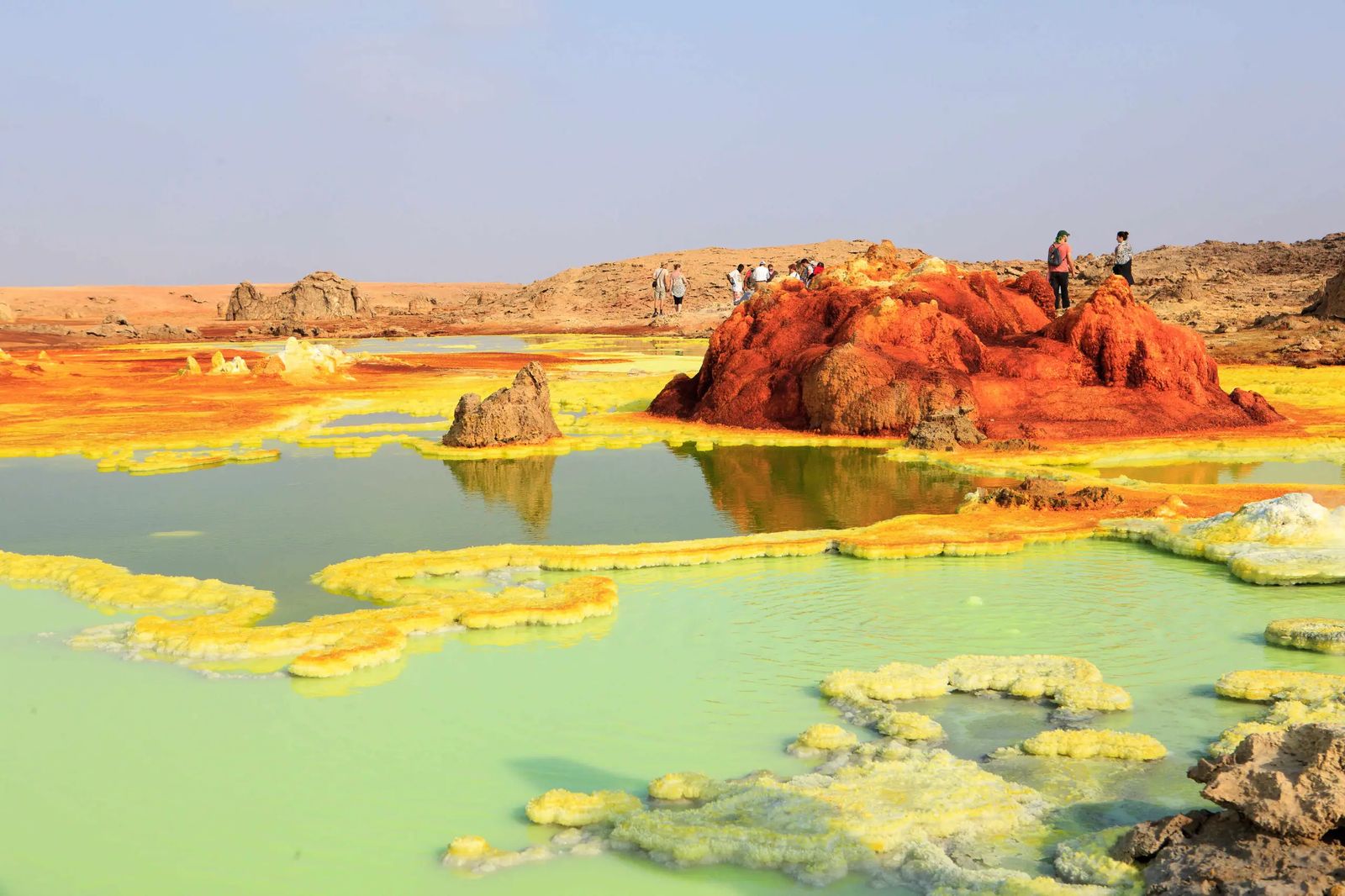
- 24/7 on-trip assistance matters most in remote regions like the Danakil Depression and the Simien Mountains, where plans change fast.
- GishAbay operates its own trips on the ground in Ethiopia, so support and itinerary changes go through the same team that runs your tour.
The best Ethiopia travel agency is the one that is properly licensed, runs trips with its own local team, and answers the phone when a road washes out at 6 a.m. Everything else, price, itinerary polish, glossy photos, matters less than those three things. This guide walks through what a full-service agency should provide, how local and overseas operators compare, and the checks that separate a reliable partner from a booking form.
Ethiopia is having a strong tourism moment, which means more agencies are competing for your booking. International tourism to Ethiopia ran about 40% above its 2019 pre-pandemic level during 2024, one of the fastest recoveries recorded worldwide, according to UN Tourism. Growth is good news for travelers, but it also raises the odds of running into a thin operation that outsources everything and disappears when something goes wrong. Knowing what to look for protects your trip and your money.
What a full-service Ethiopia travel agency provides
A real full-service agency does far more than sell you a package. It manages the moving parts that are hard to arrange from abroad and easy to get wrong.
- Licensed guides and drivers. Certified guides who know the history, the languages, and the terrain. In many regions a licensed guide is required, not optional.
- Permits and access. Entry permits for national parks, scout arrangements for restricted areas, and paperwork for sensitive zones like the Danakil.
- Transport and logistics. Reliable 4×4 vehicles, internal flights, and route planning that accounts for road conditions and altitude.
- Lodging and meals. Accommodation booked to match your budget, from community guesthouses to lodges, with dietary needs handled.
- Itinerary design. A route that fits your interests, fitness, and time rather than a fixed loop everyone gets.
- On-trip support. A contact who can solve problems while you are on the ground.
If an agency only sends a price list and a payment link, it is a reseller, not a full-service operator. The difference shows up the moment a flight is cancelled or a festival date shifts. For a sense of what a well-run trip actually looks like day to day, see our guide on what to expect on a guided Ethiopia tour.
Local vs. overseas agencies: pros and cons
Most travelers choose between an agency based in Ethiopia and one based in their home country. Both can deliver a good trip, but the trade-offs are real.
Local agencies
Local operators live where you are traveling. That produces a few clear advantages.
- Ground knowledge. They know which roads flood, which guide speaks the right language for the Omo Valley, and when a church festival actually happens versus when the calendar says it does.
- Faster problem-solving. When a plan breaks, a local team can call a driver or lodge directly and fix it in minutes.
- Fewer middlemen. You deal with the people who run the trip, which usually means lower cost and clearer answers.
- Direct community relationships. Access to experiences that resellers cannot arrange.
The trade-off is that payment terms, contracts, and time zones can feel less familiar, and quality varies widely, so vetting matters more.
Overseas agencies
An agency in your own country offers comfort factors that some travelers value.
- Familiar contracts and payment protection under your local consumer laws.
- Same-timezone communication before the trip.
- Curated marketing that makes comparison shopping easy.
The catch is that many overseas agencies do not operate in Ethiopia at all. They subcontract the actual trip to a local operator and add a margin on top. You often pay more for a trip run by the same ground team you could have booked directly, so it pays to ask an overseas agency who actually operates the tour on the ground.
Customization, support, and 24/7 on-trip assistance
A strong agency treats your itinerary as a starting draft, not a fixed product. Customization means the route bends to you: extra days in the Simien Mountains, a slower pace at altitude, a detour to a festival, a private vehicle instead of a shared one. When an agency resists any change, that is a signal it is reselling a standard package rather than planning your trip.
On-trip support is where the difference between agencies becomes obvious. Ethiopia rewards travelers who go beyond the standard circuit, and those places are exactly where things shift without warning. Weather closes a trekking route. A regional flight moves. A road to a remote site becomes impassable. In moments like these, a reachable support team is the whole game.
Good 24/7 assistance includes:
- A direct phone or messaging line that reaches a real coordinator, not a queue.
- Someone who can rebook flights, lodging, and vehicles on short notice.
- Coordination for medical help or evacuation if needed.
- Authority to adjust the itinerary on the spot rather than waiting for an office to open.
This matters most in places like the Danakil Depression and the highlands, where the pre-pandemic tourism sector once contributed around USD 4.8 billion to Ethiopia's economy at its peak, per the UN Economic Commission for Africa. That scale means the infrastructure exists, but only agencies with real ground teams can tap it quickly when your plans change.
Reading reviews and verifying licensing
Before you send a deposit, do two checks. They take an hour and prevent most bad outcomes.
Verify the license. A legitimate Ethiopia travel agency holds a tour-operator license and business registration. Ask for the documents directly, then confirm the operator with the Ministry of Tourism. A real agency will hand these over without hesitation. Reluctance is your answer.
Read reviews across several platforms. Do not rely on the testimonials printed on the agency's own website. Check Google, TripAdvisor, and social media, and look for patterns rather than single scores.
- Recent reviews. Feedback from the last 12 months reflects the current team, not who ran the company three years ago.
- Specific detail. Trustworthy reviews name guides, describe real situations, and mention how problems were handled.
- Response to complaints. How an agency replies to a negative review tells you more than a wall of five-star ratings.
- Consistency. The same praise and the same concerns showing up repeatedly is a reliable signal.
Ethiopia is far from the only African destination seeing this surge in interest. The continent welcomed roughly 74 million international arrivals in 2024, up about 12% on the previous year, according to UN Tourism. Rising demand pulls in new operators of uneven quality, which is precisely why licensing and independent reviews have become non-negotiable checks rather than nice-to-haves.
Why GishAbay stands out as an Ethiopia travel agency
GishAbay is a local agency that runs its own trips on the ground in Ethiopia. When you book, you deal with the team that actually operates your tour, so itinerary changes, support questions, and last-minute problems go through one set of people who know your trip. There is no overseas reseller adding a margin and passing your request down a chain.
That structure lines up with the criteria above. Guides are local and licensed. Itineraries are built around your interests instead of a fixed loop, whether that is trekking, historical sites, or the culture of the south. Support during the trip comes from the same coordinators who planned it. And because the team lives in Ethiopia, it can solve problems in the places where solving problems is hardest.
If you are still deciding on a route, browse Ethiopia vacation packages for every type of traveler to see how a customizable trip takes shape.
Your next step
Pick two or three agencies that pass the licensing and review checks, then send each the same request: a custom itinerary for your dates, with a clear explanation of how on-trip support works and who you would actually reach if something went wrong. The quality and speed of those replies will tell you more than any brochure. Reach out to GishAbay with your travel dates and interests, and compare the answer against the criteria in this guide before you commit.
Frequently asked questions
Do I need a travel agency to visit Ethiopia?
You can travel independently, but a licensed agency simplifies permits, guides, and remote-area logistics. Regions like the Danakil Depression and Omo Valley effectively require an organized operator for access and safety.
Is it better to book with a local or an overseas Ethiopia travel agency?
Local agencies usually have stronger ground knowledge and faster problem-solving. Many overseas agencies subcontract the actual trip to a local operator, so booking directly with a reputable local agency often means fewer middlemen and lower cost.
How do I verify an Ethiopia travel agency is legitimate?
Ask for the operating license and tour-operator registration, confirm it with the Ministry of Tourism, and cross-check reviews on independent platforms like Google, TripAdvisor, and social media before paying a deposit.
What should 24/7 on-trip support actually include?
A direct phone or messaging contact who can reach your guide, rebook flights or lodging, arrange medical help, and adjust the itinerary when weather or road conditions change.