Key takeaways
- Debre Zeit, officially Bishoftu since the late 1990s, sits 47.9 km southeast of Addis Ababa at 1,920 metres elevation (Wikipedia).
- The town is nicknamed the City of Seven Lakes, built around a cluster of volcanic crater lakes.
- A 1996 survey at one crater lake recorded 50 bird species, making the area a strong birdwatching stop (Key Biodiversity Areas).
- Its lower, warmer elevation and short drive make it an easy day trip or weekend escape from the capital.
- The dry season from November to February is the best time to visit for calm water and migratory birds.
Debre Zeit, now officially called Bishoftu, is a small resort town built around a cluster of volcanic crater lakes, 47.9 km southeast of Addis Ababa (Wikipedia). It is the easiest lake escape from the capital, warm, green, and close enough to reach in about an hour. This guide covers where Debre Zeit in Ethiopia sits, what the lakes look like, how to plan a day trip or weekend, and when to go.
Where Does Debre Zeit Sit, and Why Is It Called Bishoftu?
Debre Zeit sits 47.9 km (29.8 mi) southeast of Addis Ababa along the route 4 highway, at an elevation of 1,920 metres (6,300 ft) in the Oromia Region, according to the figures recorded on Wikipedia. That places it roughly 500 metres lower than the capital, which gives it a warmer, more temperate feel.
The name confusion trips up a lot of first-time visitors. Debre Zeit is Amharic for "Mount of Olives." The town has carried the Oromo name Bishoftu, meaning something like "sweetness," since the late 1990s, which was also its name until 1955. Both names remain in common use on maps, bus signs, and resort websites.
So when a travel listing says Bishoftu and your map says Debre Zeyit, you are looking at the same town. The spelling Debre Zeyit is just another transliteration of the same Amharic words.
What Are the Crater Lakes Like?
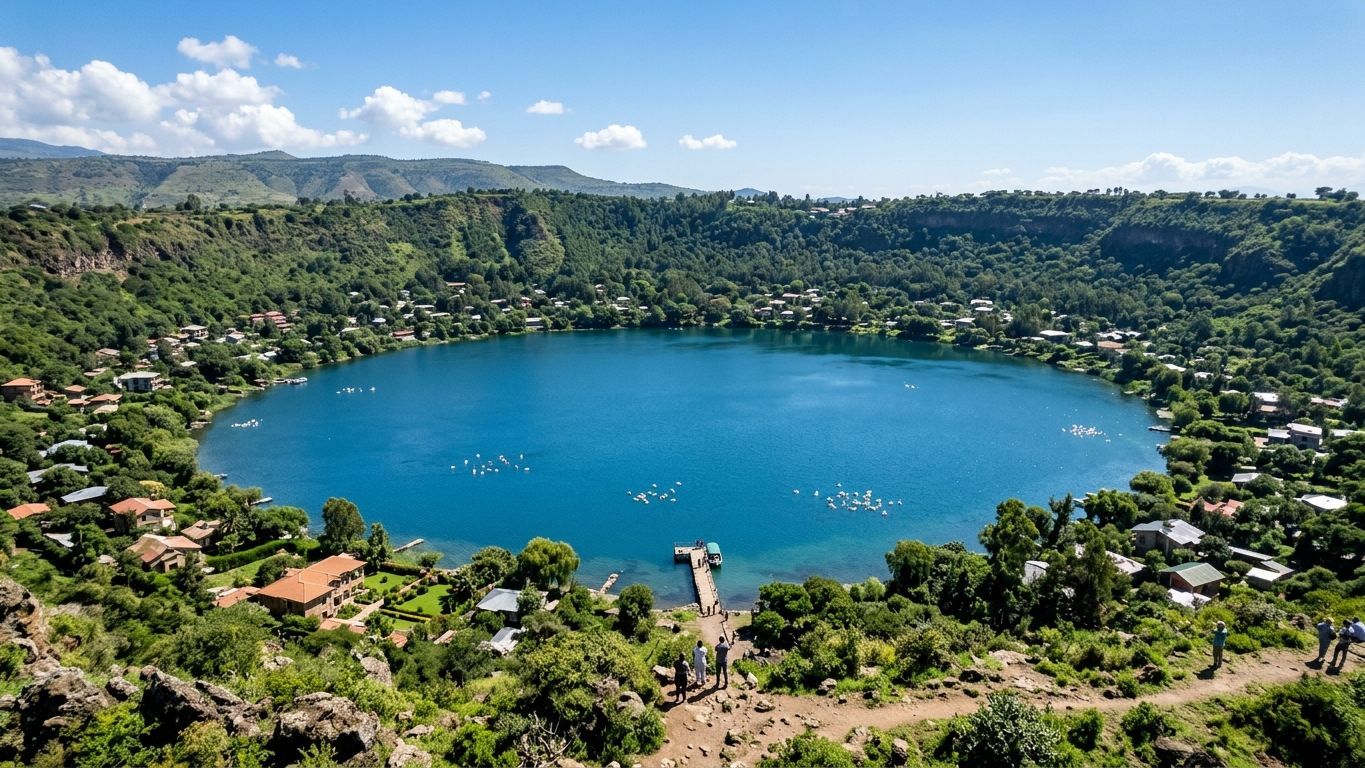
Bishoftu is nicknamed the City of Seven Lakes, and the crater lakes are the whole reason to come. Wikipedia enumerates five principal crater lakes: Lake Bishoftu, Lake Hora, Lake Bishoftu Guda, Lake Koriftu, and the seasonal Lake Cheleklaka, with Green Crater Lake and Lake Hora Kiloli nearby.
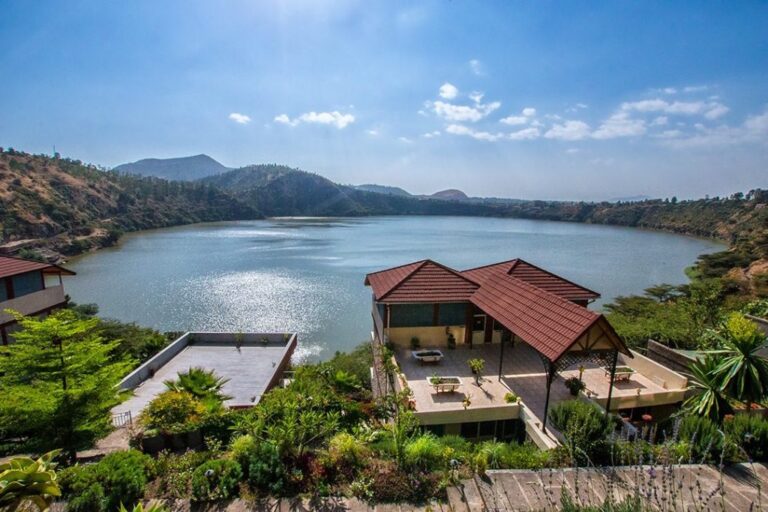
Each lake sits inside its own maar, a round basin left by ancient volcanic activity. The water fills these circular craters, so the shorelines curve in near-perfect rings with steep green walls rising around them. The lakes are deep for their size. One survey recorded a maximum depth of 87 metres at a single crater (Key Biodiversity Areas).
Lake Hora is the busiest and the social heart of the town. It is a base for watersports, draws many water birds, and hosts the annual Irreecha thanksgiving festival of the Oromo people. Lake Bishoftu Guda and Lake Koriftu are quieter, with resorts strung along their rims. The scenery shifts with the light: glassy and silver at dawn, deep blue by midday.
Can You Do Debre Zeit as a Day Trip from Addis Ababa?
Yes, and it is one of the simplest day trips in the country. At 47.9 km from Addis Ababa, the drive takes about an hour outside of peak city traffic. You can leave after breakfast, spend the day by the water, and be back in the capital for dinner.
A day trip suits travelers who want a break from the altitude and noise of Addis Ababa without committing a whole leg of their itinerary. Many people pair it with their arrival or departure days, when a long cross-country drive would be too much.
If you have a free weekend, an overnight stay lets you catch both sunrise and sunset over the craters, which is when the lakes look their best. For planning a guided version of this trip, Yenew builds Bishoftu into day tours and short escapes from Addis Ababa, with transport and a driver who knows which resorts allow day use.
What About Resorts, Birdwatching, and Dining?
The lakeshore resorts are the main draw for weekenders, and birdwatching is the main draw for naturalists. A 1996 survey at Bishoftu Lake recorded 50 bird species, including flamingos and other waterbirds, with vultures roosting in the surrounding rocky hills, according to the Key Biodiversity Areas factsheet for the lake.
Resorts line the rims of several lakes, most of them offering lakeside rooms, swimming, and open-air restaurants. Many allow day visitors to use the grounds and pool for a small fee, so you do not need to stay overnight to enjoy the setting. Weekends bring families from Addis Ababa, so a weekday visit is calmer.
For birders, the seasonal wetland at Lake Cheleklaka fills with migratory waterbirds in the cooler months. Early morning is the richest time for sightings, before the day warms and the boats set out. If this is your main interest, it pairs naturally with the wider Rift Valley lakes birding circuit further south.
Dining is relaxed and lake-facing. Resort kitchens serve a mix of Ethiopian staples and grilled fish from the lakes, and most have shaded terraces built for slow lunches. A fresh fish lunch with a view over the crater is one of the town's quiet pleasures.
How Do You Get There, and When Should You Go?
Getting to Debre Zeit is straightforward: it is a short, paved drive southeast of Addis Ababa along the route 4 highway. Private cars, hired drivers, and regular minibuses all make the run. A hired car or a guided tour is the most comfortable option for day visitors who want to move between several lakes.
The best time to visit is the dry season, roughly November to February. The water is calm and clear, temperatures are pleasant, and migratory birds are present on the lakes. This window lines up with the country's main dry-season travel months.
Avoid the heaviest rains between June and September if lake views and birdwatching are your priority, though the countryside turns lush and green then. It is worth checking the wider seasonal pattern across the country before you fix your dates.
If you are short on time in Ethiopia, Debre Zeit is the destination to reach for first. Block out a single full day, or better a weekend, pick one or two lakes rather than rushing all of them, and build the trip around sunrise or sunset when the craters look their best.
Frequently asked questions
Is Debre Zeit the same place as Bishoftu?
Yes. Debre Zeit (Amharic for Mount of Olives) is the former name. The town has been officially known by its Oromo name, Bishoftu, since the late 1990s. You will see both names on maps and signs.
How far is Debre Zeit from Addis Ababa?
Bishoftu sits 47.9 km (29.8 mi) southeast of Addis Ababa along the route 4 highway, according to Wikipedia. The drive usually takes about an hour depending on traffic leaving the capital.
How many crater lakes are in Bishoftu?
The town is nicknamed the City of Seven Lakes. Wikipedia enumerates five principal crater lakes, including Lake Bishoftu, Lake Hora, Lake Bishoftu Guda, Lake Koriftu, and the seasonal Lake Cheleklaka, with other lakes nearby.
What is the best time to visit Debre Zeit?
The dry season, roughly November to February, offers calm clear water, pleasant temperatures, and the best birdwatching as migratory waterbirds arrive. The main rains fall between June and September.
Is Debre Zeit worth a visit on a short Ethiopia trip?
Yes, especially if your time is limited. Its short distance from Addis Ababa makes it a comfortable day trip or overnight escape, with lakeside resorts, birdlife, and relaxed dining within easy reach.