Key takeaways
- Ethiopia has 882 recorded bird species and 18 strict endemics, making it one of Africa's richest birding destinations (Avibase, 2026).
- The country holds 69 Important Bird Areas covering 47,757 square kilometres (BirdLife International).
- October through March is the prime window, when Palearctic migrants join resident birds along the Rift Valley lakes.
- Bale Mountains, the Yabelo area, and the Rift Valley lakes deliver the most endemics and waterbirds in the fewest driving days.
- A guided birding tour pairs you with a local bird specialist, 4×4 transport, lodging, and a route built around target species.
Ethiopia has 882 recorded bird species and 18 found nowhere else on Earth, so a focused trip can log hundreds of species in two weeks. The best birding tours in Ethiopia string together three landscapes, the Rift Valley lakes, the Bale Mountains, and the dry south, to reach the widest mix of endemics, migrants, and waterbirds in the fewest driving days.
This guide covers why the country rewards birders, which endemics to chase, where the hotspots are, when to go, and what a guided tour actually includes.
Why Birding Tours in Ethiopia Are World-Class
Ethiopia holds 882 recorded bird species and 18 strict endemics, placing it among the top birding countries in Africa (Avibase, 2026). That richness comes from its geography. Few countries pack so many habitats into one itinerary.
The land rises from the scorching Danakil below sea level to Afroalpine plateaus above 4,000 metres. Each belt holds its own birds. Highland moorland, acacia savanna, Rift Valley wetlands, and humid southern forest sit within a day or two of each other by road.
That same checklist records 40 globally threatened species, so a trip here carries real conservation weight (Avibase, 2026). Birders who want endemics, threatened species, and spectacle in a single journey find all three.
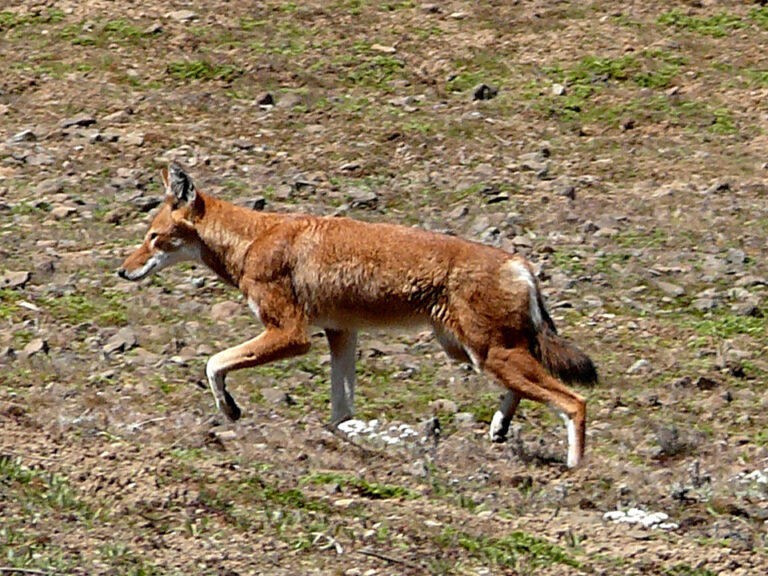
The mammal list adds to the draw. The Bale highlands shelter the Ethiopian wolf, Africa's rarest canid, often spotted on the same plateau where birders scan for endemics.
Endemic Species to Look For, From Lovebirds to Bushcrows
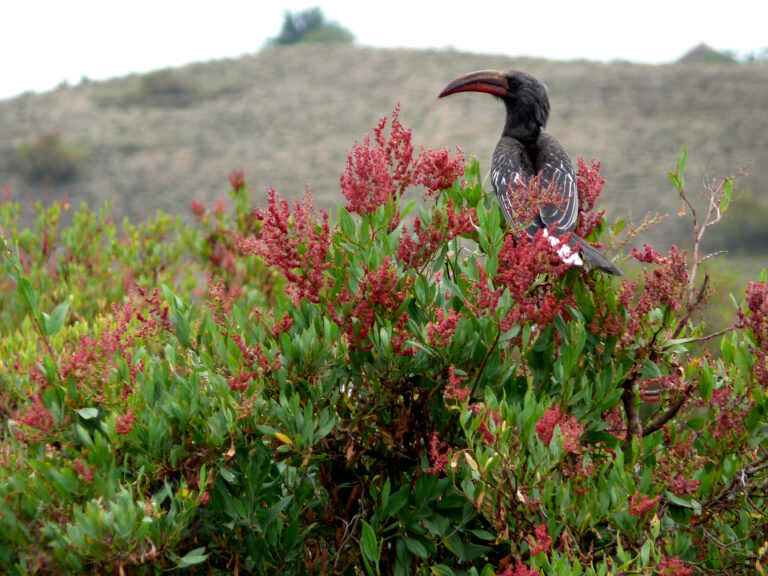
Ethiopia's 18 strict endemics are the reason most birders book a tour, and a handful have become the trip's signature targets (Avibase, 2026). Several are range-restricted, meaning you must visit a specific district to see them at all.
Top endemic targets include:
- Ethiopian Bush-crow: A quirky, social corvid confined to a small zone around Yabelo in the south.
- Prince Ruspoli's Turaco: A striking fruit-eater found in a narrow band of juniper and acacia woodland near Negele.
- Black-winged Lovebird: Ethiopia's endemic lovebird, often called the Abyssinian Lovebird, seen in highland woodland.
- Blue-winged Goose: A high-altitude waterfowl that grazes Afroalpine wetlands in Bale.
- Spot-breasted Lapwing: A smart plover of the high moorland plateaus.
- White-tailed Swallow: Another tiny-range species sharing the Bush-crow's southern acacia country.
Birders scanning tour brochures sometimes see a figure closer to 30 endemics. That higher count adds near-endemics shared with neighbouring Eritrea across the Ethiopian Highlands. Either way, the strict endemics listed above anchor every serious itinerary.
Top Birding Hotspots: Rift Valley Lakes, Bale, and Beyond
Three regions carry most Ethiopian birding tours, and each one targets a different slice of the checklist. BirdLife International recognises 69 Important Bird Areas in Ethiopia, covering 47,757 square kilometres, and the best sites cluster into a logical route (BirdLife International).
The Rift Valley lakes, Ziway, Langano, Abijatta-Shalla, and Hawassa, deliver the waterbird spectacle. Flamingos, pelicans, storks, and herons gather in dense flocks, and a single lakeshore morning can add dozens of species to your list.
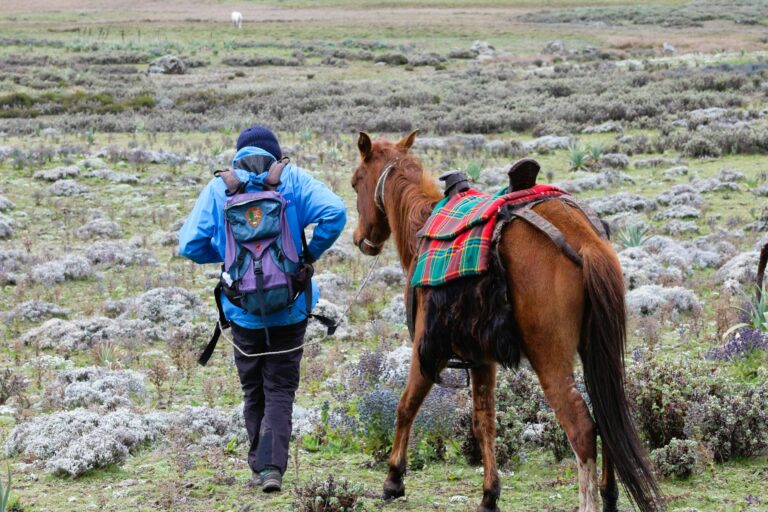
The Bale Mountains National Park is the highland engine room. The Sanetti Plateau and Harenna Forest together hold more Ethiopian endemics in one protected area than anywhere else, from the Blue-winged Goose to the Spot-breasted Lapwing.
The dry south, around Yabelo and Negele, is endemic country. This is where you chase the Ethiopian Bush-crow, White-tailed Swallow, and Prince Ruspoli's Turaco in acacia scrub and juniper woodland.
Many tours add Awash National Park for savanna and semi-arid species, giving a fourth habitat without a long detour. Some itineraries also fold in a crater-lake stop near Debre Zeit, Ethiopia's lakeside getaway, an easy add-on close to Addis Ababa.
The order you visit these regions shapes the species you record. Birders chasing the full endemic set usually run the loop south from Addis Ababa, taking the Rift Valley lakes first, climbing into Bale, then pushing on to Yabelo and Negele. That sequence matches the habitats to the drive, so you gain altitude and dryness steadily rather than backtracking. A two-week version of this route comfortably mixes waterbirds, highland endemics, and southern specialities, and it leaves room for a rest day beside a lake when the early starts catch up with you.
Best Seasons for Migrants and Breeding Plumage
October through March is the strongest window for birding tours in Ethiopia. The dry season clears the roads and trails, and Palearctic migrants swell the resident checklist along the Rift Valley and in the highland forests. November often ranks as the single best month, with dry conditions set in, migrants arrived, and green scenery lingering from the rains.
Timing shifts your target list. In the October to March dry window, you get the widest diversity and the easiest access. From April to September, resident species slip into breeding plumage and sing more, which makes them easier to find and photograph even if migrant numbers drop.
Wondering which month suits a photography-led trip versus a big-list trip? For a pure species count, aim for the late dry season. For breeding colour and song, the wetter months reward patience, though some highland tracks turn difficult after heavy rain.
What a Guided Birding Tour Includes
A guided birding tour in Ethiopia pairs you with a local bird specialist and a logistics team so you spend your hours in the field, not solving problems. Many endemics are range-restricted and hard to locate without someone who knows the calls, the exact sites, and the seasonal movements.
A typical package covers:
- A specialist bird guide who knows calls, stakeouts, and current sightings.
- 4×4 transport and a driver for rough roads to Bale, Yabelo, and Negele.
- Accommodation and meals matched to each region, from lodges to simple guesthouses.
- Park fees and permits for Bale, Awash, and other reserves.
- A route built around your target species, whether that is endemics, waterbirds, or photography.
GishAbay Ethiopia Tour builds birding itineraries around these regions, with guides who can read the highland plateaus and southern acacia country where the endemics hide. A tailored route matters most when your trip hinges on a few tough, localised species.
Good operators also handle the practical layer: airport transfers, domestic flight bookings to shorten long drives, and flexible daily timing so you can be on a lakeshore at dawn when the birds are most active. That groundwork is what turns a long species wishlist into a realistic field list.
Start by writing down your top five target birds. Share that shortlist with a specialist operator, and let the route, the season, and the hotspots be built backward from the species you most want to see.
Frequently asked questions
How many bird species can you see on a birding tour in Ethiopia?
Ethiopia has 882 recorded species, including 18 strict endemics (Avibase, 2026). A well-planned two-week tour covering the Rift Valley, Bale Mountains, and the south commonly records 300 to 400 species.
When is the best time for birding tours in Ethiopia?
October through March is best. The dry season brings clear trails and abundant Palearctic migrants, with November often cited as the single strongest month for diversity before the busy season.
Which endemic birds should I target in Ethiopia?
Headline endemics include the Ethiopian Bush-crow, Prince Ruspoli's Turaco, the Black-winged Lovebird, Blue-winged Goose, and Spot-breasted Lapwing. Most concentrate in the highlands and the Yabelo and Negele areas.
Do I need a specialist guide for birding in Ethiopia?
A specialist guide is strongly recommended. Many endemics are range-restricted and hard to find without local knowledge of calls, sites, and seasonal movements, which also saves valuable field time.