

History
The land we know as Ethiopia has a long, fascinating and well-documented history, during which it was mostly known as Abyssinia. The ancient Egyptians knew of the region because of the Nile, and people from Palestine and Arabia were regular visitors centuries before Christianity arrived.
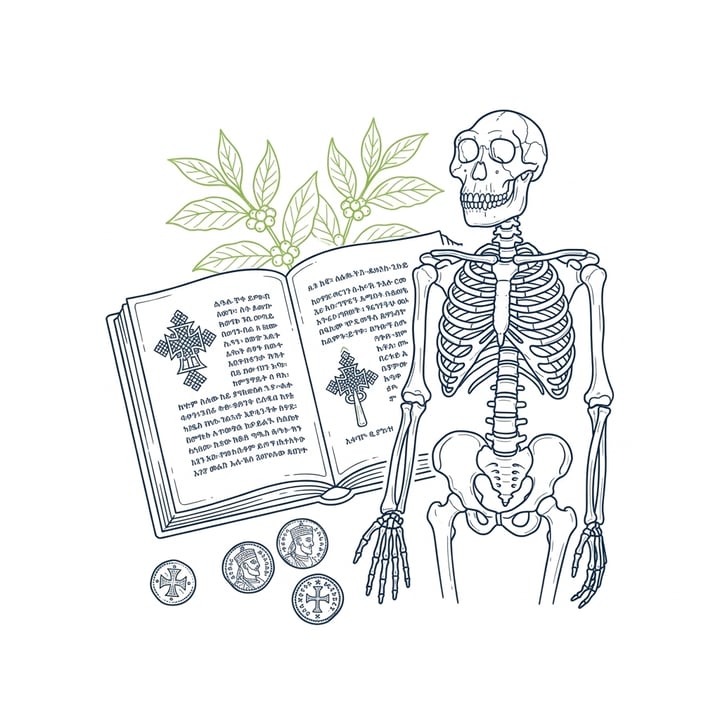
Ethiopia is also home to some of the oldest hominid remains yet discovered, including “Lucy” and “Ardi”, both found in the Afar region. Lucy was a female hominid who lived in what is now the Awash Valley at Hadar about 3.2 million years ago. When her skeleton was discovered in 1974, it supported the view that Ethiopia is one of the places where humankind originated.
Ethiopia is the oldest independent country in Sub-Saharan Africa. Tradition places the earliest evidence of its history around 1000 BC, when the Queen of Sheba visited King Solomon.
Aksum and early Christianity
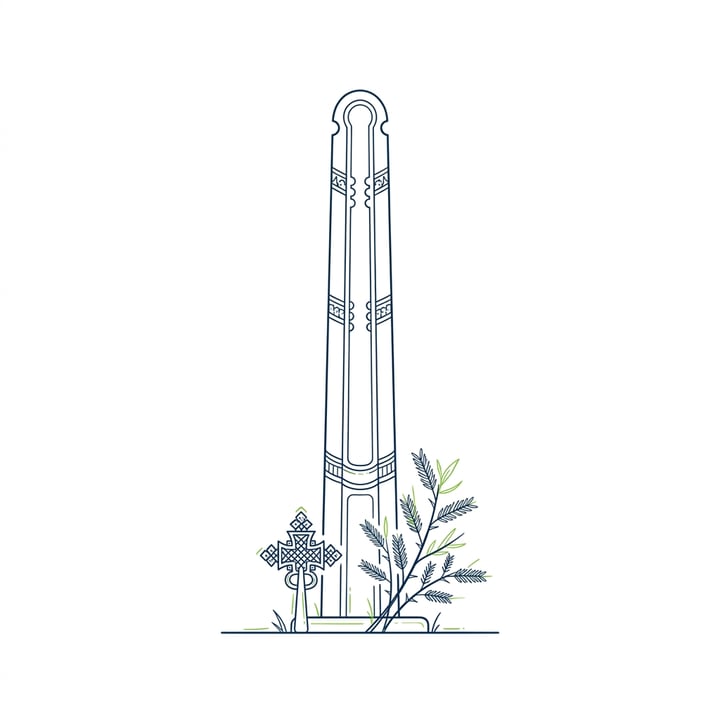
Ethiopia first appears in written history as the Aksumite Empire, which was probably established around the beginning of the Christian era. Christianity was introduced in the 4th century by Frumentius of Tyre, who was appointed bishop of the Ethiopian diocese by Patriarch Athanasius of Alexandria.
At the turn of the first millennium, Aksum was the dominant kingdom and a very advanced civilisation. The Aksumites were the first Africans to mint coins, and they were powerful enough to mount military expeditions into South Arabia. Aksum began to decline in the seventh century.
The Zagwe and Solomonic dynasties
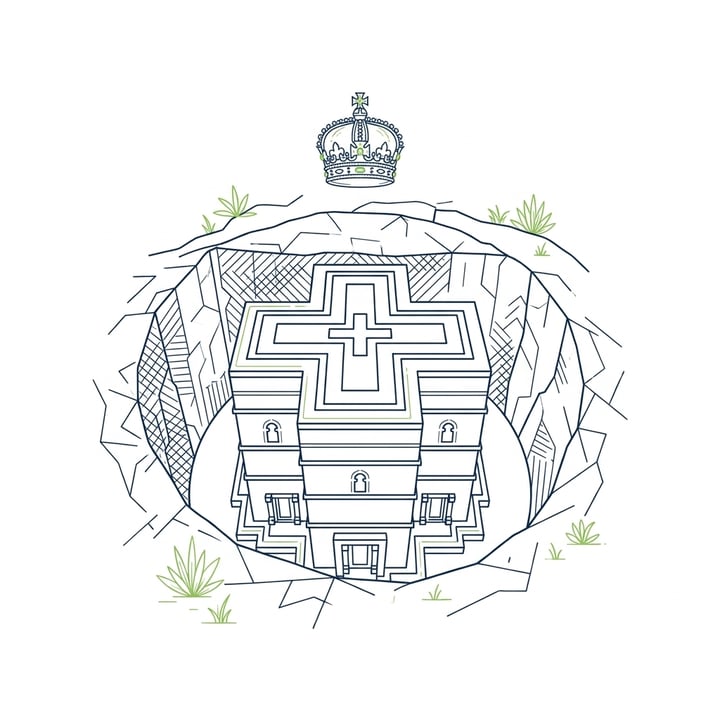
The Zagwe Dynasty ruled next. Its kings were devout Orthodox Christians who built several rock-hewn churches, and the most celebrated of them was King Lalibela.
The Solomonic Dynasty ruled from 1270 to 1636. It takes its name from Emperor Yekuno Amlak, who in 1270 declared himself a descendant of Menelik I, son of King Solomon and the Queen of Sheba, and ended Zagwe rule.
Solomonic emperors did not use fixed capital cities. The emperor, his army and his nobles lived in tents and huts, and rarely stayed in one place for more than four months at a time.
Culture
Ethiopia is a diverse mix of cultures that have lived side by side for hundreds of years. More than 80 ethnic groups live within the country’s borders, each with its own customs, practices and rituals.
As the only African country never to have been fully colonised, Ethiopia offers a rare glimpse of a culture little influenced by the West. It is also the only African country with its own alphabet. Ethiopian time is different too, with the daily clock starting at 6 am rather than midnight. The Ethiopian calendar is about seven to eight years behind the Gregorian calendar.
Literature is a significant part of Ethiopian culture. It is represented mainly by translations of ancient Greek and Hebrew religious texts into Ge’ez, Amharic and Tigrigna. Ge’ez is one of the oldest languages in the world and is still used by the Ethiopian Orthodox Tewahedo Church, whose customs have been influenced by Judaism.
Religion, music and art
Most Ethiopians are Christian, mainly Ethiopian Orthodox, and about a third are Muslim. The country is proud that it embraced Christianity in the 4th century, long before most of Europe, and Christians and Muslims live peacefully alongside one another.
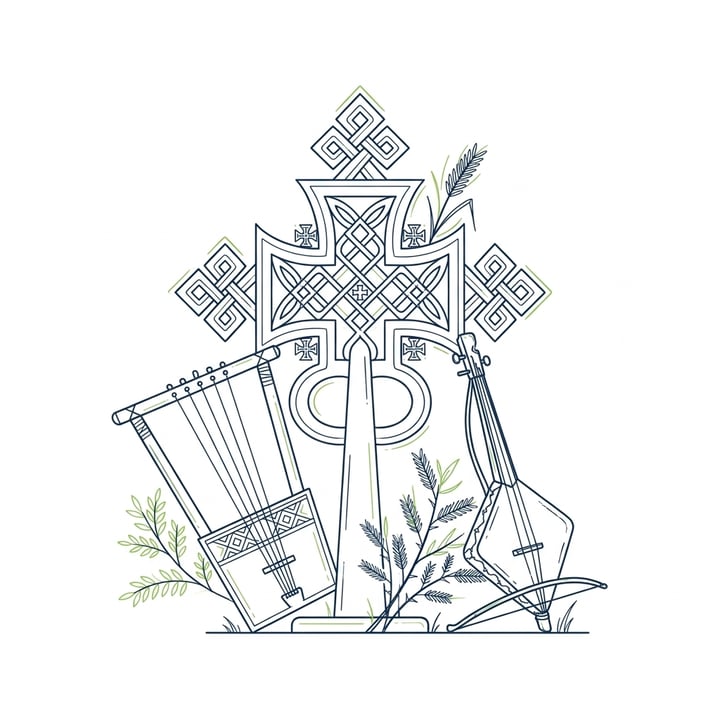
Music and dance play a great part in Ethiopian life and festivals. Common instruments include the kebero drum, the masenqo (a single-stringed fiddle), the washint (a flute), the krar (a lyre) and the begena (a harp). Special occasions rarely pass without singing and dancing.
Ethiopia also has a long tradition of religious painting, which can be seen in almost every church. The two-dimensional figures often tell a story, and they serve both to uplift and to teach religious stories.
Nature: landscape and rivers
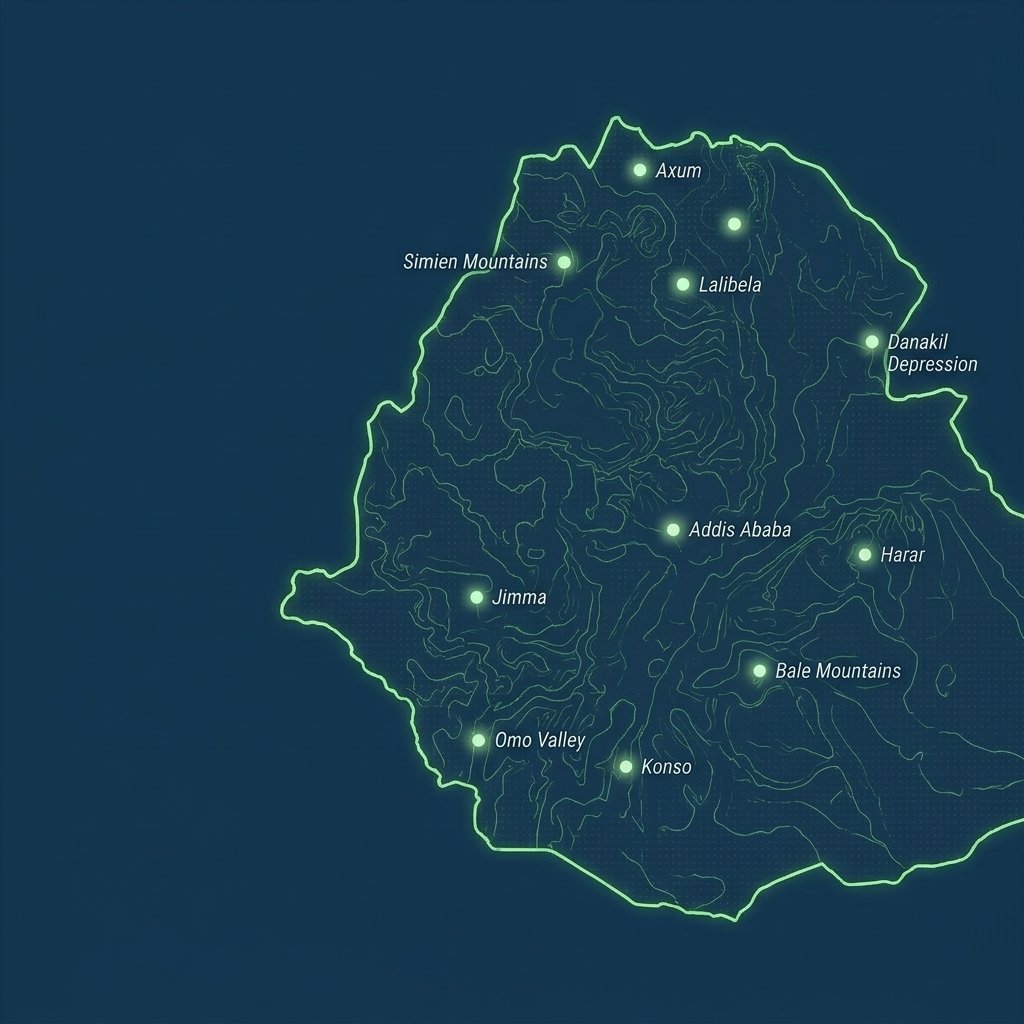
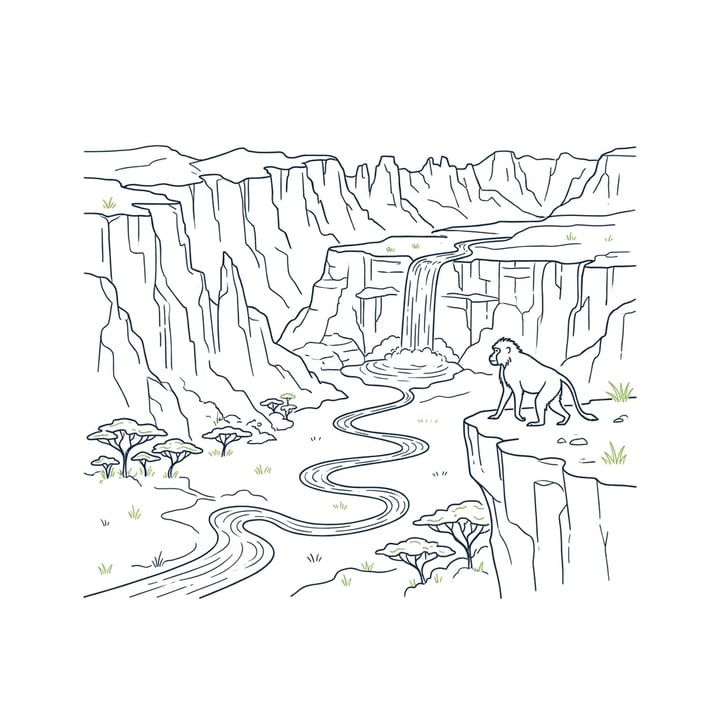
Ethiopia is rich in geographical diversity, with rugged mountains, flat-topped plateaus, deep gorges and river valleys. Erosion, volcanic eruptions and tectonic movements over the ages have shaped this varied terrain.
The highest point is Ras Dashen, at 4,620 m above sea level, and the lowest is the Danakil Desert, at 120 m below sea level. Major rivers such as the Blue Nile, Tekeze, Awash, Omo and Wabi Shebelle cut through the high plateaus and mountain ranges. In all, Ethiopia has nine major rivers and 19 lakes.
The Blue Nile, the chief headstream of the Nile, rises in Lake Tana in the north-west. The Great Rift Valley extends across the Ethiopian plateau, dividing it in two with a series of north-south escarpments that fall steeply towards the rift on either side.
Nature: climate and seasons
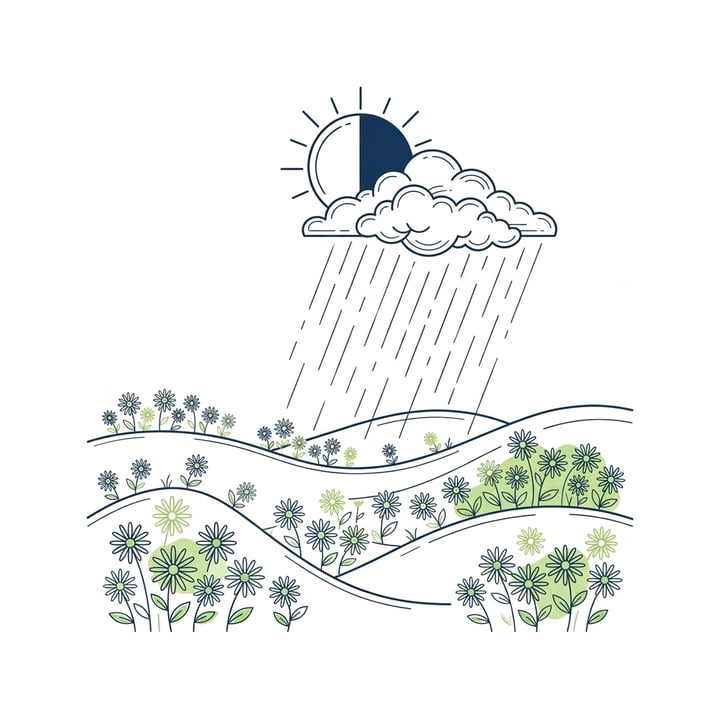
Ethiopia has four main seasons: Kiremt, summer (June to August); Tibe, autumn (September to November); Bega, winter (December to February); and Belg, spring (March to May). The coldest month is not always in Bega, and the hottest is not always in Kiremt.
Lying near the equator, Ethiopia has days and nights of almost equal length in most regions. Rainfall is concentrated in June, July and August. The climate is generally moderate, except in the lowlands of the Danakil Desert and the Ogaden, which are hot all year.
The highlands are temperate, with night frost in the mountains. A single rainy season in the west brings twice as much rain as the wet seasons in the east.
