Key takeaways
- The Gurage are a Semitic-speaking people of south-central Ethiopia, widely known across the country for trade, hospitality, and tight community self-help systems.
- Guragigna is an energetic full-body dance driven by fast drumming, performed at weddings, holidays, and the Meskel festival.
- Enset, the false banana, is the foundation of the Gurage table and a staple for around 20 million Ethiopians (Royal Botanic Gardens, Kew).
- Kitfo, minced beef seasoned with spiced butter and served with kocho, is the dish most associated with the Gurage.
- You can experience Gurage culture firsthand on a guided village visit or around the Meskel bonfire in late September.
Gurage culture centers on three things a visitor notices fast: hard work, warm hospitality, and celebration. The Gurage are a Semitic-speaking people of south-central Ethiopia, known across the country for trade and tight-knit community life, for an energetic dance driven by drums, and for a table built around the false banana called enset. This guide explains who they are, how their society holds together, and how you can experience it yourself on a cultural tour.
Who Are the Gurage and Where Do They Live?
The Gurage are a Semitic-speaking people of the Ethiopian highlands, settled in the Gurage Zone roughly 150 kilometers southwest of Addis Ababa. Their homeland sits in fertile, hilly country, and large Gurage communities have also spread into Addis Ababa and other cities, where they are closely tied to commerce and trade.
Their languages belong to the same Semitic family as Amharic and Hebrew, though centuries of contact with neighboring Cushitic-speaking peoples shaped the sound of everyday speech. Scholars usually group the Gurage into western, northern, and eastern clusters, each with its own dialect and local customs.
Because so many Gurage work far from home, the group is often described as one of Ethiopia's most mobile and entrepreneurial peoples. That reputation for enterprise is a point of pride, and it shapes how the community organizes itself back in the home villages.
How Does Gurage Society Hold Together?
Gurage social life runs on strong community institutions and customary law rather than on formal government alone. The best known is Yajoka Qicha, the traditional legal and governance system of the western Gurage clans, which handles disputes, sets community rules, and keeps the peace through councils of elders and clan leaders.
Alongside formal custom, everyday security comes from mutual-aid associations that are common across Ethiopia. Funeral societies and rotating savings groups pool money and labor so that no family faces a wedding, a burial, or a bad harvest alone. For the Gurage, these networks also support members who have migrated for work, linking the city trader back to the home village.
This mix of self-governance and mutual support helps explain the famous Gurage work ethic. Enterprise is rewarded, but it is tied to obligations: you succeed, and the community expects you to reinvest in family, neighbors, and shared projects.
What Is Gurage Music and Dance Like?
Gurage celebration is loud, fast, and physical. The signature style, often called Guragigna, is an energetic full-body dance driven by high-tempo drumming. Dancers mix quick footwork, jumps on alternating legs, hip movement, and sharp shoulder work, all timed to the beat, and the overall impression is one of stamina and precision that mirrors the people's reputation for hard work.
Ethiopian dance changes as you travel. Northern styles lean heavily on isolated shoulder movement, while southern styles like Guragigna pull in more of the legs and lower body. Watching the two side by side is one of the simplest ways to feel the country's regional variety.
Music and dance show up at weddings, religious holidays, homecomings, and harvest feasts. Performers wear traditional dress, and the crowd is rarely passive. People clap, sing, and step into the circle, which makes a Gurage celebration a participatory event rather than a show you simply watch. The same communal energy carries over to the coffee ritual that follows many gatherings, a tradition you can read more about in our guide to coffee tours in Ethiopia.
What Do the Gurage Eat? Enset and Kitfo Feasts
The Gurage table is built on enset, the false banana, which is a staple for around 20 million people in Ethiopia, roughly a fifth of the population (Royal Botanic Gardens, Kew). Unlike a banana, the useful parts are the thick underground corm and the pseudostem, not the fruit, and the plant is prized for surviving drought and storing food reserves for lean years.
Processing enset is patient, skilled work, usually done by women. The pulp is scraped, fermented underground for weeks or months, and then baked into a dense flatbread called kocho. A lighter starch from the same plant, bulla, is cooked into porridge or thin pancakes, while the boiled corm, amicho, is eaten like a root vegetable.
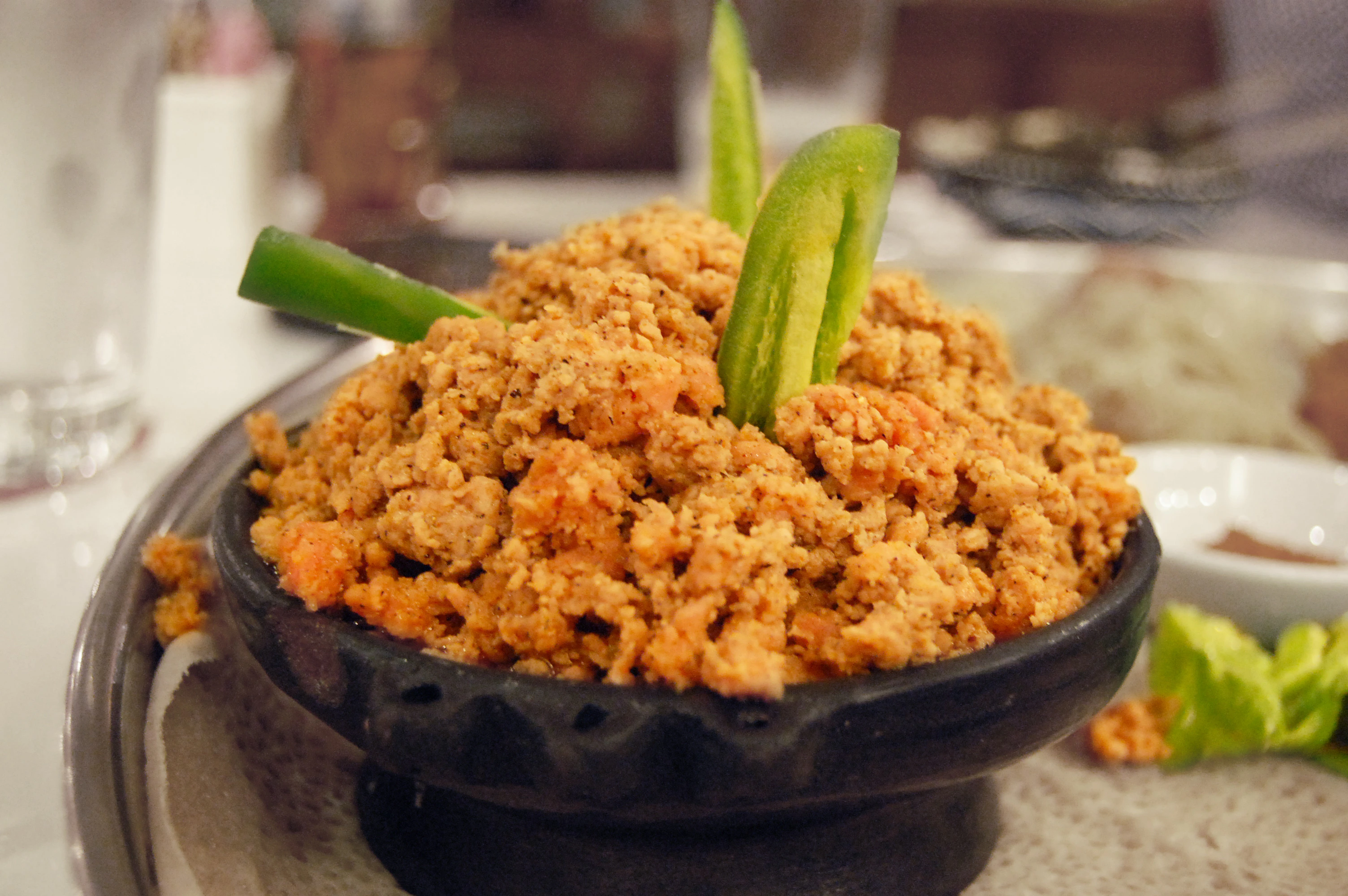
The dish most linked to the Gurage is kitfo: minced beef worked with niter kibbeh, a spiced clarified butter, and mitmita chili. It is often served raw or lightly warmed, paired with kocho rather than injera, and rounded out with fresh cheese and cooked greens. A kitfo feast is a centerpiece of Gurage hospitality, the meal brought out for guests and holidays.
What Do Gurage Villages and Homes Look Like?
Gurage villages are known for neat, round thatched houses and careful craftsmanship. The traditional home is a circular structure with a cone-shaped grass roof, built around a central pole with wooden spokes radiating out to hold the thatch, and the result is admired across Ethiopia for its symmetry and tidy construction.
Daily life blends farming with the enset gardens that ring most homesteads. Households keep livestock and grow barley, potatoes, and kale in the highlands, with wheat and teff lower down, so the enset plot provides the reliable base while other crops add variety.
Hospitality is woven into village life. Guests are welcomed with coffee, sometimes prepared with butter and salt, and roasted grain, and a household may host dozens of visitors at once during a celebration. That openness is a large part of why guided cultural visits to Gurage country feel genuinely warm rather than staged.
When and Where Can You Experience Gurage Culture?
The richest window is the Meskel festival in late September, which the Gurage celebrate with particular devotion. Meskel marks the finding of the True Cross and is built around the Demera, a tall conical bonfire lit after processions, singing, and prayer. The festival is recognized by UNESCO as intangible cultural heritage, and its inscription specifically names the Gurage country alongside Addis Ababa (UNESCO Intangible Cultural Heritage).
Outside festival dates, a guided visit to the Gurage Zone is the most direct way in. A good day combines a village walk to see enset processing and traditional houses, a shared kitfo meal, and, with luck, local music and dance. Going with a local guide also smooths the etiquette, since the best experiences come from invited, respectful visits rather than drop-ins.
Gurage culture fits naturally into a wider southern Ethiopia itinerary and can be arranged as part of a custom trip. If you want to combine it with highland scenery, markets, and other cultural stops, a tailored route is the easiest path, and Yenew builds these cultural days into private Ethiopia tours on request. Pick a few days in late September if you can, bring an appetite for kitfo, and let the drums do the rest.
Frequently asked questions
Where do the Gurage people live?
The Gurage live in the Gurage Zone of south-central Ethiopia, roughly 150 kilometers southwest of Addis Ababa. Large Gurage communities also live and trade in Addis Ababa and other Ethiopian cities.
What is the main food of the Gurage?
The staple is enset, the false banana, processed into a fermented flatbread called kocho. Festive meals often center on kitfo, minced beef seasoned with spiced butter and chili, served with kocho rather than injera.
What is Guragigna dance?
Guragigna is a fast, acrobatic group dance from the Gurage people. Dancers move the whole body, with quick footwork, jumps, and shoulder movement timed to high-tempo drumming, usually in traditional dress at celebrations.
When is the best time to experience Gurage culture?
Late September is ideal, when the Meskel festival brings the Demera bonfire, music, and communal feasting. Meskel is recognized by UNESCO, and the Gurage region keeps its own distinctive celebrations.
Is it respectful to visit a Gurage village as a tourist?
Yes, when you go with a guide who arranges the visit and explains local etiquette. The Gurage are known for hospitality, often welcoming many guests with coffee and roasted grain, but a respectful, invited visit matters.