Key takeaways
- Dorze village sits in the Gamo highlands at roughly 2,500 meters, about 30 kilometers and an hour by road from Arba Minch.
- The famous elephant-shaped bamboo houses can stand up to 12 meters tall and last up to 80 years with maintenance.
- The Dorze are master weavers whose cotton shamma cloth is prized across Ethiopia.
- Enset, the false banana plant, is the staple crop, pounded and fermented for several weeks into kocho bread.
- Dorze pairs naturally with an Arba Minch and southern Ethiopia itinerary that continues toward the Omo Valley.
Dorze village is a highland community in southern Ethiopia famous for two things: giant woven bamboo houses that look like elephants and some of the finest cotton weaving in the country. It sits in the Gamo highlands above Arba Minch, where a cool, green landscape of terraced fields and enset plants replaces the dry heat of the Rift Valley below. For travelers, a visit to Dorze village is a close look at living craft traditions that have continued for centuries.
The Dorze people number in the thousands and belong to the wider Gamo community of the southern highlands. They are known across Ethiopia as skilled weavers, and their reputation travels far beyond their villages. What draws most visitors, though, is the chance to see the houses, the looms, and the food up close.
Where Dorze village sits in the highlands above Arba Minch
Dorze village sits in the Gamo highlands at roughly 2,500 meters above sea level, about 30 kilometers from Arba Minch and around an hour by car, according to Drive Ethiopia. The road climbs steadily out of the Rift Valley, and the temperature drops as you gain altitude. By the time you reach the ridge, the air is cool and often misty, with views back down toward Lake Abaya and Lake Chamo.
The elevation shapes daily life here. The cool, wet climate suits enset, bamboo, and small garden plots rather than the lowland crops grown near the lakes. Villages spread along the ridges, and footpaths connect homesteads, workshops, and the market town of Chencha a short drive away. Because the Dorze live so high above Arba Minch, the trip doubles as a scenic drive through terraced hillsides and eucalyptus stands.
Their famous elephant-shaped bamboo houses
The most striking sight in Dorze village is the traditional house. Built from bamboo strips woven over a wooden frame and clad in enset leaves, these structures can stand up to 12 meters tall and last up to 80 years with proper maintenance, as reported by [African Leadership Magazine]. Their rounded shape, with a low front entrance, is often compared to an elephant's head and trunk.
The design is practical as well as beautiful. Smoke from the indoor cooking fire rises through the bamboo and helps cure the frame, protecting it from insects and rot. When the base of a house is eaten away by termites over the years, the family can lift the whole structure and move it to fresh ground, which is why some houses grow shorter with age. Guides often walk visitors through a home to show the single open interior, the hearth, and the small pen where animals shelter at night.
Building one of these houses is a community effort. Men cut and split the bamboo, bend it into the arched frame, and weave the walls, while enset leaves are layered over the outside to shed the frequent highland rain. A new house can take weeks of work and the help of many neighbors, which is one reason the structures are treated with such care. Inside, the space is divided simply into areas for sleeping, cooking, and storage, and a raised platform near the fire keeps the family warm through cold highland nights.
Cotton weaving and colorful shamma cloth
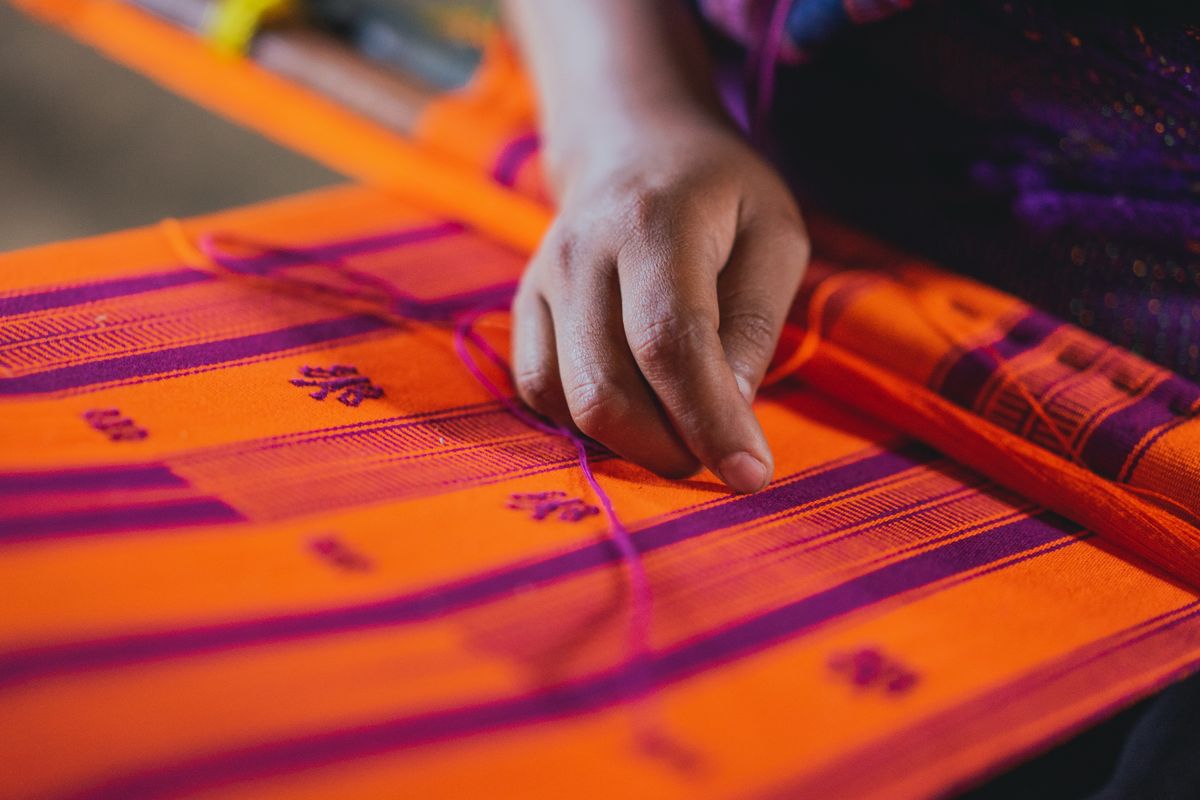
Weaving is the craft that made the Dorze people of Ethiopia famous. Men typically work the looms, spinning and weaving cotton into the lightweight white cloth known as shamma, often finished with bright woven borders. The results are sold in markets across the country, and many Ethiopians associate fine shamma with Dorze hands.
A visit usually includes time at a working loom, where you can watch a weaver pass the shuttle and build a scarf or shawl row by row. The patterns range from plain white ceremonial cloth to vivid stripes of red, yellow, and green. Buying a piece directly from the maker is one of the most meaningful souvenirs you can bring home from the southern highlands, and it puts money straight into the community.
The craft is passed down through families, and children often learn the basics of spinning and dyeing before they are old enough to work a full loom. Cotton is grown in the warmer lowlands and carried up to the highlands, then spun by hand into thread before weaving begins. A single finished shawl can represent days of patient work, which is worth remembering when you negotiate a price. Beyond white shamma, weavers produce the gabi, a thicker blanket-like cloth made of several layers, and the netela, a lighter wrap worn by women over the shoulders.
Enset bread making and local food tasting
Food in Dorze village revolves around enset, the false banana plant that grows thick around every homestead. The plant is not eaten as fruit. Instead, the stem and root are scraped, pounded into a pulp, and buried to ferment for several weeks before being baked, a process described by African Leadership Magazine. The result is kocho, a dense flatbread cooked over the fire on a griddle lined with enset leaves.
Most guided visits include a tasting. You might watch a woman scrape the pulp, then sample fresh kocho served with spicy chili paste and local honey. Many homesteads also offer a cup of the local spirit distilled from enset or grain, poured warmly as a gesture of welcome. Pairing the bread with a traditional Ethiopian coffee ceremony is common, and it turns a quick stop into a genuine meal shared with a family.
Markets, music and village hospitality
Beyond the houses and looms, part of the appeal of Dorze is simply the rhythm of village life. The nearby Chencha market draws people from surrounding hamlets to trade cloth, produce, livestock, and household goods, and timing a visit to a market day adds color and energy to the trip. Vendors lay out shamma, baskets, and vegetables, and the bargaining is friendly.
Hospitality runs deep here. Visitors are often greeted with song, and families take pride in showing their home, their craft, and their food. Children may walk alongside you between homesteads, and elders explain how a house is built or how cloth is finished. Treating the visit as a cultural exchange rather than a photo stop, and asking before taking portraits, goes a long way toward a warm reception.
Visiting Dorze as part of a southern tour
Dorze fits neatly into a southern Ethiopia route. Most travelers base themselves in Arba Minch, visit the lakes and Nechisar National Park, then drive up to Dorze for a half-day cultural stop. If you are planning that leg, our Arba Minch and Nechisar National Park guide covers the wildlife, boat trips, and logistics that pair well with a Dorze visit.
From Arba Minch, many itineraries continue south toward the tribal lands of the lower Omo, and Dorze makes a natural first cultural stop before the drive deeper into the valley. Yenew builds private southern tours that weave Dorze, the Rift Valley lakes, and the Omo together at your own pace, so you can linger at a loom or a market instead of rushing a checklist. To turn this reading into a real trip, reach out with your travel dates and the regions you want to see, and ask for a draft southern itinerary that starts with a morning in Dorze.
Frequently asked questions
Where is Dorze village located?
Dorze village lies in the Gamo highlands of southern Ethiopia, about 30 kilometers northwest of Arba Minch. The drive climbs from the Rift Valley floor and takes roughly one hour.
Why are Dorze houses shaped like elephants?
The tall, rounded bamboo and enset-leaf houses resemble an elephant's head and trunk, with the low doorway standing in for the trunk. Local lore links the shape to elephants that once roamed the region.
What is the Dorze best known for?
The Dorze are renowned for two things: their towering woven bamboo houses and their cotton weaving. Their colorful shamma cloth is sold in markets across Ethiopia.
How long should I spend in Dorze?
A half-day guided visit is enough to tour a homestead, watch weaving, and taste enset bread. Many travelers add it to a day trip from Arba Minch or a longer southern tour.
Can I buy weaving directly from the Dorze?
Yes. Scarves, shawls, and shamma cloth are sold at village workshops and the nearby Chencha market. Buying directly supports the weavers who made the pieces.