Key takeaways
- Bale Mountains National Park holds more than half of the world's remaining Ethiopian wolves, the best place on Earth to see the species.
- The park protects 26 percent of Ethiopia's endemic species and ranks among Africa's top birding sites for its many highland birds.
- The Sanetti Plateau, sitting above 4,000 meters, is the single most reliable place to spot Ethiopian wolves hunting rodents.
- The dry season from November to March gives the clearest skies and easiest trekking conditions.
- A licensed local guide handles park permits, scouts, altitude pacing and wolf sightings, making a guided trip the practical way to visit.
Bale Mountains National Park is the best place on Earth to see the Ethiopian wolf, and one of the finest highland trekking regions in Africa. The park protects a rare stack of habitats, from cloud forest to open moorland above 4,000 meters, packed with animals and birds found nowhere else. This guide covers the wildlife you can expect to see, the routes worth walking or riding, and how to plan a trip that actually delivers a wolf sighting.
The reserve sits in Ethiopia's southeastern highlands, a full day's drive south of Addis Ababa. Most travelers pair it with a wider highland itinerary, and it rewards anyone willing to trade comfort at altitude for the chance to watch a wild wolf hunt across an open plateau.
Why Bale Mountains National Park is a top wildlife destination
Few protected areas concentrate rare species the way this one does. According to the park's official conservation records, Bale Mountains National Park holds 26 percent of Ethiopia's endemic species, a remarkable share for a single reserve. That density is why biologists and serious wildlife travelers put it near the top of any Ethiopian list.
The headline animals are the large endemic mammals. The mountain nyala, a tall spiral-horned antelope, is largely confined to these highlands. Menelik's bushbuck moves through the forest edges, and the Bale monkey, a grass-eating primate, lives in the bamboo zones. Giant molerats, endemic and oddly charming, cover the plateau in visible burrow systems and form the main food supply for the park's most famous resident.
That resident is the Ethiopian wolf, and it is the reason most wildlife travelers come. More on it below, but the short version is simple: nowhere else offers a better chance to see one in the wild.
The park also matters far beyond its wildlife. Water rising in the Bale massif supports millions of people downstream, so the moorland and forest here function as a working watershed for a large part of southern Ethiopia. Protecting the wolf and the mountain nyala also protects the region's water.
Spotting the Ethiopian wolf on the Sanetti Plateau
The Ethiopian wolf is Africa's most endangered carnivore, and the numbers explain the urgency. Conservation monitoring by Oxford University's WildCRU puts the total wild population at around 450 wolves in 99 packs, split across six isolated mountain ranges. Some of those populations hold fewer than 25 adults. Bale Mountains carries more than half of every Ethiopian wolf alive, the largest single population of the species.
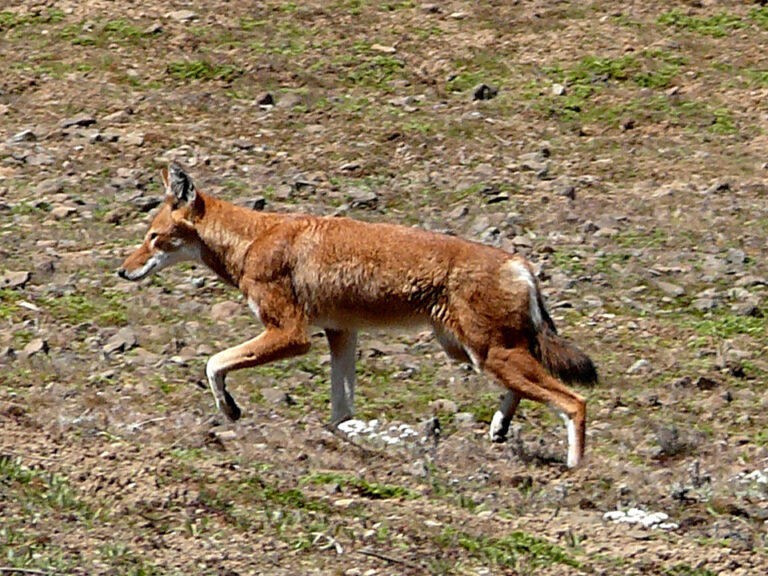
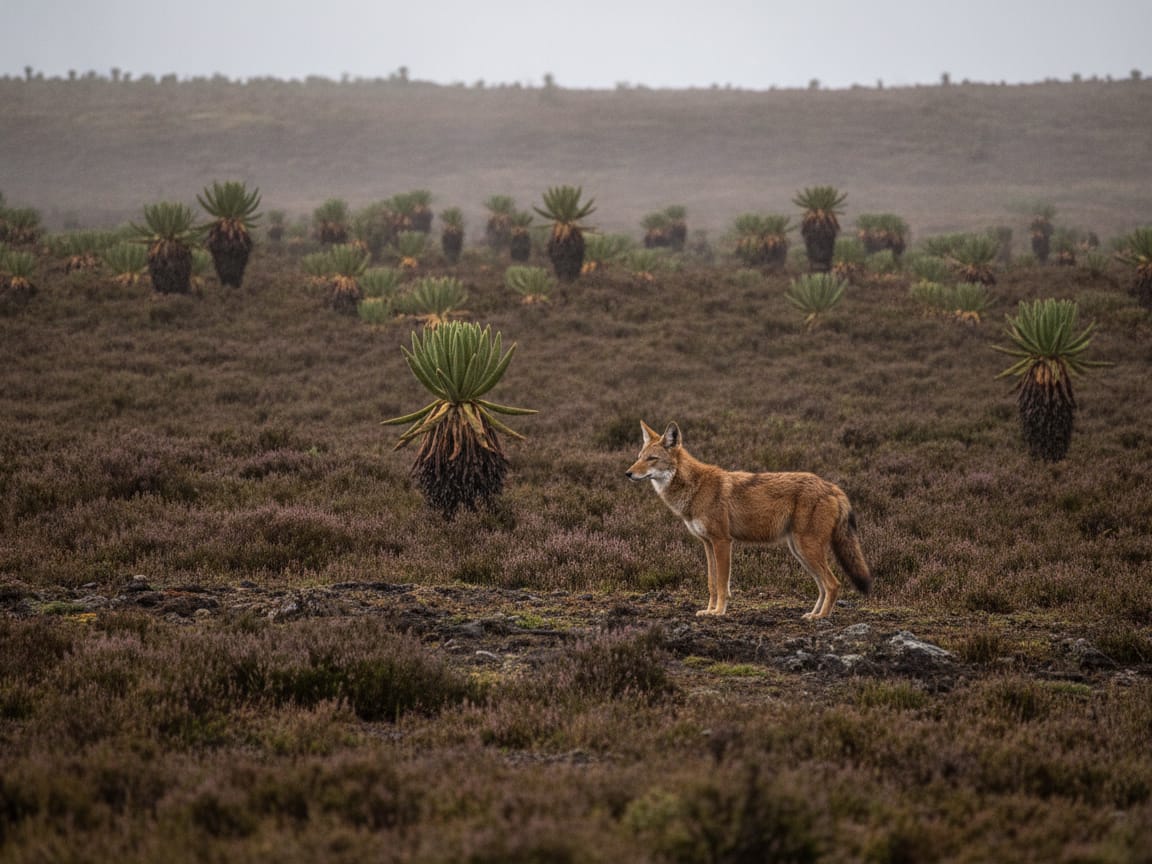
That concentration makes one place, the Sanetti Plateau, the best wolf-watching ground on the planet. This vast expanse of afroalpine moorland sits above 4,000 meters, an open, treeless world of frost-hardy plants, giant lobelia and endless rodent burrows. Wolves hunt those rodents by day, often in plain view, trotting across the grass or sitting alert on a rise. A slow drive or walk across the plateau in the early morning or late afternoon gives most visitors a genuine sighting.
The wolf's russet coat and white throat stand out against the pale grass, and it behaves less like a shy predator than a working hunter, focused on the giant molerats underfoot. Keep your distance, stay quiet, and let a guide position you downwind. Disease carried by domestic dogs is the single biggest threat to these wolves, so responsible operators keep dogs away from wolf ground entirely.
Harenna Forest, Afroalpine moorland, and birding highlights
Drop off the southern edge of the plateau and the landscape changes completely. The road falls into the Harenna Forest, a dense, moss-draped cloud forest that feels a world away from the bare moorland above. Wild coffee grows here under the canopy, and the forest shelters lions, leopards, colobus monkeys and the endemic Bale monkey. Walking the forest tracks is slower and more secretive than plateau spotting, but it adds a second, richer habitat to the same trip.
Between the forest below and the plateau above lies the afroalpine moorland, the zone that defines Bale. Giant lobelias rise like candelabras, everlasting flowers carpet the ground, and the air is thin and sharp. This is where the wolves and giant molerats live, and it is some of the most striking high-altitude scenery in Africa.
For birders, Bale is a destination in its own right. The park records hundreds of bird species, including several endemic to Ethiopia, and the African Bird Club has ranked it among the top birding spots on the continent. Look for the blue-winged goose, the wattled ibis, the spot-breasted plover and Rouget's rail, all birds you will struggle to find anywhere outside these highlands. The mix of forest, moorland and lakes packs an unusual range of species into a short drive.
Best routes for trekking, horse riding, and day trips
You can experience Bale at almost any pace, from a single scenic drive to a multi-day trek deep into the highlands.
The Sanetti Plateau drive is the classic day trip. A vehicle crosses the plateau to Tullu Dimtu, one of the highest points in Ethiopia, passing wolf territory and sweeping moorland views along the way. It suits travelers short on time or unsure about altitude, and it still delivers the marquee wildlife.
Multi-day treks run north from the park headquarters at Dinsho into the Web Valley and up onto the high plateau. Trekkers camp at mountain huts or tented sites, walking between four and seven days depending on the loop. These routes cross the full range of habitats, from juniper woodland to open afroalpine terrain, and give the deepest sense of the massif.
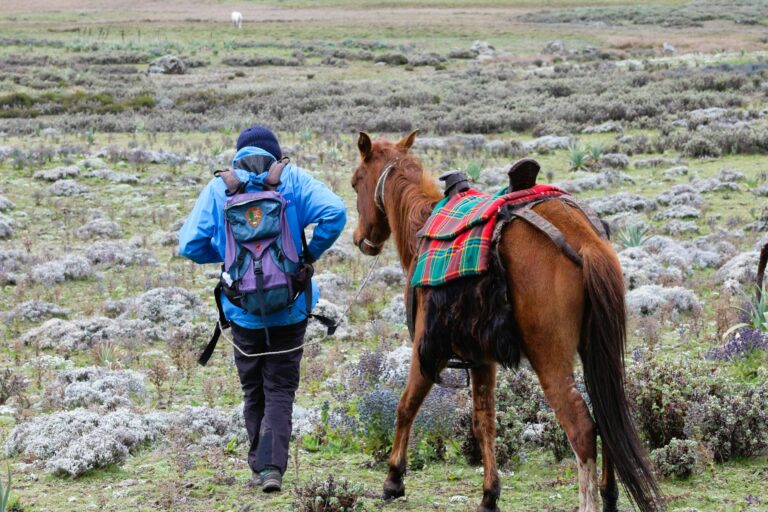
Horse riding is a Bale specialty. Local horses are sure-footed at altitude, and riding lets you cover more ground than walking while easing the strain of the thin air. Many multi-day itineraries mix riding and trekking, with pack horses carrying the camp.
Day walks from Dinsho are the gentlest option. The area around the headquarters is the reliable place to see mountain nyala and Menelik's bushbuck on foot, often within an hour of arriving. It makes a good acclimatization walk before heading higher.
Whichever route you choose, altitude is the real variable. Most of the park sits high enough that pacing matters, so build in a slower first day and drink plenty of water. If you want a broader picture of getting around the country before you commit, our complete Ethiopia trip starter guide covers routes, seasons and logistics.
When to visit and how to arrange a guided Bale safari
The dry season, running roughly from November to March, is the best window. Skies are clearest, trails are firm, and wolf sightings on the plateau are most reliable. October and April sit on the shoulders, often green and quiet, with a chance of rain but fewer visitors. The main rains fall from around June to September, when tracks turn to mud and forest walks get difficult.
Getting to the park takes planning. From Addis Ababa it is a long drive south through Shashamene to Goba and Dinsho, usually broken over a day. That distance, combined with park permits, camping logistics and the value of a wolf-tracking scout, is why most travelers visit with a guide rather than going alone. A licensed local team handles the permits, arranges horses and cooks, paces you through the altitude, and knows where the wolves have been seen that week.
This is where a specialist operator earns its place. Yenew, through GishAbay Ethiopia Tour, builds guided Bale itineraries that combine the Sanetti Plateau, Harenna Forest and multi-day trekking with the practical details handled for you: transport from Addis, park fees, scouts and camping. Because Bale pairs so well with the northern highlands, it also slots neatly into a longer route that might include the Simien Mountains for a two-mountain wildlife trip.
Start by deciding how much time you have and whether you want a single plateau day or a full trek, then work backward to the season. Pick your dates in the November-to-March window, reach out to a licensed Ethiopian operator to lock in permits and a scout, and you have the framework for one of the most rewarding wildlife trips in Africa.
Frequently asked questions
Where is Bale Mountains National Park?
It lies in the southeastern highlands of Ethiopia, in the Oromia region, roughly a full day's drive south of Addis Ababa through the town of Goba.
What is the best time to visit Bale Mountains?
The dry season from November to March offers the clearest weather and firmest trails. October and April can also be good, with fewer visitors and green landscapes.
Can you actually see the Ethiopian wolf in Bale?
Yes. The Sanetti Plateau holds the densest wolf population anywhere, and sightings are common on a morning or late-afternoon drive across the plateau.
Do I need a guide to visit Bale Mountains National Park?
A licensed guide is strongly recommended and handles permits, scouts, altitude pacing and wildlife tracking. Some park zones require a local scout by regulation.
How high is the Bale Mountains trek?
Routes cross afroalpine terrain above 4,000 meters, including the Sanetti Plateau and Tullu Dimtu, one of the highest points in Ethiopia.