Key takeaways
- There are no wild tigers in Ethiopia or anywhere in Africa; tigers are native only to Asia, from India to the Russian Far East.
- Ethiopia is home to lions, leopards, and cheetahs, along with the endemic Ethiopian wolf, Africa's most endangered carnivore.
- Fewer than 500 adult Ethiopian wolves survive, with the largest population in the Bale Mountains.
- Tigers now occupy around just 8% of their historic range, and that range has always been in Asia, never Africa.
- The Bale Mountains, Simien Mountains, and Awash national parks are the best places to spot Ethiopian wildlife.
No, there are no wild tigers in Ethiopia, and there never have been. Tigers are native only to Asia, so the closest wild tiger lives thousands of miles away. If you are planning a trip and wondering whether tigers roam the Ethiopian bush, the honest answer sets you up for the animals you will actually encounter: lions, leopards, cheetahs, and a rare wolf found nowhere else on the planet.
This guide clears up the confusion around tigers, then walks through the real wildlife of Ethiopia and where to find it.
Why Are There No Wild Tigers in Ethiopia?
There are no tigers in Ethiopia because tigers are an Asian species, not an African one. According to WWF, continental tigers range across mainland Asia from India and Nepal to the Russian Far East, and they now occupy around just 8% of their historic range (WWF UK). That range has always sat east of Africa, separated by deserts and seas.
No fossil or historical record places a wild tiger population on the African continent. The big striped cat simply evolved elsewhere. So a traveler asking "is there a tiger in Ethiopia" is really asking about an animal that lives on a different landmass entirely.
The only tigers you might see on Ethiopian soil are in captivity, such as a zoo exhibit. In the wild, every stripe you spot will belong to a zebra, not a cat.
Why does the mix-up persist? Tigers dominate films, logos, and children's books, so many people picture them as a catch-all symbol for any large wild cat. Africa's own big cats get grouped under that mental image, and Ethiopia, with its reputation for dramatic landscapes, seems like a plausible home. The geography simply does not line up with where tigers evolved and still live.
Which Big Cats Actually Live in Ethiopia?
Ethiopia is home to three African big cats: lions, leopards, and cheetahs. All three are native, breeding species, and the lion is the country's national emblem. These are the predators that fill the role many visitors mistakenly assign to tigers.
The Ethiopian lion is famous for its unusually dark, often black mane. A long-studied population lives along the Alatash region on the Sudanese border, and lions also appear in the Bale Mountains and parts of the south. You can read more about this distinctive cat in our guide to the Abyssinian lion, Ethiopia's black-maned big cat.
Leopards are widespread but elusive. They turn up in Awash, Mago, Omo, and the Bale Mountains, yet their stealth makes sightings a matter of luck and patience. Cheetahs are scarcer still, recorded mainly in the Mago and Omo parks of the south. Spotting one is a genuine prize.
What Other Wildlife Should You Expect?
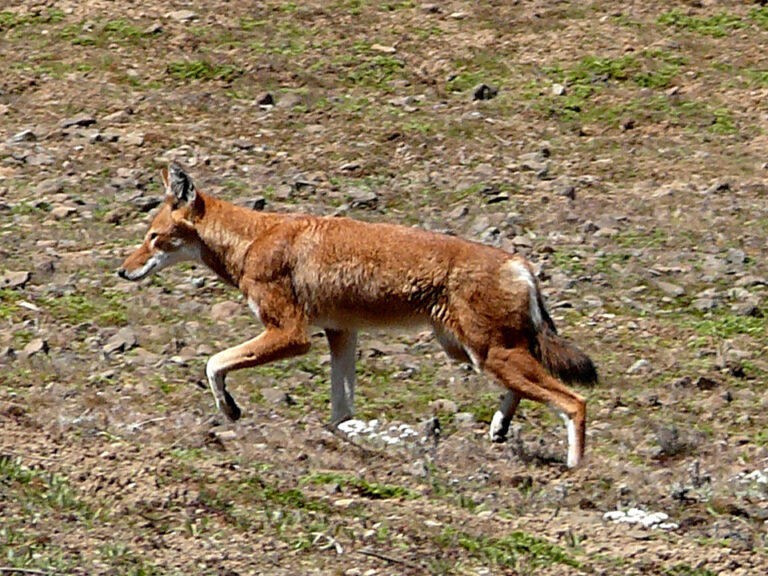
Beyond the big cats, Ethiopia's headline animal is the Ethiopian wolf, a species found nowhere else. Fewer than 500 adults survive in just six isolated mountain ranges, which makes it Africa's most endangered carnivore and the rarest wild dog on Earth (WildCRU, University of Oxford). The Bale Mountains hold the largest single population.
The highlands also shelter other endemics you will not find on a typical African safari. Gelada baboons graze the cliff edges in loose herds, the walia ibex clings to the Simien escarpments, and Menelik's bushbuck slips through the forest. Birders do well here too, with the Rift Valley lakes drawing flamingos, pelicans, and dozens of raptors.
This mix is what makes Ethiopian wildlife distinct. You trade the promise of tigers for a lineup of animals that are, in several cases, impossible to see anywhere else.
Where Are the Best Parks to Spot Ethiopian Wildlife?
Ethiopia has close to two dozen national parks, and a handful stand out for wildlife. Each one covers a different habitat, so your target species should guide where you go. The highlands, the savanna, and the Rift Valley each hold their own cast.
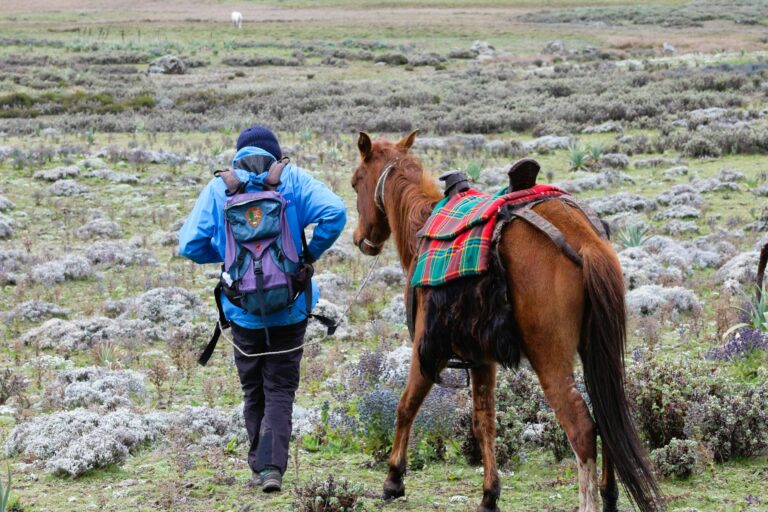
The Bale Mountains are the single best place for the Ethiopian wolf and highland endemics. The Simien Mountains deliver gelada baboons and the walia ibex against dramatic cliffs. Awash, one of the country's oldest parks, offers savanna species including leopards and oryx within easy reach of Addis Ababa.
For the south, Mago and Omo parks hold the widest range of larger mammals, including the best, if still slim, chances at cheetah and lion. If you are timing a trip around animal activity, the dry months generally improve your odds, since thinner vegetation and gathering herds make animals easier to spot.
How Do You Plan a Wildlife-Focused Ethiopia Tour?
Start by choosing one or two habitats rather than trying to cover the whole country. Ethiopia's wildlife spreads across remote highlands and lowland parks, and the roads between them are long. A focused route gives you more time watching animals and less time in transit.
Pair your species wish list with the right park, then build in buffer days, since cats and wolves rarely appear on schedule. A knowledgeable local guide makes the difference between driving past a camouflaged leopard and actually seeing it. Guides read tracks, know den sites, and understand each park's rhythm.
Think about pace, too. Early mornings and late afternoons are when cats move and feed, so a good itinerary plans game drives around those windows and keeps the midday heat for travel or rest. Pack patience along with binoculars, because the most memorable sightings often come after a long, quiet wait.
This is where a specialist operator earns its keep. Yenew, through GishAbay Ethiopia Tour, arranges guided wildlife itineraries that match parks to the animals you most want to see, handling permits, transport, and expert spotters so you can concentrate on the search. Tell them whether your priority is the Ethiopian wolf, a black-maned lion, or a broad highland and savanna sampler, and they will shape the route to fit. That focus turns a vague wish to see animals into a trip built around your best real chances.
Frequently asked questions
Are there any tigers in Ethiopia?
No. There are no wild tigers in Ethiopia. Tigers live only in Asia, from India and Nepal to the Russian Far East. Any tiger in Ethiopia would be in a zoo, not the wild.
Have tigers ever lived in Africa?
No wild tiger population has ever existed in Africa. Tigers evolved in Asia, and authorities such as WWF describe their range as mainland Asia only. Africa's native big cats are lions, leopards, and cheetahs.
What big cats live in Ethiopia?
Ethiopia has lions, leopards, and cheetahs. The lion is the national symbol and famous for its dark mane. Leopards and cheetahs live in parks such as Mago and Omo but are harder to spot.
What is the rarest animal in Ethiopia?
The Ethiopian wolf is the rarest. Fewer than 500 adults remain, making it Africa's most endangered carnivore and the rarest wild dog species on Earth. The Bale Mountains hold the largest population.
Where can I see wildlife in Ethiopia?
The Bale Mountains, Simien Mountains, and Awash national parks are top choices. Ethiopia has close to two dozen national parks, covering highlands, savanna, and the Rift Valley, each with distinct species.