Key takeaways
- The Gheralta rock churches are a cluster of cliff-top chapels carved into the sandstone of Tigray, reached only on foot.
- Abuna Yemata Guh is the best known, famed for a steep barefoot climb up a bare rock face to reach painted ceilings inside.
- Maryam Korkor offers a gentler ascent and one of the largest, most decorated interiors in the massif.
- The sites sit on Ethiopia's landscape of standout heritage but are less visited than Lalibela, so a local guide and a head for heights matter.
- Gheralta pairs well with a wider Ethiopian heritage route that includes Lalibela, Axum, and the northern highlands.
Tucked into the cliffs of northern Ethiopia, the Gheralta rock churches are ancient chapels carved high into sheer sandstone, reached only by climbing the rock itself. If you want the drama of Ethiopian faith and landscape without the crowds of Lalibela, this is where to go.
This guide covers what makes Gheralta special, the two churches most visitors aim for, what the climbs actually involve, and how to fold the region into a wider Ethiopian trip.
Why the Gheralta Rock Churches Are a Hidden Highlight
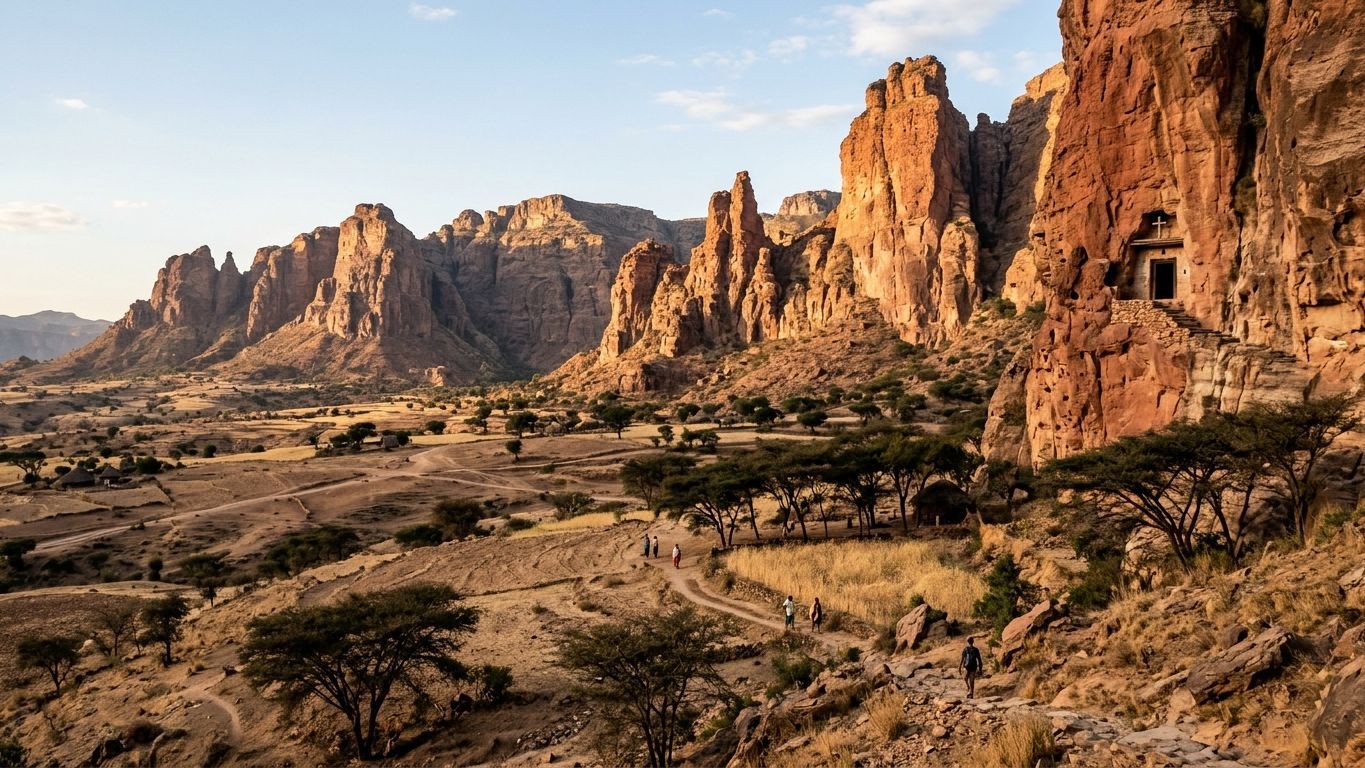
Gheralta is a massif of flat-topped mountains and vertical rock faces in the Tigray Region, and its churches are hewn straight into that stone, often near the summits. The Metropolitan Museum of Art describes the wider Tigray region as home to a large concentration of rock-hewn churches, carved over centuries since Christianity took root in the area. Many sit hundreds of metres above the surrounding plateau, which is exactly why they stayed hidden and protected for so long.
Unlike Lalibela, which draws steady streams of visitors, the Gheralta churches see far fewer travellers. Reaching them is part of the point. There is no shortcut, no cable car, and no queue. You walk up through farmland, then up the rock, and the reward is a quiet, painted interior with a view across the whole valley.
The churches also carry real religious weight. They remain active places of worship for the Ethiopian Orthodox Tewahedo Church, tended by resident priests who hold the keys and guard the treasures inside. Visitors are guests in a living tradition, not spectators at a museum.
For a broader sense of how these sites fit into Ethiopian religious life, it helps to read them alongside the wider tradition of Ethiopian church faith, art, and architecture.
Famous Churches: Abuna Yemata Guh and Maryam Korkor
Two churches anchor almost every Gheralta visit. Each offers a different experience, and many travellers try to see both.
Abuna Yemata Guh
Abuna Yemata Guh is the one that appears in the photographs of people pressed against a bare cliff. It is named after one of the Nine Saints, monks traditionally credited with spreading Christianity across the northern highlands, and it is cut into a rock pillar high above the plain. Getting inside means a steep, exposed climb up the rock face, usually barefoot for grip, ending on a narrow ledge before the entrance.
The effort buys something extraordinary. The interior ceiling and walls are covered in vivid painted figures, including depictions of the apostles, that have survived for centuries in the dry mountain air. Because the church is sealed against wind and rain by the cliff itself, the colours remain remarkably fresh.
Maryam Korkor
Maryam Korkor, sometimes written Debre Maryam Qorqor, sits on the same massif and rewards a slightly gentler approach. The walk up is longer but far less frightening than Abuna Yemata Guh, with the final stretch a scramble rather than a sheer climb. Inside, it is one of the larger and more architecturally ambitious churches in the area, with carved arches, columns, and wall paintings tied to the flourishing of Ethiopian Christian art in the medieval period.
Many guides pair Maryam Korkor with the small nearby church of Daniel Korkor, a short walk along the ridge, so you can see two interiors and a spectacular clifftop view in a single outing.
What the Climbs Involve and How to Prepare
The climbs are the reason people hesitate, and honesty helps here. Abuna Yemata Guh in particular demands a head for heights. The hardest section is a near-vertical face of smooth sandstone with foot and hand holds worn into the rock, followed by a narrow ledge with a long drop to one side. Local climbers who know every hold assist visitors up and down, and a guide arranges this before you start.
A few practical points make the day safer and more enjoyable:
- Go with a local guide. A guide handles church access, finds the priest with the key, and coordinates the local helpers who steady you on exposed sections.
- Climb in the dry season. From roughly October to March the rock offers reliable grip. Wet sandstone turns slippery and the exposed sections become genuinely dangerous.
- Wear the right footwear. You will likely climb the steepest part barefoot, so bring shoes with good grip for the approach and be ready to remove them.
- Carry water and go early. The ascents are hot by midday. An early start means cooler rock and softer light for photos.
- Be honest about fear of heights. If exposure worries you, choose Maryam Korkor and Daniel Korkor over Abuna Yemata Guh. Both deliver painted interiors and huge views with far less risk.
Reasonable fitness is enough for most of these climbs. You do not need technical mountaineering skill, but you do need to be steady on your feet and comfortable trusting a helper's hand on the hardest moves.
Landscapes and Photography in the Gheralta Massif
Even without the churches, Gheralta would be worth the trip for its scenery. The massif is a sweep of russet sandstone towers, sheer escarpments, and green valley floors dotted with farmland and euphorbia. Light here is dramatic at the ends of the day, when the low sun sets the rock glowing and long shadows fall across the plain.
For photographers, the standout shots fall into a few categories:
- The climbs themselves, with a tiny human figure against a vast rock face, which conveys scale better than any wide landscape.
- The clifftop views from church ledges, looking out over the patchwork of fields far below.
- The painted interiors, though these usually require permission and no flash, since strong light and camera flashes can damage centuries-old pigment.
Always ask your guide before photographing inside a church or a priest, and respect any request to put the camera away. These are sacred spaces first and photo subjects second. The dry, clear air of the northern highlands, described in the wider context of Ethiopian Orthodox heritage by resources such as the Metropolitan Museum of Art, is also why the frescoes have lasted so long, so protecting them matters.
Adding Tigray's Rock Churches to a Heritage Tour
Gheralta rarely stands alone on an itinerary. It fits naturally into a northern heritage circuit that traces the roots of Ethiopian Christianity and empire. A common route links the ancient capital of Axum, the Gheralta churches around Hawzen, and the more famous rock-hewn churches at Lalibela to the south.
If Gheralta whets your appetite for rock architecture, the obvious next stop is Lalibela, and our guide to the 11 rock-hewn churches at Lalibela explains why those sites earned Ethiopia's most famous UNESCO listing. The sacred landscapes of Tigray, by contrast, currently sit on Ethiopia's UNESCO World Heritage Tentative List, as recorded by the UNESCO World Heritage Centre, which makes visiting now feel like reaching them ahead of the wider crowd.
Practical logistics matter for a region this remote. Roads are winding, church access depends on priests and local helpers, and the harder climbs need someone who knows them. This is where a specialist operator earns its place. Yenew, through GishAbay Ethiopia Tour, builds northern heritage routes that string Gheralta together with Axum, Lalibela, and the highland scenery, arranging the guides, permissions, and local climbers that make cliff-top churches accessible to visitors rather than only to pilgrims.
Because Gheralta sits deep in the north, most travellers reach it as part of a longer loop rather than a standalone day trip. If you are still shaping the bigger picture, settle the fundamentals of routing, timing, and budgeting first, then decide where the Tigray churches fit.
Ready to stand on a Gheralta ledge yourself? Sketch a rough northern route, flag Abuna Yemata Guh or Maryam Korkor as your priority, and talk to a Tigray-experienced guide about the season and your comfort with heights before you lock in dates. That single conversation is what turns a daunting cliff into a safe, unforgettable climb.
Frequently asked questions
Where are the Gheralta rock churches located?
They sit in the Gheralta massif of the Tigray Region in northern Ethiopia, a sandstone landscape of flat-topped mountains and steep cliffs. The nearest town base is Hawzen.
How hard is the climb to Abuna Yemata Guh?
It is demanding. The final section is a near-vertical scramble up bare rock, done barefoot for grip, followed by a narrow ledge with a long drop. Most fit visitors manage it with a guide and local helpers.
Are the Gheralta churches a UNESCO World Heritage Site?
The sacred landscapes of Tigray sit on Ethiopia's UNESCO World Heritage Tentative List rather than the inscribed list. Lalibela, further south, is the country's famous inscribed rock-church site.
Do I need a guide to visit the Gheralta churches?
Yes. A local guide arranges church access, the priest with the key, and the local climbers who assist on exposed sections. Guides also handle permissions and safety on the harder ascents.
When is the best time to visit Gheralta?
The dry season from October to March offers the most reliable footing on the rock. Wet-season conditions make the smooth sandstone slippery and the climbs riskier.