Key takeaways
- Enkutatash is the Ethiopian New Year, celebrated on September 11 most years and September 12 in the year before a Gregorian leap year.
- On September 11, 2026 the Ethiopian calendar turns to year 2019, since it runs 7 to 8 years behind the Gregorian calendar across 13 months.
- The name Enkutatash means 'gift of jewels' and traces back to a legend about the Queen of Sheba returning from King Solomon.
- Signature traditions include bright yellow Adey Abeba daisies, children singing door to door, and family feasts of injera and doro wat.
Enkutatash is the Ethiopian New Year, a holiday that lands on September 11 rather than January 1. It marks the first day of Meskerem, the first month of a calendar that runs 7 to 8 years behind the one most of the world uses. On September 11, 2026, Ethiopia welcomes the year 2019 while fields across the highlands turn gold with daisies.
The celebration blends faith, harvest and family. Children carry flowers door to door, churches fill before dawn, and homes smell of roasting coffee and spiced stew. For a traveler, few events open a clearer window onto Ethiopian culture.
What Is Enkutatash and Why Does It Fall in September?
Enkutatash is the Ethiopian New Year, and it opens the month of Meskerem, usually on September 11. The date shifts to September 12 in the year before a Gregorian leap year. The timing follows the Ethiopian calendar, which counts 13 months and sits 7 to 8 years behind the Gregorian system (timeanddate.com).
The September date is tied to the land. The long summer rains end around this time, and the highlands dry out under clear skies. Farmers look ahead to harvest, so the New Year doubles as a seasonal reset. The sun returns, the mud recedes, and the countryside bursts into flower.
That calendar gap surprises many visitors. Ethiopia counts twelve months of 30 days, plus a short thirteenth month of five or six days called Pagume. If you want the full mechanics behind the date, our guide to the Ethiopian calendar walks through all 13 months.
The Legend and History Behind the Celebration
The name Enkutatash means "gift of jewels," and the story reaches back nearly three thousand years. By tradition, the holiday recalls the return of the Queen of Sheba from her visit to King Solomon in Jerusalem. Her chiefs are said to have welcomed her home by refilling her treasury with jewels.
That legend gives the day its name, but the celebration grew into something broader over the centuries. It became a thanksgiving for the end of the rains and the start of a fruitful season. Religious meaning layered on top, since the Ethiopian Orthodox Church anchors much of the national calendar.
Enkutatash now carries both threads at once. One is the memory of an ancient queen and her treasure. The other is the simple joy of a new agricultural year, when the hills green over and the first flowers appear. Both ideas live comfortably side by side in how families mark the day.
Traditions: Flowers, Songs and Family Gatherings
Three customs define Enkutatash: the yellow Adey Abeba daisy, children's songs, and a shared family meal. Together they turn a date on the calendar into a sensory event you can see, hear and taste across the highlands.
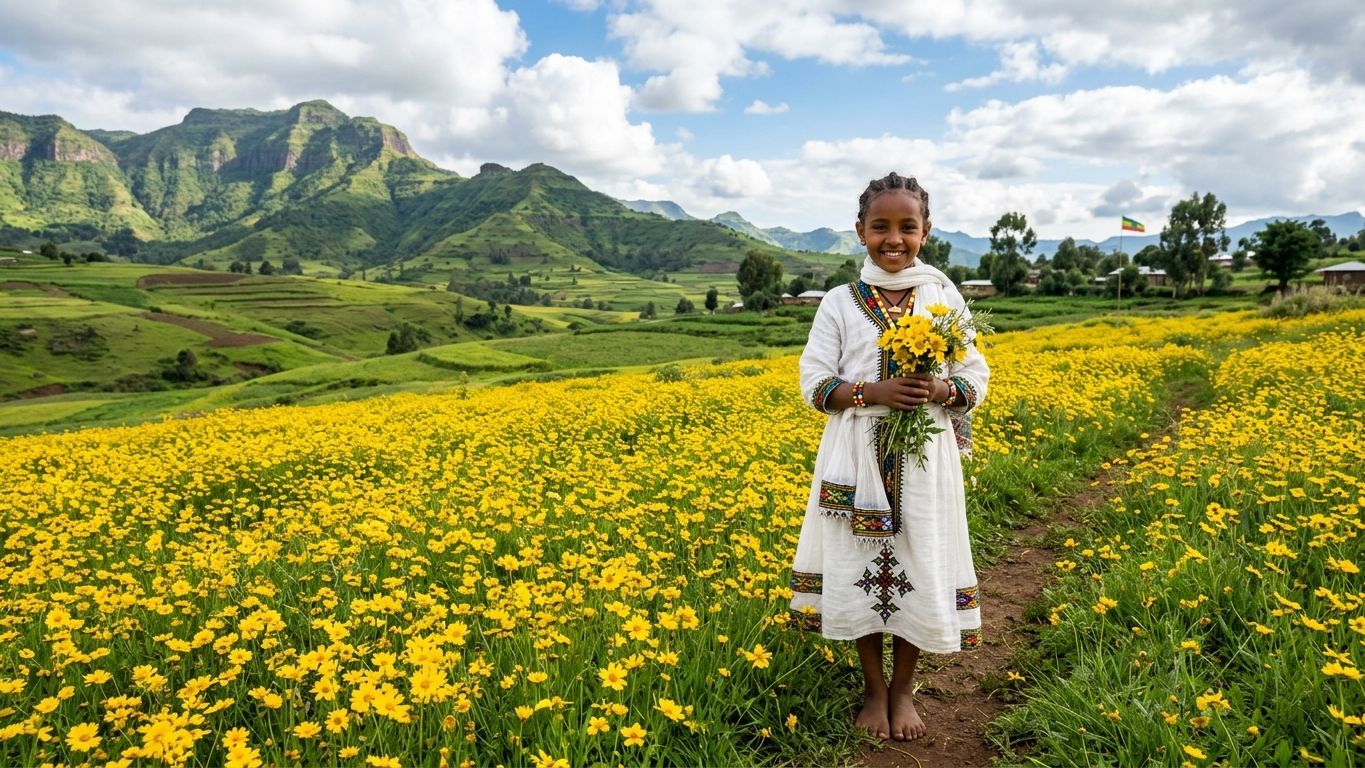
The Adey Abeba is a small golden daisy that blooms in September. It covers fields and roadsides just as the New Year arrives, so it became the natural symbol of the holiday. People gather the flowers for bouquets, weave them into decorations, and hand them out as gifts.
Children drive much of the celebration. Dressed in traditional white clothing, girls go from house to house singing a New Year song known as Abebayehosh, while boys often bring hand-drawn pictures. In return, neighbors offer small gifts, a little money, or bread. The songs and drawings are keepsakes of the season.
Inside the home, the meal brings everyone together. Families share injera, the sour flatbread that anchors Ethiopian cooking, alongside doro wat, a rich chicken stew. A traditional coffee ceremony often closes the day, with green beans roasted, ground and brewed in a clay jebena pot while guests sit and talk.
Our observation: Among the holidays we help travelers witness, Enkutatash stands out because so much of it happens on the street and in the home rather than behind temple walls. You do not need a ticket to feel it.
How Towns and Churches Mark the Day
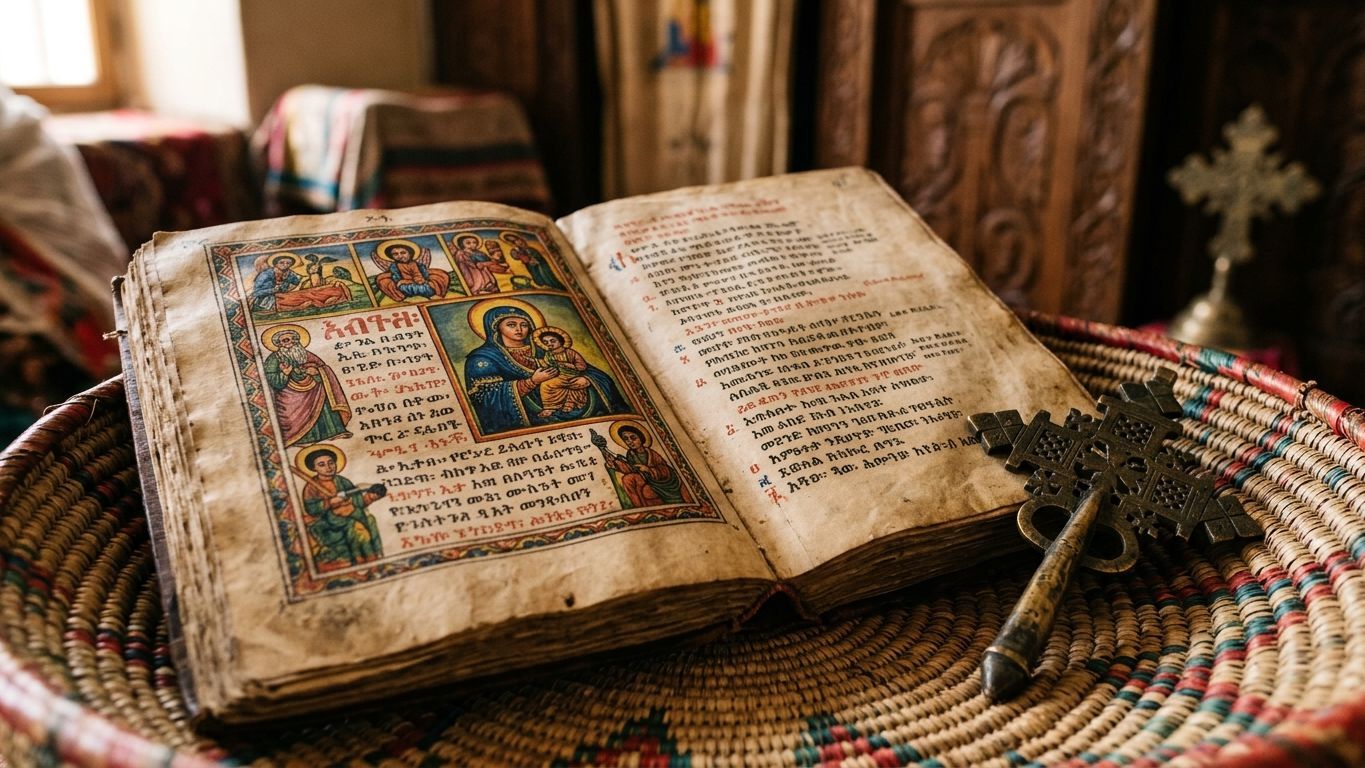
Enkutatash begins in church, often before sunrise. Across Ethiopia, Orthodox congregations gather for services where priests chant hymns in Ge'ez, the ancient liturgical language, and worshippers carry candles and flowers. In Addis Ababa, major cathedrals draw large crowds for the dawn liturgy.
After services, the celebration spills into towns and neighborhoods. Streets fill with people in festive white dress, and the sound of singing carries from one compound to the next. Markets stay busy as families buy flowers, chickens for the stew, and gifts for visiting relatives.
The holiday is also a homecoming. Relatives who live in cities or abroad return to family compounds, and the Ethiopian diaspora mirrors the customs overseas with their own gatherings and coffee ceremonies. Whether in a highland village or a rented hall in another country, the shape of the day stays familiar: faith first, then flowers, food and family.
Experiencing Ethiopian New Year as a Visitor
September is one of the best windows to visit Ethiopia, and Enkutatash sits right at the start of it. The rains have cleared, the highlands are green, and the tourism season is reopening. In the 2025/2026 financial year Ethiopia recorded more than 1.4 million foreign tourists and 5.2 billion US dollars in tourism revenue, with over 50 million domestic trips (Dawan Africa, 2026).
For a traveler, the holiday is easy to join. Public church services are open, town festivities happen in the open air, and Ethiopian hospitality means a stranger is often invited to share coffee or a plate of injera. A few simple courtesies help: dress modestly for church visits, ask before photographing people, and learn the greeting "Melkam Addis Amet," meaning "Happy New Year."
Timing the trip around Enkutatash also lines up with clear-weather travel to the country's highlights. The same crisp September skies that follow the rains make this a strong season for the historic north and the highlands. If you want help building an itinerary that catches the New Year and the landscape at their best, Yenew arranges guided cultural tours across Ethiopia, including stops timed to local festivals.
Plan ahead rather than winging it. Hotels and flights fill quickly around the holiday, so book early and confirm church service times locally, since they vary by congregation. Begin your plan now by choosing a base city, deciding whether you want the historic route or a cultural immersion, and reserving accommodation while September dates are still open.
Frequently asked questions
When is Enkutatash celebrated?
Enkutatash falls on September 11 in most years, and on September 12 in the year before a Gregorian leap year. In 2026 it is September 11, which begins Ethiopian year 2019.
What does the word Enkutatash mean?
Enkutatash translates as 'gift of jewels.' The name comes from a legend in which the Queen of Sheba was welcomed home with jewels after visiting King Solomon.
Why does the Ethiopian New Year fall in September?
The Ethiopian calendar starts its first month, Meskerem, in September, as the long rains end and the highlands bloom. It also runs 7 to 8 years behind the Gregorian calendar.
What flower is linked to Enkutatash?
The Adey Abeba, a small yellow Meskel daisy, blankets the highlands in September. Children gather the blooms to hand out as part of the New Year celebration.
Can tourists take part in Enkutatash?
Yes. Visitors are welcome at public church services, town festivities and family meals. September weather is clear and dry, which makes it a good time to travel in Ethiopia.